Ericsson headquarters in Stockholm, Sweden. Its CEO, Borje Ekholm, said it had identified 'unusual expenses dating back to 2018'. Photo: EPA

Telecoms company Ericsson gave millions to ISIS in Iraq, report says


  • English
  • Arabic

Swedish telecoms company Ericsson has been accused of spending “millions of dollars” to smuggle equipment into ISIS-controlled territory in Iraq.

The claim is contained in a leaked internal report by the company obtained by the International Consortium of Investigative Journalists.

Speaking to local media on February 16, Ericsson’s chief executive Borje Ekholm said it had identified “unusual expenses dating back to 2018”.

“What we are seeing is that transport routes have been purchased through areas that have been controlled by terrorist organisations, including ISIS,” Mr Ekholm told Swedish paper Dagens industri.

The ICIJ said that between 2011 and 2019, Ericsson made payments “to sustain its business in Iraq, financing slush funds, trips abroad for defence officials and payoffs through middlemen to corporate executives and possibly terrorists”.

“The internal investigation describes a pattern of bribery and corruption so widespread, and company oversight so weak, that millions of dollars in payments couldn’t be accounted for — all while Ericsson worked to maintain and expand vital cellular networks in one of the most corrupt countries in the world.”

The ICIJ also said the leaked Ericsson report showed the company had relied on fixers and unvetted subcontractors to run its business with the involvement of fake contracts, invoices with inflated amounts, doctored financial statements and other payments made to “contractors” with vague job descriptions.

In pictures — ISIS attacks civilians in Iraq

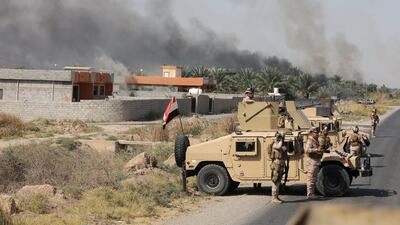
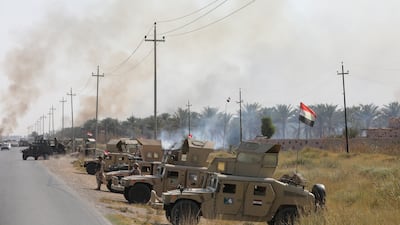
  • Iraqi security forces are deployed after an attack by ISIS extremists, near Muqdadiya, in Iraq. Reuters
    Iraqi security forces are deployed after an attack by ISIS extremists, near Muqdadiya, in Iraq. Reuters
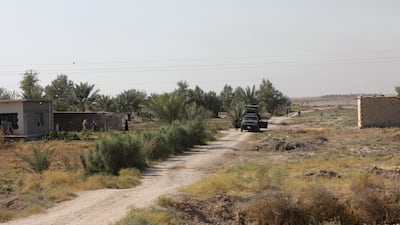
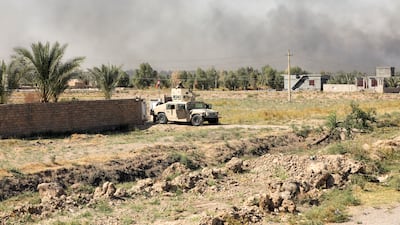
  • The extremists attacked Al Rashad village outside the city of Muqdadiya in Diyala, officials said.
    The extremists attacked Al Rashad village outside the city of Muqdadiya in Diyala, officials said.
  • At least 11 civilians were killed and at least 25 civilians were wounded. The number of deaths is expected to rise.
    At least 11 civilians were killed and at least 25 civilians were wounded. The number of deaths is expected to rise.
  • Security forces and government-sanctioned paramilitary troops were sent to the area. Iraqi President Barham Salih denounced the 'cowardly terrorist' attack and called for increasing efforts to chase down ISIS cells.
    Security forces and government-sanctioned paramilitary troops were sent to the area. Iraqi President Barham Salih denounced the 'cowardly terrorist' attack and called for increasing efforts to chase down ISIS cells.

“In one instance, a member of a powerful Kurdish family, the Barzanis, collected $1.2 million for ‘facilitation to the chairman’ of a mobile phone operator — also a Barzani,” the ICIJ said, citing the internal Ericsson report.

The leaked documents include 73 of the report's 79 pages with summaries of 28 witness interviews and 22.5 million emails, which the ICIJ distributed to 28 media outlets to help verify the information.

In 2019, Ericsson paid more than $1 billion in settlements to the US government over a “scheme to make and improperly record tens of millions of dollars in improper payments around the world”, the US Department of Justice said, after a subsidiary of the company pleaded guilty to its role.

The ICIJ called it “one of the largest foreign corruption settlements in history”.

Manchester United v Liverpool

Premier League, kick off 7.30pm (UAE)

While you're here
Desert Warrior

Starring: Anthony Mackie, Aiysha Hart, Ben Kingsley

Director: Rupert Wyatt

Rating: 3/5

Emirates Cricket Board Women’s T10

ECB Hawks v ECB Falcons

Monday, April 6, 7.30pm, Sharjah Cricket Stadium

The match will be broadcast live on the My Sports Eye Facebook page


Hawks

Coach: Chaitrali Kalgutkar

Squad: Chaya Mughal (captain), Archara Supriya, Chamani Senevirathne, Chathurika Anand, Geethika Jyothis, Indhuja Nandakumar, Kashish Loungani, Khushi Sharma, Khushi Tanwar, Rinitha Rajith, Siddhi Pagarani, Siya Gokhale, Subha Srinivasan, Suraksha Kotte, Theertha Satish


Falcons

Coach: Najeeb Amar

Squad: Kavisha Kumari (captain), Almaseera Jahangir, Annika Shivpuri, Archisha Mukherjee, Judit Cleetus, Ishani Senavirathne, Lavanya Keny, Mahika Gaur, Malavika Unnithan, Rishitha Rajith, Rithika Rajith, Samaira Dharnidharka, Shashini Kaluarachchi, Udeni Kuruppuarachchi, Vaishnave Mahesh


UJDA CHAMAN

Produced: Panorama Studios International

Directed: Abhishek Pathak

Cast: Sunny Singh, Maanvi Gagroo, Grusha Kapoor, Saurabh Shukla

Rating: 3.5 /5 stars

Water waste

In the UAE’s arid climate, small shrubs, bushes and flower beds usually require about six litres of water per square metre, daily. That increases to 12 litres per square metre a day for small trees, and 300 litres for palm trees.

Horticulturists suggest the best time for watering is before 8am or after 6pm, when water won't be dried up by the sun.

A global report published by the Water Resources Institute in August, ranked the UAE 10th out of 164 nations where water supplies are most stretched.

The Emirates is the world’s third largest per capita water consumer after the US and Canada.

Gulf Under 19s final

Dubai College A 50-12 Dubai College B

Mercer, the investment consulting arm of US services company Marsh & McLennan, expects its wealth division to at least double its assets under management (AUM) in the Middle East as wealth in the region continues to grow despite economic headwinds, a company official said.

Mercer Wealth, which globally has $160 billion in AUM, plans to boost its AUM in the region to $2-$3bn in the next 2-3 years from the present $1bn, said Yasir AbuShaban, a Dubai-based principal with Mercer Wealth.

Within the next two to three years, we are looking at reaching $2 to $3 billion as a conservative estimate and we do see an opportunity to do so,” said Mr AbuShaban.

Mercer does not directly make investments, but allocates clients’ money they have discretion to, to professional asset managers. They also provide advice to clients.

“We have buying power. We can negotiate on their (client’s) behalf with asset managers to provide them lower fees than they otherwise would have to get on their own,” he added.

Mercer Wealth’s clients include sovereign wealth funds, family offices, and insurance companies among others.

From its office in Dubai, Mercer also looks after Africa, India and Turkey, where they also see opportunity for growth.

Wealth creation in Middle East and Africa (MEA) grew 8.5 per cent to $8.1 trillion last year from $7.5tn in 2015, higher than last year’s global average of 6 per cent and the second-highest growth in a region after Asia-Pacific which grew 9.9 per cent, according to consultancy Boston Consulting Group (BCG). In the region, where wealth grew just 1.9 per cent in 2015 compared with 2014, a pickup in oil prices has helped in wealth generation.

BCG is forecasting MEA wealth will rise to $12tn by 2021, growing at an annual average of 8 per cent.

Drivers of wealth generation in the region will be split evenly between new wealth creation and growth of performance of existing assets, according to BCG.

Another general trend in the region is clients’ looking for a comprehensive approach to investing, according to Mr AbuShaban.

“Institutional investors or some of the families are seeing a slowdown in the available capital they have to invest and in that sense they are looking at optimizing the way they manage their portfolios and making sure they are not investing haphazardly and different parts of their investment are working together,” said Mr AbuShaban.

Some clients also have a higher appetite for risk, given the low interest-rate environment that does not provide enough yield for some institutional investors. These clients are keen to invest in illiquid assets, such as private equity and infrastructure.

“What we have seen is a desire for higher returns in what has been a low-return environment specifically in various fixed income or bonds,” he said.

“In this environment, we have seen a de facto increase in the risk that clients are taking in things like illiquid investments, private equity investments, infrastructure and private debt, those kind of investments were higher illiquidity results in incrementally higher returns.”

The Abu Dhabi Investment Authority, one of the largest sovereign wealth funds, said in its 2016 report that has gradually increased its exposure in direct private equity and private credit transactions, mainly in Asian markets and especially in China and India. The authority’s private equity department focused on structured equities owing to “their defensive characteristics.”

Updated: February 28, 2022, 7:44 AM