

The next phase of the restoration of a historic minaret and churches in the Iraqi city of Mosul, which were devastated when ISIS took control of the area, will begin within weeks through a joint project carried out by the UAE and Unesco, the UN agency said in a statement on Tuesday.
Conservationists have for three years been preparing the site of the Al Hadba minaret, part of Al Nouri Mosque, as well as Al Saa’a and Al Tahera churches in an effort to revive Mosul’s old city, the majority of which was destroyed in the ISIS era.
ISIS leader Abu Bakr Al Baghdadi famously announced the creation of his so-called caliphate from Al Nouri mosque. The 800-year-old landmark and its famed leaning minaret were destroyed as one of the group’s last acts upon leaving Mosul in 2017.
Noura Al Kaabi, UAE Minister of Culture and Youth, thanked the many engineers and conservationists involved in the project, which she said would benefit the estimated 1.7 million residents of Iraq’s second-largest city.
“The progress made on this project strengthens the resolve of the community and aids in bolstering the local economy by instilling confidence and engaging Iraqis in rebuilding their historical treasures,” Ms Al Kaabi said in the Unesco statement.
During preparations, researchers made significant “archaeological discoveries” under Al Nouri Mosque, which served to raise “our understanding of this historic monument”, Ms Al Kaabi added.
“Consultations are under way to finalise the design of the mosque, incorporating these precious discoveries,” the minister said.
Audrey Azoulay, Unesco’s director-general, will travel to Mosul when reconstruction begins in March, the UN agency for culture, education and science said in a statement on Tuesday.
Unesco had initially partnered with the UAE to rebuild Al Nouri Mosque and Al Hadba minaret, though the project was expanded to include the damaged churches. The agency has also partnered with the EU to rebuild 122 historic houses.
-
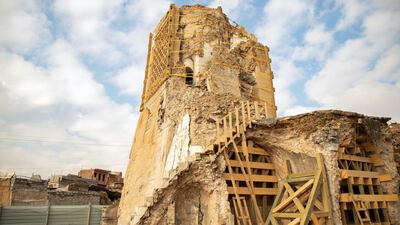
The UAE, in co-operation with Unesco, is helping to rebuild Al Nuri Mosque in Mosul. -
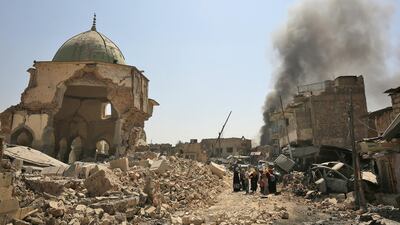
The mosque and its famous leaning minaret were destroyed by ISIS in 2017 as government forces closed in on the last fighters from the terrorist group that once held much of north-west Iraq. AFP -
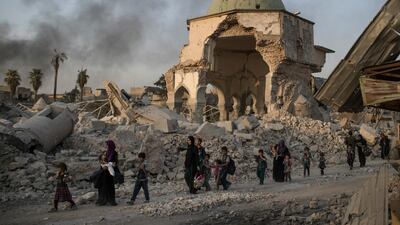
The mosque was left largely destroyed after the defeat of ISIS. AP -
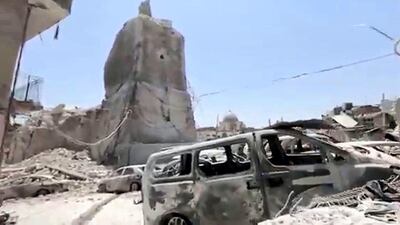
The minaret was also wrecked by the terrorists. AFP -
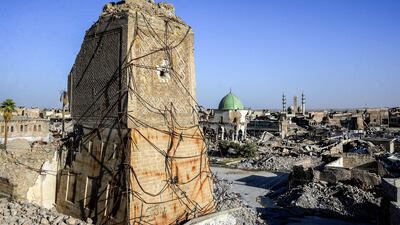
The 45-metre Al Hadba minaret was built 840 years ago. AFP -
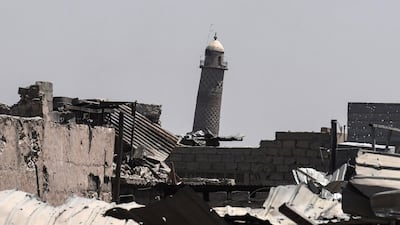
Before its destruction, its distinctive lean gave it its name, which translates as 'the hunchback' in Arabic. AFP -
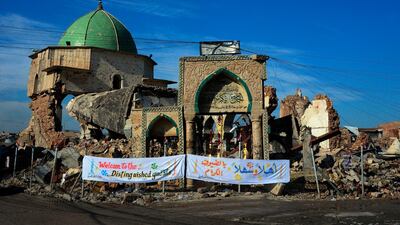
The UAE pledged $50.4 million (Dh185m) to restore Al Nuri Mosque and the minaret, in addition to providing expertise and support to co-ordinate the reconstruction. AFP -
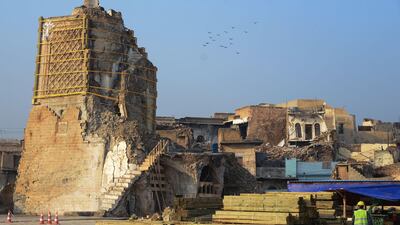
Work on the reconstruction of Al Hadba in December, 2019. AFP -
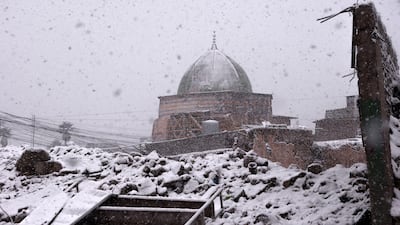
Al Nuri Mosque dome during a snowstorm in Mosul in February 2020. AFP -
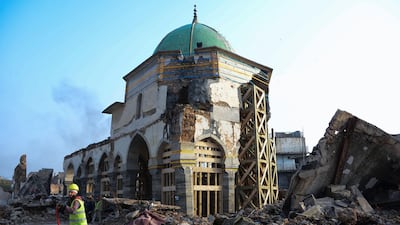
An Iraqi worker clears rubble during reconstruction work in December 2019. AFP -
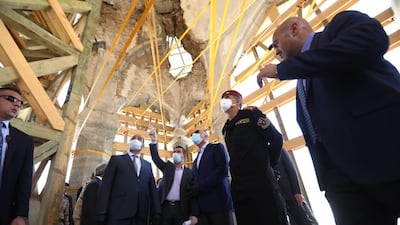
Iraqi prime minister at the time, Mustafa Al Khadimi, tours Al Nuri in 2020. Photo: Iraqi PM Media Office -
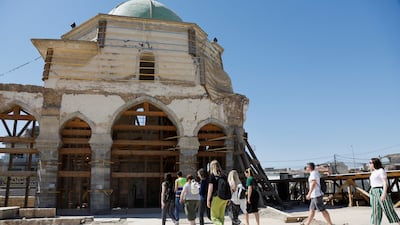
Tourists visit Al Nuri in April 2022. Reuters -
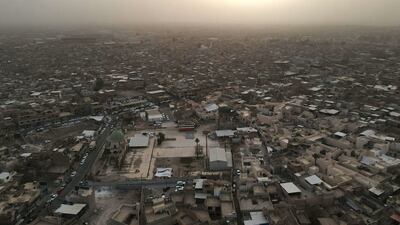
An aerial view of the Al Nuri mosque complex during a dust storm in June 2022. AFP -
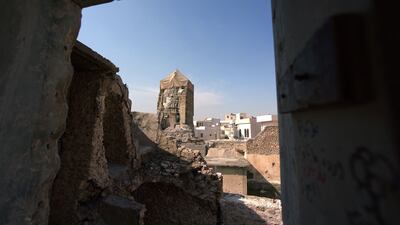
Renovation work on the mosque as seen through a doorway. AFP -
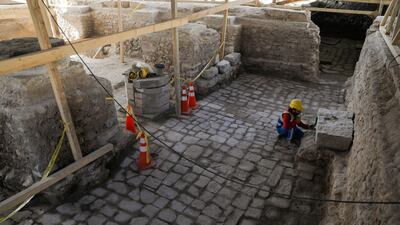
A labourer working on the monuments of Al Nuri in January 2022. Reuters -
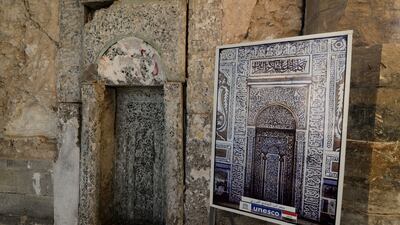
Restoration work at the mosque. AFP -
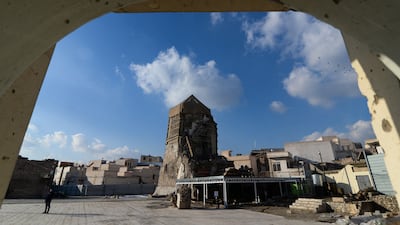
Excavations around Al Nuri. AFP


Work started on the sites towards the end of 2018, but involved the clearing of rubble and removal of “booby traps, hazardous materials and unexploded ordinance” that were left over after the ISIS extremists were pushed out, Unesco said.
Excavation work at Al Nouri Mosque revealed four rooms, water basins and drainage channels that were likely used for ritual ablutions. The coins, jars and fragments of pottery found suggest the rooms date from about the 12th century during the Atabeg period.
The removal of old stones from the damaged sites uncovered “valuable pieces” that will be used in the reconstruction, the UN agency said. The project brought international experts together with University of Mosul archaeology students.
Ernesto Ottone Ramirez, an assistant Unesco director-general, said “large numbers of youths” were involved in reconstruction work in a nation where high unemployment rates, particularly among the young, have given rise to protests.
The Great Mosque has always held a deep significance for Mosul residents and Iraqis in general. The leaning minaret became popularly known as Al Hadba, or “the hunchback”, and the image of the mosque features on the Iraqi 10,000 dinar note.

