


Nesa, 24, is locked in.
Used to sharing her dissent against the Iranian regime online, her attempts to join the month-long youth-led protests in Iran have been stymied by her concerned family.
"I have been against this regime for as long as I can remember. I always published my dissent online, even when the country is calm," Nesa told The National via a messaging app.
Shaken by the violence outside their home in the city of Sanandaj in western Iran, her parents refused to let her outside. Nearby, drivers have been killed for merely beeping their car horns at security forces, so attending a full-on demonstration against them is out of the question.
The Kurdish city of around 500,000 lies just three hours from Saqez, the hometown of Mahsa Amini, whose death in morality police custody last month was the catalyst for what many now see as a popular nationwide uprising.
The provincial capital and heartland of the country's western Kurdish areas, it has seen some of the fiercest violence at the hands of security forces, with human rights groups warning of a "massacre" as civilian neighbourhoods are shelled and people shot from their roofs.
Her phone was taken away, hoping it would ease her longing to protest. They don't want to have to mourn her, like other families.
"My family is afraid that I will die, but I say that I am no different from Mahsa Amini and the others. Freedom is worth being killed for."
In Sanandaj, protests have taken place in the city every day since Amini’s burial, where women took off their headscarves as they stood vigil over her freshly-dug grave.
Her tombstone would later read in Kurdish : "You won't die. Your name will become a symbol."
Nesa talks of teenagers and young children whisked away to be held in interrogation centres, a claim also made by Kurdish human rights groups.
A friend's brother was shot dozens of times in the leg, with almost 70 pieces of shrapnel lodged in his leg. She sends photos of the man's bloodied limbs, and says he can no longer walk.
"We are all afraid, death is the worst, but our anger and the cruelty we have seen over the past 43 years has made us overcome it."
'This time feels different'
Kimiya, in the US, watched with worry as the crackdown worsened in Sanandaj, where her family still live.
“They are shooting people from helicopters,” she told The National. “ The people have taken over the streets. There are drone and tank and helicopter strikes.”
She communicates sporadically with relatives through Virtual Private Networks, which encrypt internet use and disguise the user's identity, providing a short relief from constant internet blackouts, a common tactic enforced by Tehran whenever dissent rears its head. The last time Iran saw large-scale protests, in 2019, the internet was shut off for weeks as 1,500 were killed for opposing an overnight hike in fuel prices.
“My grandma feels sick, because Mahsa was my age when she died.”
“We are really used to things being bad in Iran so there's always been a bit of desensitization...but this time feels so different,” she said.
-
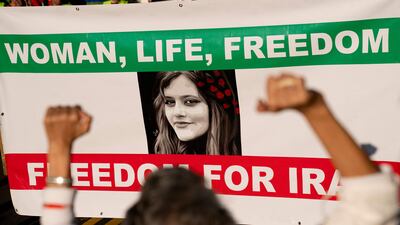
Demonstrators chant slogans during the March of Solidarity for Iran in Washington. AFP -
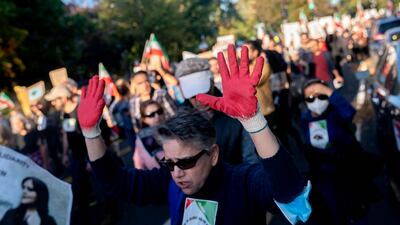
Another group of demonstrators at the march. AFP -
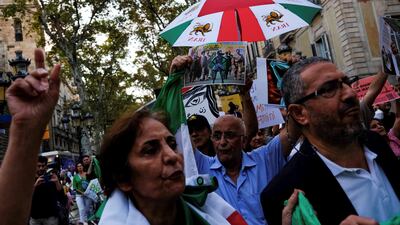
A protest in support of Iranian women in Barcelona. Reuters -
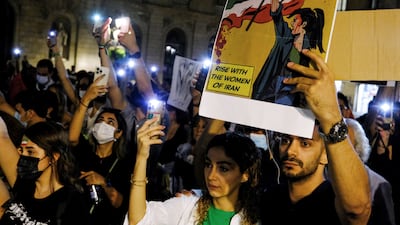
Iranian citizens and locals joined in the Barcelona protest. Reuters -
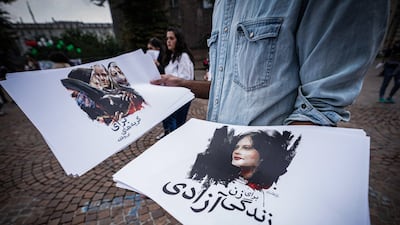
People attend a demonstration in solidarity with Mahsa Amini and other Iranian women in Castello Square, Turin. EPA -
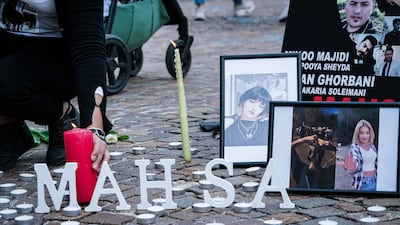
A person places a candle during the demonstration in Turin. EPA -
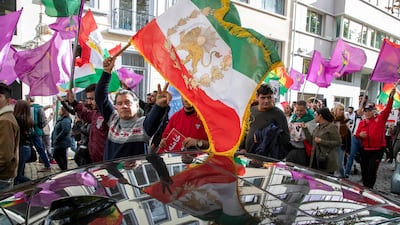
A protester holds a pre-Islamic Revolution Iranian flag during a demonstration in Brussels in support of the Iranians fighting for their freedom. AFP -
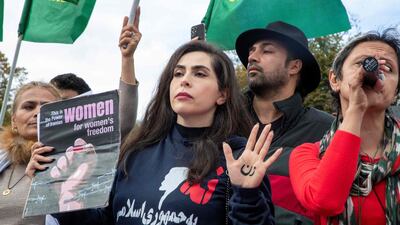
A protester wearing a top with a logo that reads 'No to an Islamic state" as she takes part in a rally in support of the Iranian people, in Brussels. AFP -
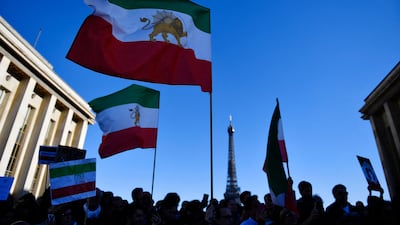
People wave the Shah-era Iranian flag during a protest in Paris. AFP -
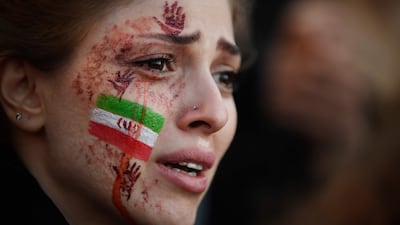
A woman shows her true colours in the protest against the Iranian government, in Paris. AFP -
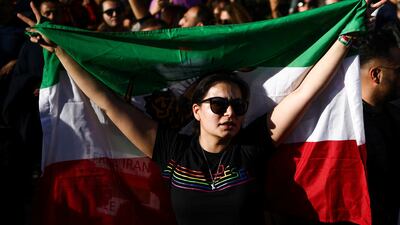
A woman holds a flag, as people protest against the Iranian regime outside Iran's embassy in central London. Reuters -
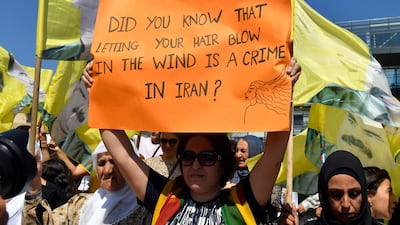
Supporters of the Kurdistan Workers' Party (PKK) carry placards and wave party flags in Beirut, during a protest against the death of Ms Amini. EPA -
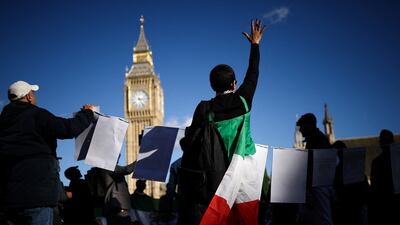
People demonstrate against the Iranian government outside the Houses of Parliament in London following the death of Amini. Reuters -
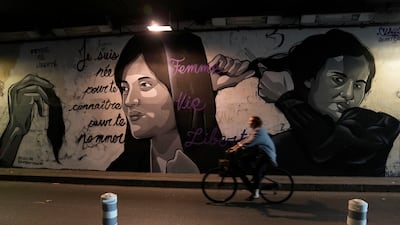
A mural in Paris depicts women cutting their hair to show support for Iranian protesters. AP -
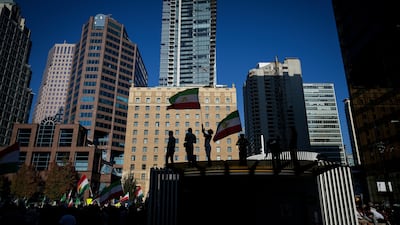
People take part in a rally against the Iranian government in Vancouver, Canada, on Saturday. AP -
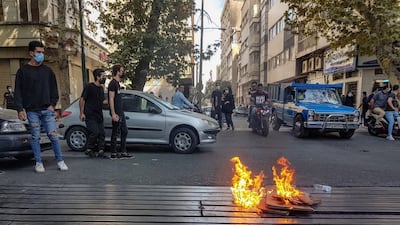
Protesters take to the streets of Tehran. EPA -
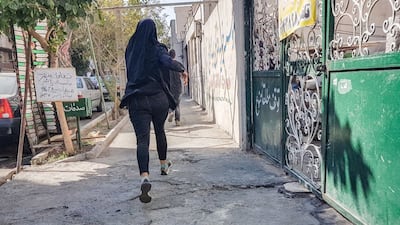
Iranian protesters run after clashing with with police. EPA -
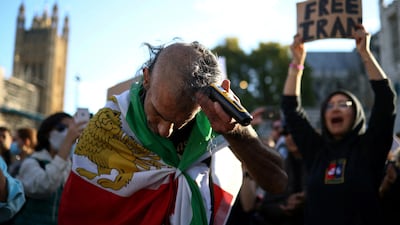
A protester shaves their head outside the Houses of Parliament in London. Reuters -
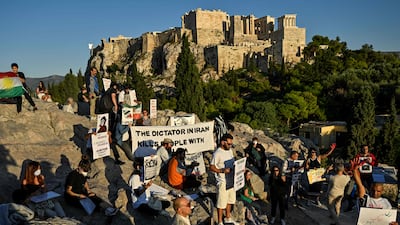
Iranians living in Athens hold a protest in solidarity. AFP -
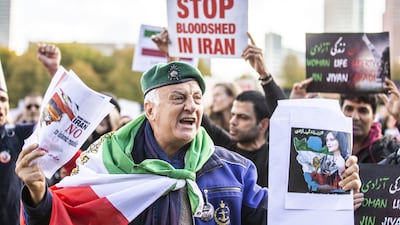
People take part in a rally in The Hague. AFP -
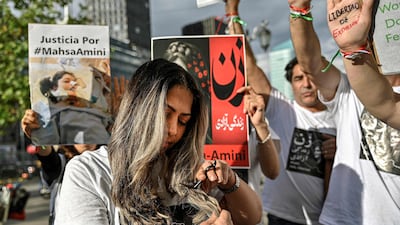
A woman cuts her hair during a demonstration in Santiago, Chile, by feminist groups and Iranian migrants in support of Iranian women following the death of Amini. AFP -
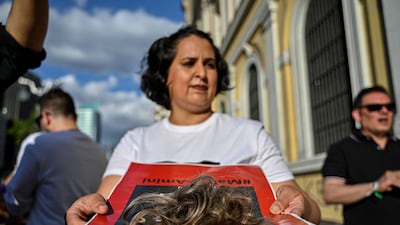
Members of feminist groups and Iranian migrants during the protests in Santiago. AFP -
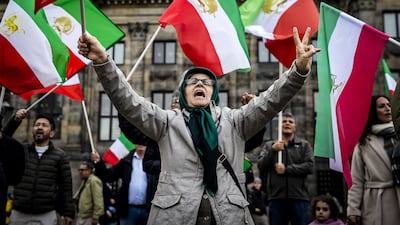
Iranian activists shout slogans during a protest against the government in Tehran, in Amsterdam, The Netherlands. EPA -
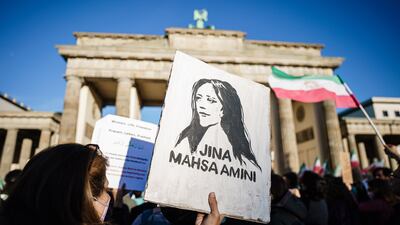
A protester holds a painted portrait of Mahsa Amini in Berlin, Germany. EPA -
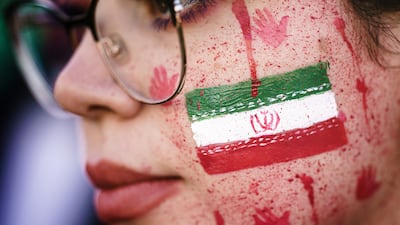
A protester shows red paint on her face, resembling blood splatters and bloody handprints next to the national Iranian emblem, during a rally in Berlin. EPA -
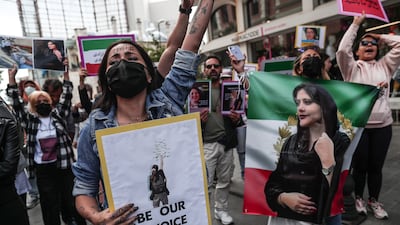
Iranian protesters shout slogan during a protest in Istanbul, Turkey. EPA -
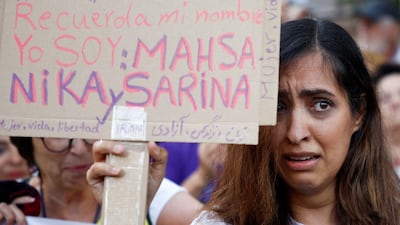
A woman holds a sign during a protest against the Iranian government, in front of the country's embassy in Madrid, Spain. The protests were triggered by the death of a young Iranian woman, Mahsa Amini, in police custody. Reuters -
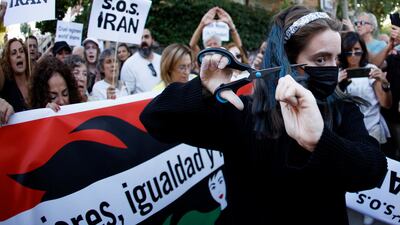
A woman cuts her hair during the protest in front of the Iranian embassy in Madrid. Reuters -
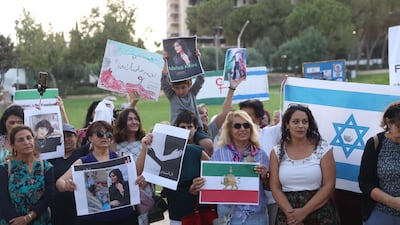
Israelis show their support for women in Iran as they hold up placards of Amini during a protest in Jerusalem. EPA -
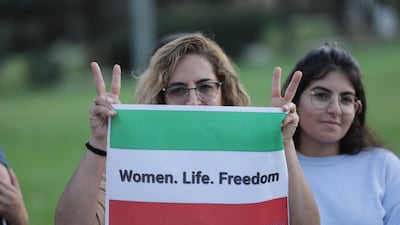
Amini, 22, was arrested in Tehran on September 13, 2022, by the morality police. She fell into a coma while in police custody and was declared dead on September 16. EPA -
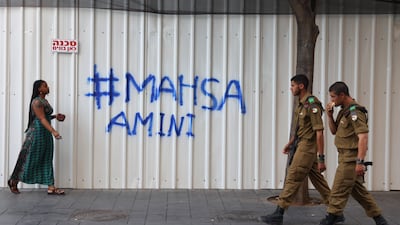
People walk by graffiti in support of the protests triggered by Amini's death, in Jerusalem. EPA -
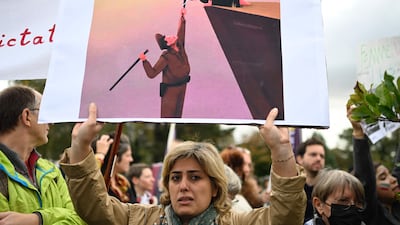
A protest in Nantes, western France, after the death of Amini in Iranian police custody. AFP -
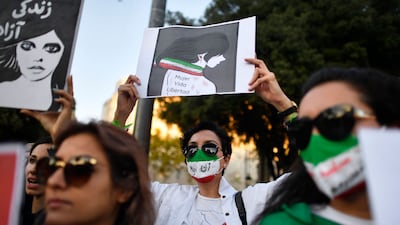
Women gather for a demonstration in Barcelona, Spain. AFP -
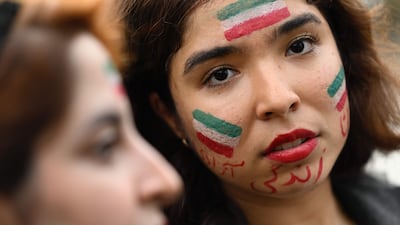
Demonstrators in Nantes. Amini's death has sparked a global protest movement. AFP -
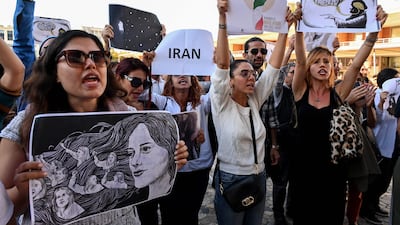
Women protest outside the town hall in in Montpellier, southern France. AFP -
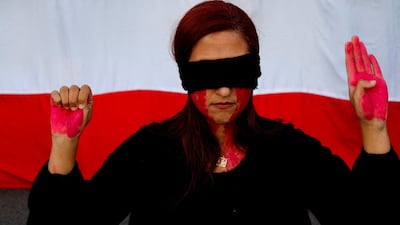
A woman at a protest in Catalunya Square, Barcelona. Reuters -
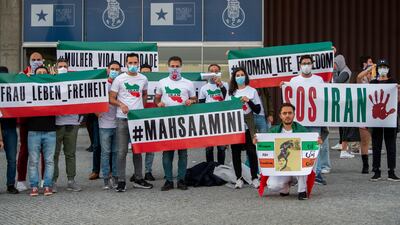
Campaigners and football fans protest at a Champions League match between Porto and Bayer Leverkusen at the Dragao stadium in Portugal. EPA -
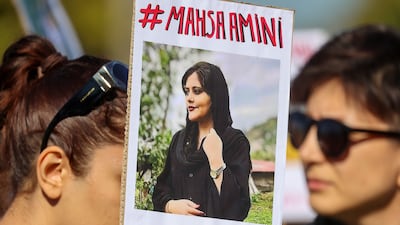
People hold placards during a demonstration in solidarity with the Iranian people near the European Parliament in Strasbourg, France. EPA -
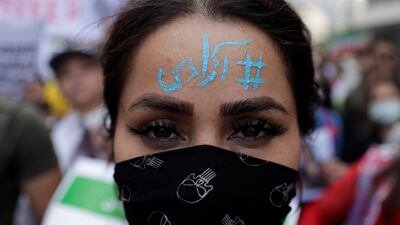
An Iranian woman living in Turkey with 'Freedom' written on her forehead takes part in a protest near the Iranian consulate in Istanbul. Reuters -
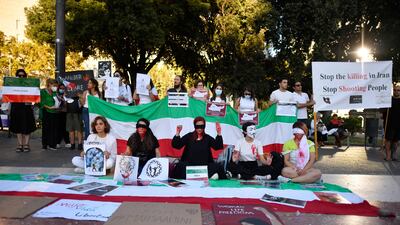
In Barcelona, protesters take part in a demonstration in support of Iranian women. AFP -
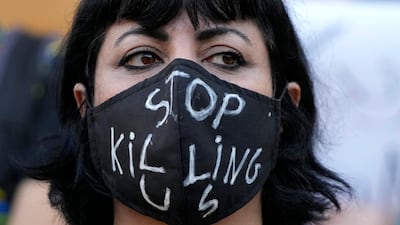
A Lebanese activist takes part in a protest in Beirut, triggered by the death of Amini, 22. AP -
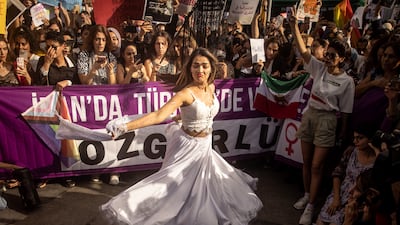
A Turkish protester takes off her head scarf while giving a performance in Instanbul during a protest against Iran over Amini's death. Getty -
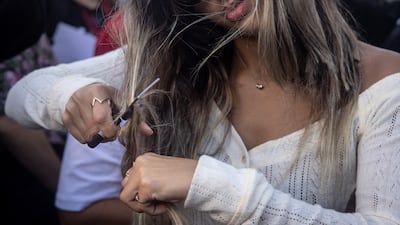
A woman in Istanbul cuts her hair during a protest against Iran. Getty -
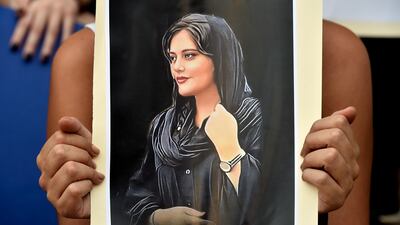
A Lebanese activist holds a poster depicting Amini during a protest in Beirut organised by feminist groups in support of women protesters in Iran. EPA -
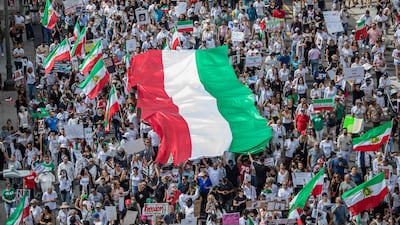
Demonstrators in Los Angeles, California, hold the Iranian flag during a protest against the government in Tehran. AFP -
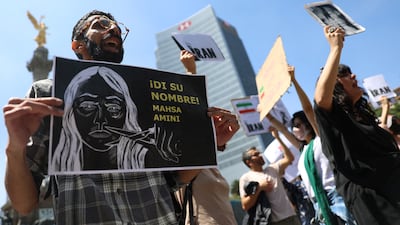
Demonstrators hold placards in Mexico City during a protest against Iran. Reuters -
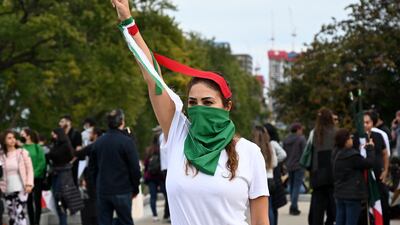
People demonstrate in Montreal, Canada, during a protest triggered by Amini's death. AFP -
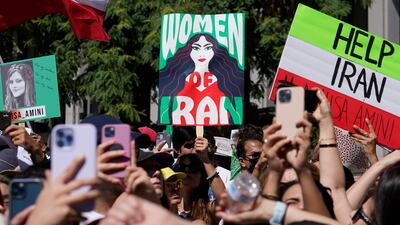
Iranian Americans participate in a rally in central Los Angeles, in solidarity with women in Iran. AP -
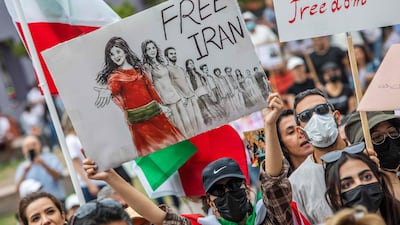
Demonstrators march during a protest in Los Angeles, California. AFP -
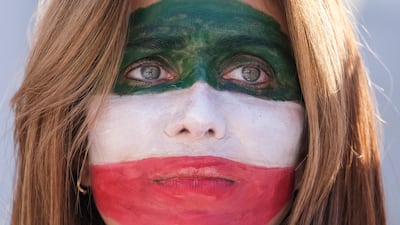
A woman with the colours of the Iranian flag painted on her face participates in a rally as thousands demonstrate in support of Iranian women in Los Angeles. EPA -
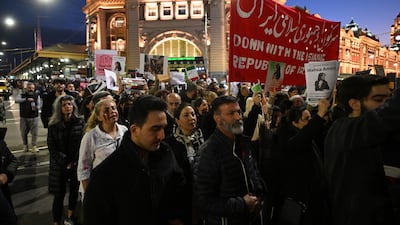
Australians protest over Amini's death in Melbourne. EPA -
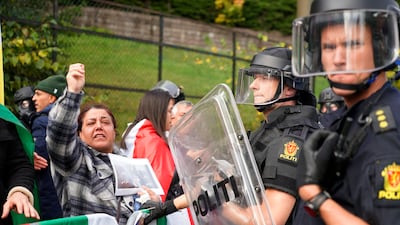
Police block protesters from entering Iran's embassy in Oslo, Norway. EPA -
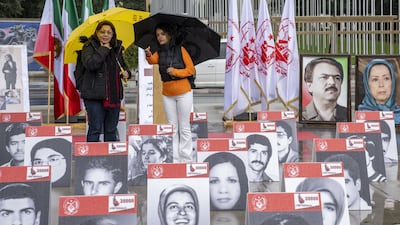
Demonstrators in front of the European headquarters of the UN in Geneva, Switzerland, during a rally against Iran. EPA -
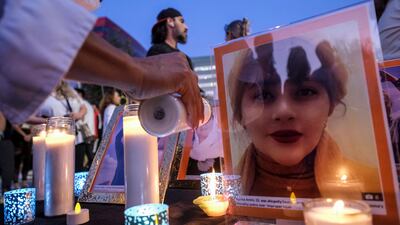
A candlelight vigil for Amini in Los Angeles. AFP -
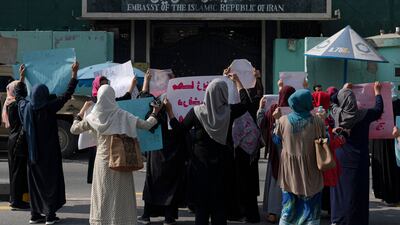
Afghan women hold placards as they take part in a protest in front of the Iranian embassy in Kabul. AFP -
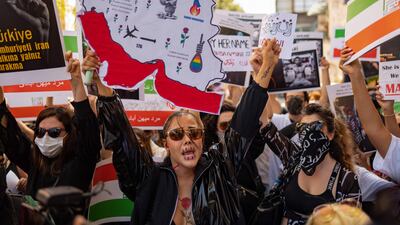
Protestors take part in a rally outside the Iranian consulate in Istanbul. AFP -
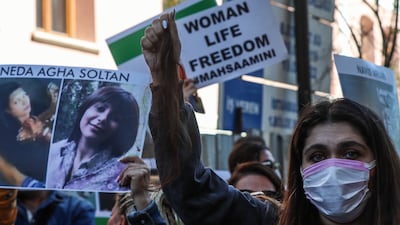
An Iranian woman shows a lock of hair she cut off during a protest outside the Iranian consulate in Istanbul. EPA -
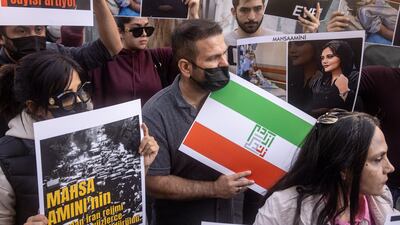
Demonstrators outside the Iranian consulate in Istanbul. Getty -
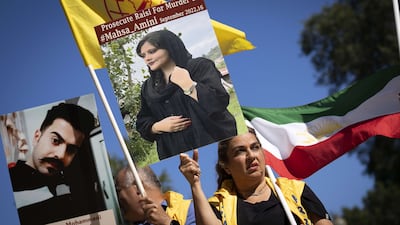
Iranian Americans rally on Capitol Hill in Washington to show support for protesters in Iran. AFP -
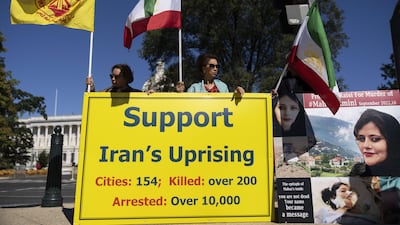
Protesters on Capitol Hill hold a sign condemning the crackdown by Tehran. AFP -
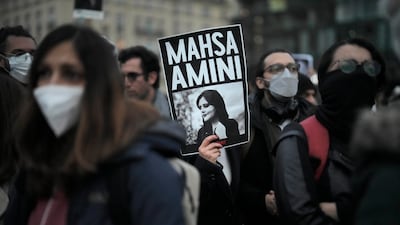
German demonstrators gather in Berlin after the death of Amini in Iranian police custody. AP -
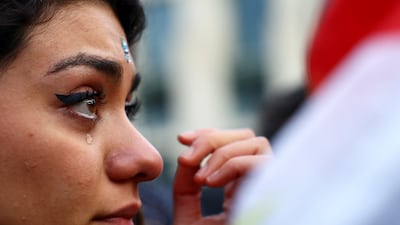
A protester cries during a rally in Berlin. Reuters -
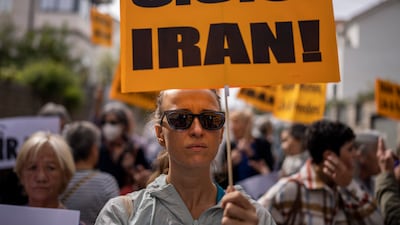
A demonstration in Madrid, Spain. Thousands have gathered in cities across Europe to support protests in Iran. AP -
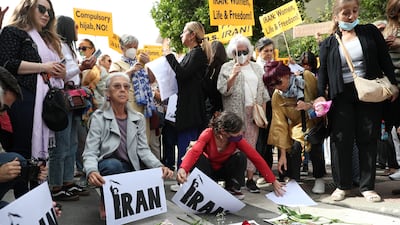
Demonstrators gather outside the Iranian embassy in Madrid. Reuters -
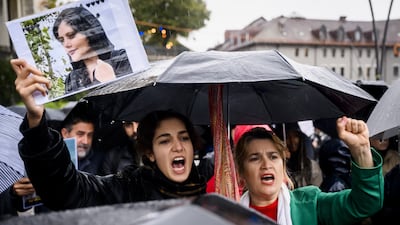
People take part in a protest in Lausanne, Switzerland. EPA -
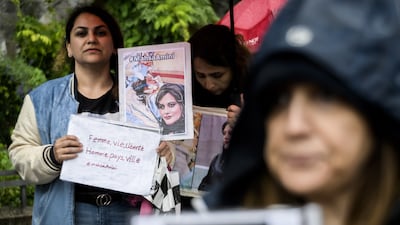
Protesters hold signs featuring images of Amini during the protest in the western Swiss city. EPA -
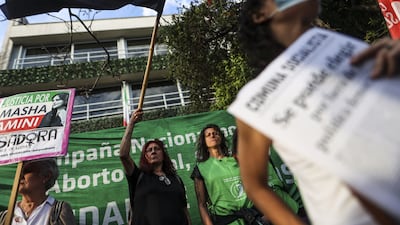
Demonstrators in front of the Iranian embassy in Buenos Aires, Argentina. EPA -
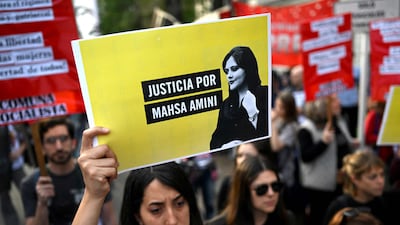
An activist outside the Iranian embassy in Buenos Aires, Argentina, with a sign that reads 'Justice for Mahsa Amini'. AFP -
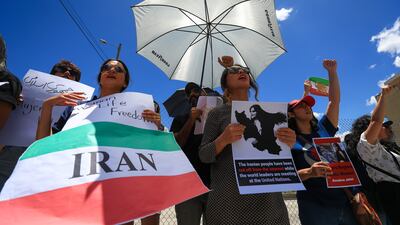
A demonstration against violence in Iran is held in Quito, Ecuador. The Iranian community in Ecuador protested outside the Iranian embassy. EPA -
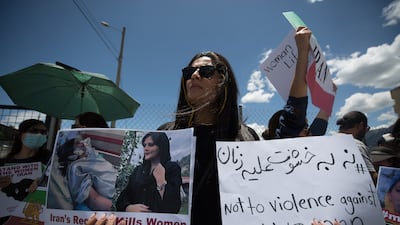
Protesters at a demonstration outside the Iranian embassy in Quito, Ecuador. EPA


Activist group "Tehran Youth" called for a nationwide general strike last Monday in response to security forces opening fire on Sanandaj crowds the night before. The call was heeded, especially in the west, with businesses shuttered and streets emptied across Kurdish cities.
But the crackdown continued.
Kimiya's family have told her they leave the house as little as possible, fearing they will be shot from above. Her grandmother, in her 80s, has left for Tehran, the only relative able to leave the city.
"We are both really torn up, as are all my family who emigrated."
Human rights activists say most of the protesters have been killed in minority areas of the country, including Sistan and Baluchestan province, where upwards of 80 people were recently killed in what has come to be called "Bloody Friday".
Nationwide, at least 30 children have also been confirmed killed, including a 7-year-old schoolgirl in the Kurdish city of Bukan.
The government focuses its bloody response in marginalised areas to intimidate Baloch, Arab and Kurdish residents, Rebin Rahmani, founder of the France-based Kurdistan Human Rights Network told The National.
"Crackdowns in the Kurdish region have always been harsher than other regions in the country," he added, citing "continuous discontent in the region against central government policies".
A war against the people
Arash, 35, lives in the north of Iran, not far from the Caspian Sea.
He spends most of his time online, sharing videos and reports of the nationwide protests. He complains often about the patchy internet connection, which he says has been awful since the protests erupted.
“I’m not a hero or a genius but I want to do my best for the freedom process. I think for now, I’m more useful in the background.”
Several people have been shot dead in the provincial capital of Rasht, he says, and others in smaller towns and cities.
“It’s a war against our people. That’s not protest control, it’s war.”
“The regime has army weapons and protesters don’t have a pistol.”
As we speak, news arrives of a fire at Tehran's notorious Evin prison spreads online, prompting fear and fury, already heightened after the death of a schoolgirl following a raid on her school in the northern city of Ardabil.
"Only an Iranian knows the real face of this Islam. The regime is awful. It’s non-human behaviour."
Another protester, who didn't want to give their name, had a simple message.
“Write that Iran is steeped in blood.”

