• Iranian soldiers fire a missile in Baluchestan, near the shore of the Sea of Oman, during a military exercise on November 8, 2021. Iranian Army via AFP
    Iranian soldiers fire a missile in Baluchestan, near the shore of the Sea of Oman, during a military exercise on November 8, 2021. Iranian Army via AFP
  • Iranian troops fire a Ghaidr missile during the second day of military exercise in the northern Sea of Oman, on November 8, 2021. Iranian Army via EPA
    Iranian troops fire a Ghaidr missile during the second day of military exercise in the northern Sea of Oman, on November 8, 2021. Iranian Army via EPA
  • Iranian Army and Air Force personnel work on missile air-defence systems during an exercise at an undisclosed site in Iran on October 21, 2021, when the country began a nationwide air force drill. Iranian Army via EPA
    Iranian Army and Air Force personnel work on missile air-defence systems during an exercise at an undisclosed site in Iran on October 21, 2021, when the country began a nationwide air force drill. Iranian Army via EPA
  • One week earlier, it had conducted a massive air defence exercise, state media reported. Iranian Army via EPA
    One week earlier, it had conducted a massive air defence exercise, state media reported. Iranian Army via EPA
  • Iranian Air Force personnel work on air defence missiles during a nationwide drill on October 21, 2021. Iranian Army via AP
    Iranian Air Force personnel work on air defence missiles during a nationwide drill on October 21, 2021. Iranian Army via AP
  • Iran holds a major air defence drill. In this image, made available on October 12, 2021, missiles are launched during a joint exercise between the Iranian Army and the country’s Islamic Revolutionary Guard Corps, in the desert of central Iran. Iranian Army via EPA
    Iran holds a major air defence drill. In this image, made available on October 12, 2021, missiles are launched during a joint exercise between the Iranian Army and the country’s Islamic Revolutionary Guard Corps, in the desert of central Iran. Iranian Army via EPA

US envoy rules out lifting sanctions on Iran's Revolutionary Guard


  • English
  • Arabic

The US will maintain sanctions on Iran's powerful Revolutionary Guard paramilitary force even if there is a deal to limit the country's nuclear programme, US special envoy Robert Malley said on Sunday.

Iran has insisted that taking the Revolutionary Guard Corps (IRGC) off a US terrorist list be part of a revived nuclear accord, which diplomats say is close.

But Mr Malley said the force's designation as foreign terrorist organisation (FTO) would not be lifted.

“The IRGC will remain sanctioned under US law and our perception of the IRGC will remain,” he told the Doha Forum international conference in the Qatari capital.

A senior adviser to Iran's supreme leader told the conference that a nuclear deal between Tehran and world powers was imminent but could only happen if the US showed political will.

A handout video grab by the official website of the Iranian military official website Imamedia shows surface-to-surface Khaibar-buster missiles launched in an undisclosed location in Iran. EPA

“Yes, it's imminent. It depends on the political view of the United States,” Kamal Kharrazi said.

He said it was vital for Washington to remove the FTO designation against the Revolutionary Guard.

“IRGC is a national army and a national army being listed as a terrorist group certainly is not acceptable,” he said.

Former US president Donald Trump withdrew from the 2015 nuclear deal reached under the Obama administration.

The new version of that deal would curb Iran's nuclear programme in exchange for lifting sanctions that have damaged the country's economy and caused shortages in essential items such as food and medicine.

The EU's co-ordinator for talks met Iran's chief negotiator on Sunday in Tehran, according to Iranian state media.

European Union diplomat Enrique Mora, who co-ordinates talks between Iran and the US, arrived late on Saturday and met Iran's chief negotiator Ali Bagheri, according to the IRNA agency. Mr Mora said in a tweet before his trip that he was “working on closing the remaining gaps".

“Now we are very close to an agreement and I hope it will be possible,” senior EU diplomat Josep Borrell said on Saturday, adding that he believed a deal could be struck in “a matter of days".

However, Mr Malley dampened expectations saying he “can't be confident it is imminent” because negotiators thought they were close several months ago.

Earlier this week, US military Central Command head Gen Kenneth McKenzie said Iranian proxy attacks have been calibrated at a “low enough level” to avoid disrupting the continuing talks.

“Their intent is to do it at a low-enough level that it will not, in their view at least, disrupt the negotiating process. In my judgment, that’s a dangerous position for them to have,” Gen McKenzie said before the US Senate on Tuesday.

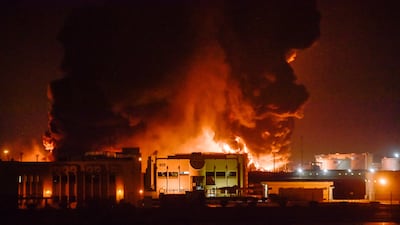
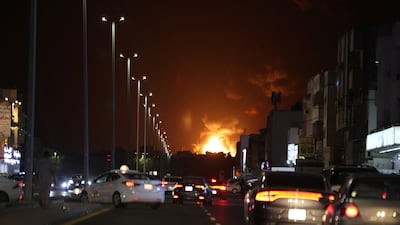
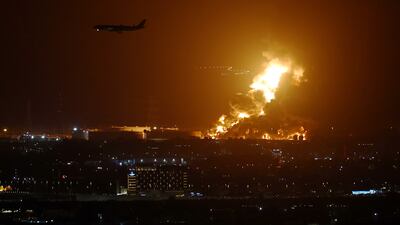
On Friday, Iran-backed Houthi rebels in Yemen carried out attacks on Saudi Arabia causing a fire at the Aramco fuel depot in Jeddah. The attacks were reportedly launched from Yemen's Hodeidah. The Saudi-led coalition responded by carrying out air strikes on Hodeidah to neutralise what it called the “sources of threat” to the kingdom.

  • Smoke and flames rise above Saudi Arabia's Red Sea coastal city of Jeddah following a Houthi attack on an Aramco oil facility. AFP
    Smoke and flames rise above Saudi Arabia's Red Sea coastal city of Jeddah following a Houthi attack on an Aramco oil facility. AFP
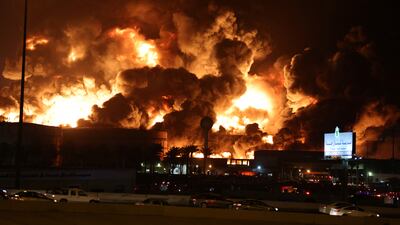
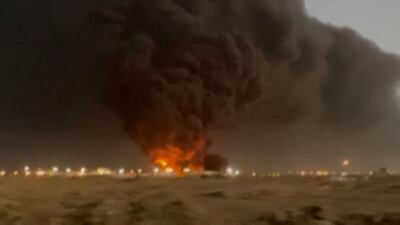
  • A view of a fire at Saudi Aramco's petroleum storage facility in Jeddah, Saudi Arabia, after the Houthi attack. Reuters
    A view of a fire at Saudi Aramco's petroleum storage facility in Jeddah, Saudi Arabia, after the Houthi attack. Reuters
  • A fire broke out at Aramco's petroleum storage facility in Jeddah, Saudi Arabia, after an attack by Yemen's Houthi rebels. Reuters
    A fire broke out at Aramco's petroleum storage facility in Jeddah, Saudi Arabia, after an attack by Yemen's Houthi rebels. Reuters
  • A view of the fire at the Aramco petroleum storage facility in Jeddah. Reuters
    A view of the fire at the Aramco petroleum storage facility in Jeddah. Reuters
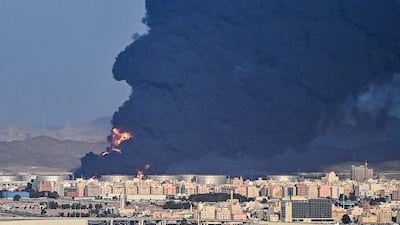
  • The Aramco petroleum storage facility is close to the Formula One circuit in Jeddah. Getty Images
    The Aramco petroleum storage facility is close to the Formula One circuit in Jeddah. Getty Images
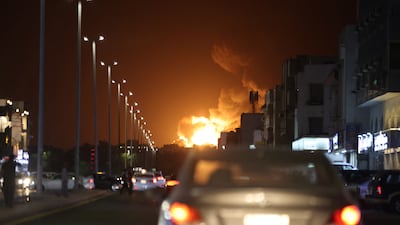
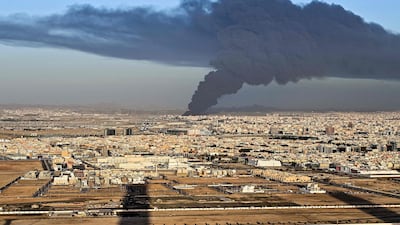
  • Smoke billows from the storage facility in the Red Sea coastal city of Jeddah. AFP
    Smoke billows from the storage facility in the Red Sea coastal city of Jeddah. AFP
  • Yemen's Houthi rebels have claimed responsibility for the attack on the Aramco facility in Jeddah. AFP
    Yemen's Houthi rebels have claimed responsibility for the attack on the Aramco facility in Jeddah. AFP
  • The attack was part of a wave of drone and missile assaults on Saudi Arabia on Friday. AFP
    The attack was part of a wave of drone and missile assaults on Saudi Arabia on Friday. AFP
Essentials

The flights
Whether you trek after mountain gorillas in Rwanda, Uganda or the Congo, the most convenient international airport is in Rwanda’s capital city, Kigali. There are direct flights from Dubai a couple of days a week with RwandAir. Otherwise, an indirect route is available via Nairobi with Kenya Airways. Flydubai flies to Kinshasa in the Democratic Republic of Congo, via Entebbe in Uganda. Expect to pay from US$350 (Dh1,286) return, including taxes.
The tours
Superb ape-watching tours that take in all three gorilla countries mentioned above are run by Natural World Safaris. In September, the company will be operating a unique Ugandan ape safari guided by well-known primatologist Ben Garrod.
In the Democratic Republic of Congo, local operator Kivu Travel can organise pretty much any kind of safari throughout the Virunga National Park and elsewhere in eastern Congo.

Updated: March 27, 2022, 11:31 AM