
Update: Morad Tahbaz on hunger strike
A British-US national released from Evin Prison in Iran only to find himself back in custody two days later was on Sunday taken from the notorious jail to a hotel in Tehran.
Wildlife conservationist Morad Tahbaz, 66, who also holds Iranian citizenship, was first allowed out on the same day last week that charity worker Nazanin Zaghari-Ratcliffe and retired civil engineer Anoosheh Ashoori were released and then allowed to return to Britain.
A Foreign Commonwealth and Development Office spokesman confirmed that Mr Tahbaz was now in a hotel in the capital.
"We have been in touch with Morad's family throughout the day and continue to lobby the Iranian authorities at the highest levels to allow him to return home immediately, as the Iranian government committed to doing," the spokesman said.
Britain said it secured his furlough, along with the release and return of the two other dual nationals.
This came after the UK finally agreed to settle a £400 million ($526.7m) debt from the 1970s, which fuelled tension between the countries for decades.
Mr Tahbaz, who has cancer, was arrested during a crackdown on environmental activists in January 2018.
He is a prominent conservationist and board member of the Persian Wildlife Heritage Foundation, which protects endangered species.
Mr Tahbaz was sentenced to 10 years in prison with his colleagues on vague charges of spying for the US and undermining Iran's security.
The UK and the US are working closely with each other to try to secure his permanent release.
Family members hoped that Mr Tahbaz, who was born in Hammersmith, west London, would be freed under the deal under which Mr Ashoori and Ms Zaghari-Ratcliffe arrived back in the UK early on Thursday.
-
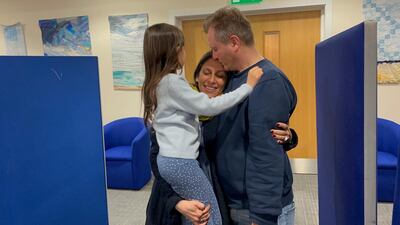
Nazanin Zaghari-Ratcliffe reunited with her husband, Richard Ratcliffe, and their daughter, Gabriella, after being held for six years in Iran. Photo: @TulipSiddiq via Twitter -
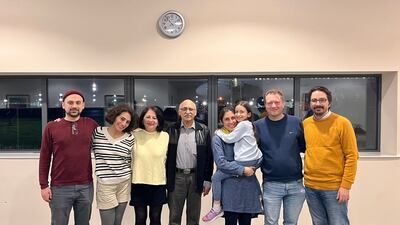
Ms Zaghari-Ratcliffe and Anoosheh Ashoori, centre, with their families. Photo: @lilika49 via Twitter -
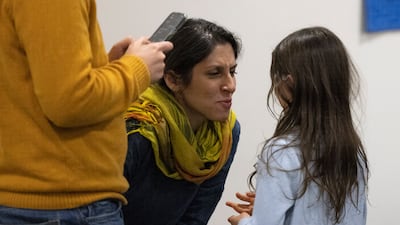
Nazanin Zaghari-Ratcliffe with her daughter at RAF Brize Norton airbase. EPA -
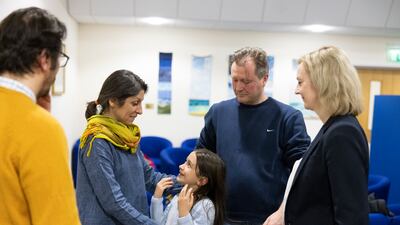
Nazanin Zaghari-Ratcliffe with her daughter Gabriella, husband Richard and British Foreign Secretary Liz Truss at RAF Brize Norton. EPA -
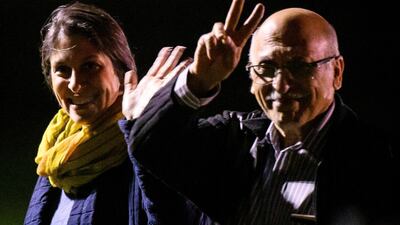
Nazanin Zaghari-Ratcliffe and Anoosheh Ashoori were released in March 2022. Reuters -
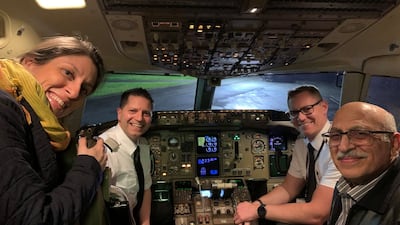
Ms Zaghari-Ratcliffe and Mr Ashoori with the cabin crew in Brize Norton. Reuters -
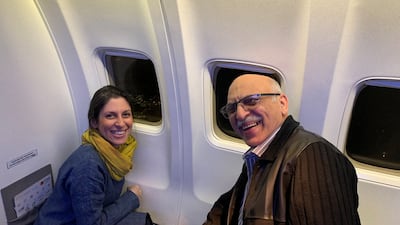
Ms Zaghari-Ratcliffe and Mr Ashoori as their plane flies over London. Reuters -
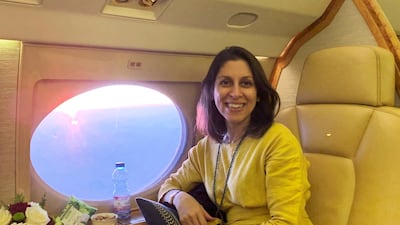
Ms Zaghari-Ratcliffe sits in a plane en route to London after taking off from Teheran. Reuters -
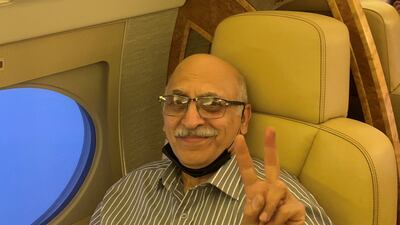
Mr Ashoori gestures as he sits in the plane heading to London. Reuters -
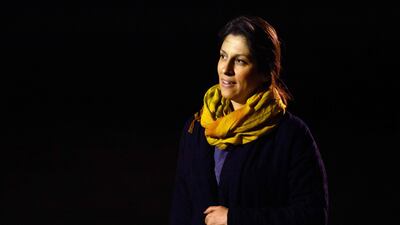
Ms Zaghari-Ratcliffe was arrested in Tehran in April 2016 as she prepared to fly back to the UK, having taken her daughter Gabriella to see relatives. AFP -
She was accused of plotting to overthrow the Iranian government and sentenced to five years in jail, spending four years in Tehran’s Evin Prison and one under house arrest. Photo: Tulip Siddiq / Twitter -
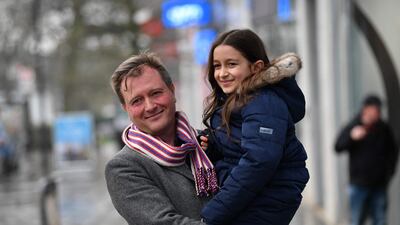
Richard Ratcliffe with daughter Gabriella outside their house in London on Wednesday. AFP -
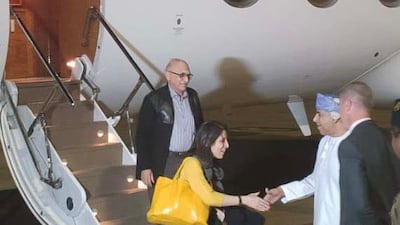
Ms Zaghari-Ratcliffe and Mr Ashoori arrive in Oman en route to the UK. Photo: @badralbusaidi / Twitter -
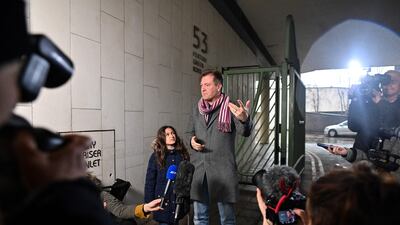
Mr Ratcliffe went on a hunger strike in October 2021 in protest at the UK government’s failure to secure his wife's release. AFP -
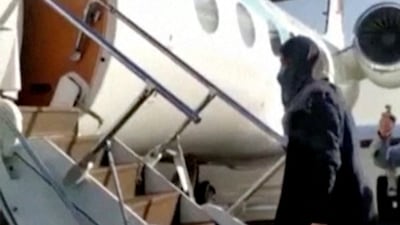
Ms Zaghari-Ratcliffe boards a plane as she prepares to leave Tehran. Reuters -
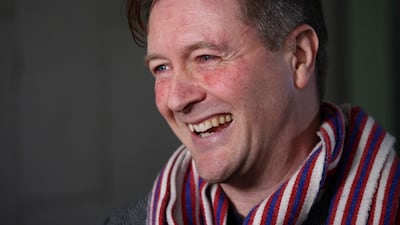
Mr Ratcliffe told the media that the family plan to find solace elsewhere for a few days. Reuters -
Gabriella was not yet two when her mother was arrested. Photo: Tulip Siddiq / Twitter


It is not clear if Mr Tahbaz has been fitted with an ankle tag by the Iranians, which the UK foreign office had been told was set to happen.
"We continue to work night and day to secure the release of our wrongfully detained citizens, including US-UK citizen Morad Tahbaz," a US State Department spokesman said.
"Simply put: Iran is unjustly detaining innocent Americans and others and should release them immediately."

