

After almost a week of scorching temperatures in Cairo, the mercury dropped by more than 12°C on Tuesday, as Storm Daniel arrived over Egypt's capital.
Storm Daniel has wreaked havoc in its path around the Mediterranean. A deluge in north-east Libya has killed at least 2,000 people in recent days, with 10,000 missing.
Earlier, parts of south-eastern Europe were badly affected.
It arrived over Egypt's Mediterranean coast on Monday evening, hours after a notice from the Egyptian Meteorological Authority. The authority said Storm Daniel has now lost some of its strength.
By Tuesday morning, sandstorms stirred up by Daniel had created a thick layer of dust and fog over Cairo, causing the temperature to drop from the low 40°C on Monday to 28°C by Tuesday.
Photos and videos posted by Cairo residents on social media also showed that light rain had fallen in some of the city’s western outskirts, particularly in the districts of Sheikh Zayed and 6th of October.
Strong winds blew across the city, after days of still weather.
The effects were more noticeable on Egypt’s north coast where some holidaymakers remained, despite Daniel's approach.
A resident of the Ras Al Hikma area along the north coast, about 200km from the Libyan border, said her home was hit by strong winds and heavy rainfall.
A video she shared with The National showed the palm trees outside her home being violently shaken by strong winds amid torrential rain.
Yet resorts further east, closer to the port city of Alexandria, experienced little more than a thick fog over the sea.
The poor visibility in Cairo was due to arrival of large quantities of dust carried by Daniel, picked up when the storm passed over Egypt's Western Desert, after crossing from Libya.
Dust is expected to remain over Cairo until the end of the week when light to moderate rainfall is expected to wash it away and usher in the cooler autumn months, the meteorological authority said.
In Libya, Storm Daniel caused flash floods and brought destruction to areas including the cities of Benghazi, Susa, Bayda, Al Marj and Derna.
In Derna, a minister with Libya's eastern government reported more than 1,000 people dead on Tuesday.
“I returned from Derna. It is very disastrous. Bodies are lying everywhere – in the sea, in the valleys, under the buildings,” said Hichem Chkiouat, Minister of Civil Aviation and a member of the emergency committee.
“The number of bodies recovered in Derna is more 1,000.”
Mr Chkiouat said a quarter of Derna's buildings had “disappeared” and that the final death toll would be “really, really big”.
-
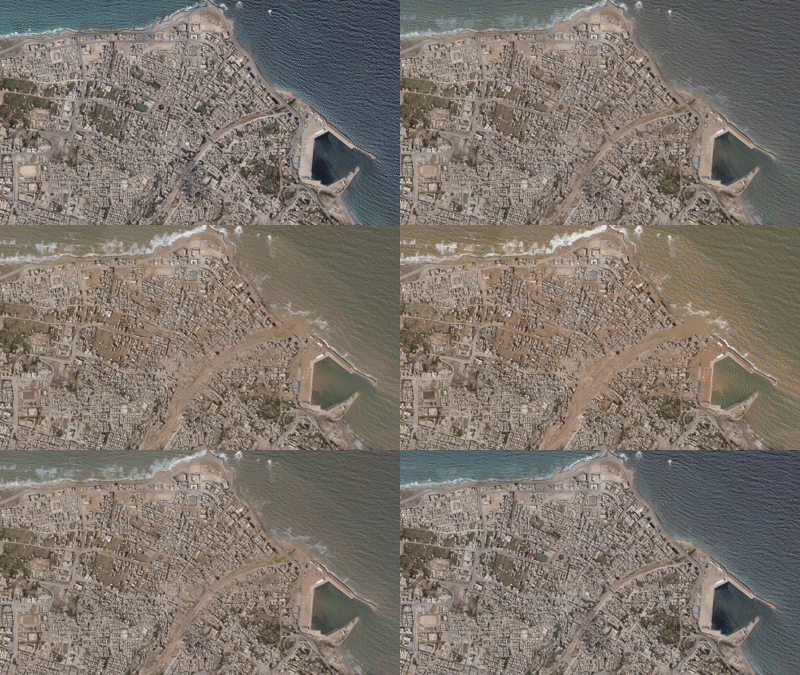
Before and after pictures after a powerful storm and heavy rainfall hit the country, in Derna. Reuters/ Planet Labs -

A damaged car in Derna, Libya, after a powerful storm and heavy rain hit the country. Reuters -
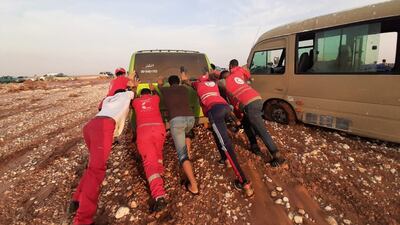
Members of Libyan Red Crescent Ajdabiya push a vehicle through the mud in an area affected by flooding. Reuters -
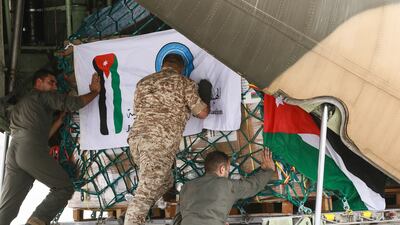
Workers at Marka military airport in Amman, Jordan, load a military plane with humanitarian aid for Libya. AFP -
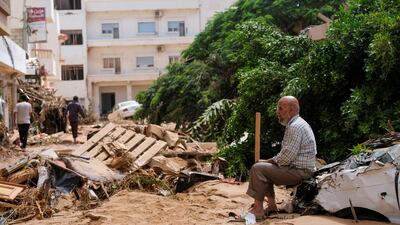
Storm damage in Derna, Libya. Reuters -
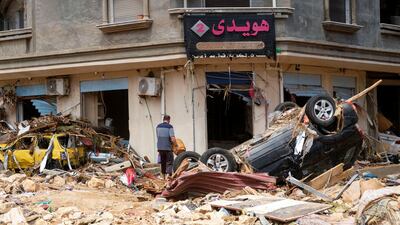
A man surveys the damage in Derna after a powerful storm and heavy rainfall hit Libya. Reuters -

An apartment block after floodwaters washed away surrounding homes in Derna, eastern Libya. AFP -

A car crushed against the side of a building in the aftermath of flash-floods in Derna. AFP -
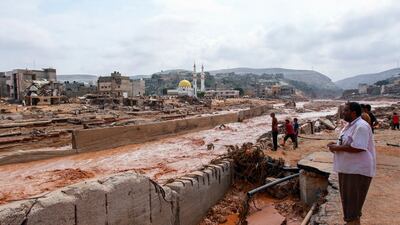
Libyans survey the devastation from floods caused by Storm Daniel in Derna. AFP -
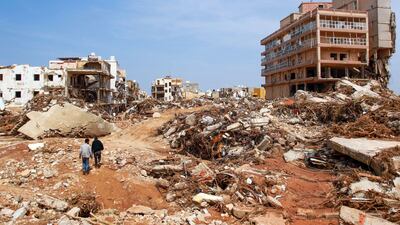
Floodwaters washed away entire neighbourhoods in Derna, leaving thousands of people dead or missing, authorities said. AFP -
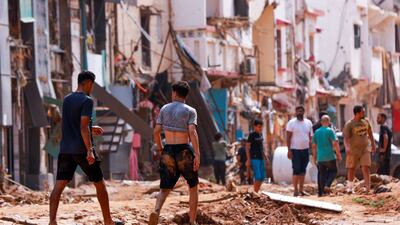
People survey the flood damage in Derna, which was most affected. AFP -
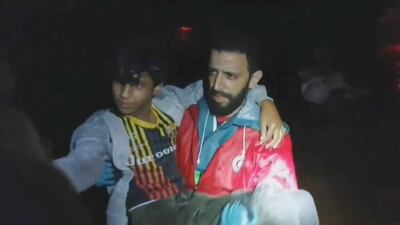
Members of the Libyan Red Crescent rescuing people from floods at an unidentified location in eastern Libya. AFP -
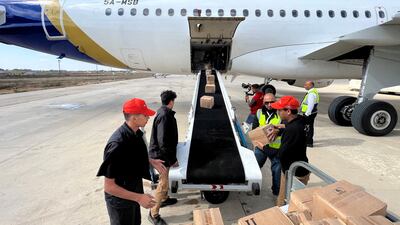
Members of Libya's Youth Hostels Association unload medical aid from a plane at Al Abraq Airport, for the victims of the floods. Reuters -
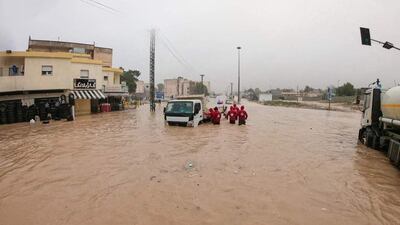
Roads engulfed by floodwater in eastern Libya after Storm Daniel left its mark. AFP -
Thousands remain unaccounted for in eastern Libya amid widespread and heavy flooding. AFP -
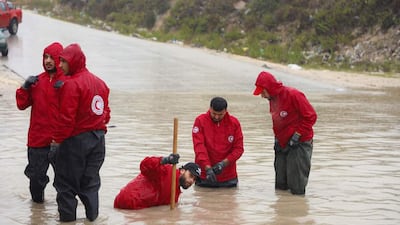
The collapse of nearby dams sent a wall of water that 'erased everything in its way', said a survivor in Derna. AFP -
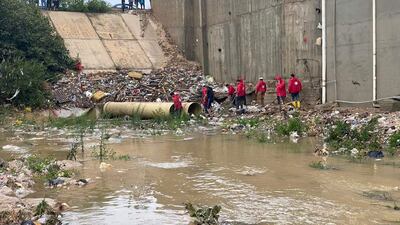
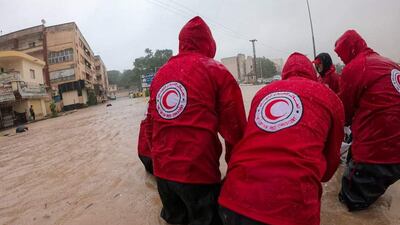
Members of the Libyan Red Crescent working on opening roads engulfed by floods in eastern Libya. AFP -
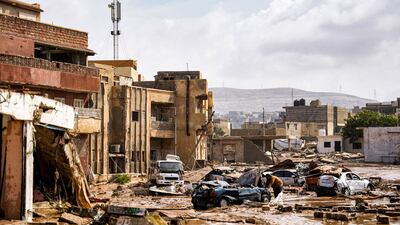
Damage in Benghazi in the wake of Storm Daniel. AFP -

Devastating floods swept away entire neighbourhoods in several coastal towns. AFP -
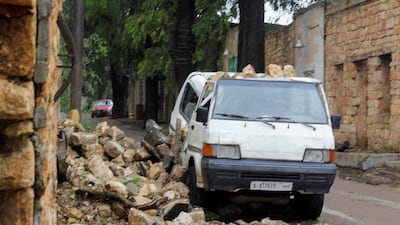
A damaged van in Shahat city. Reuters -
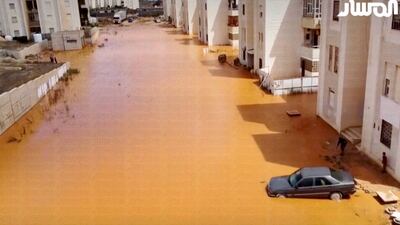
Flooded streets in Marj. AP -
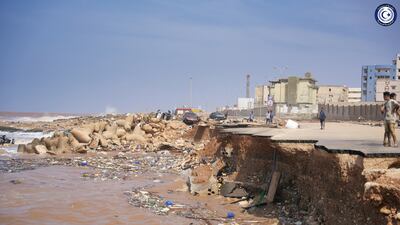
A seaside road collapsed after heavy flooding caused by Storm Daniel in Derna. AP -
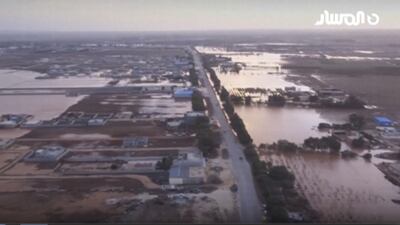
Flooding in the aftermath of Storm Daniel in Marj. Many of the thousands missing are believed to have been carried away by the waters. AP -
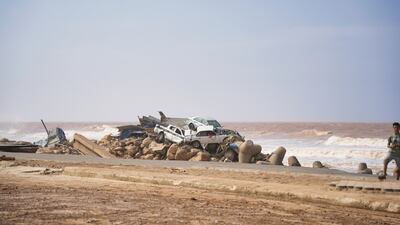
Cars piled on the sea bank in Derna, after being carried away by floodwater. AP -
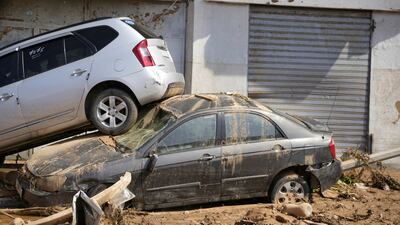
Cars stacked on top each other, after being washed away by floodwaters in Derna. AP -

A car propped up against a shopfront in Derna. AP -
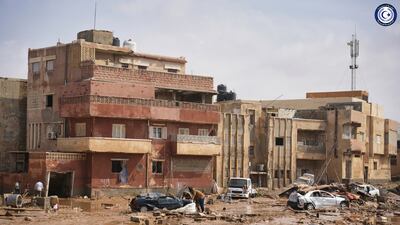
The damage in Derna is widespread. AP -
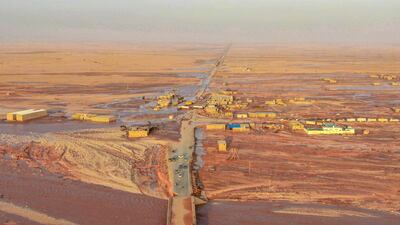
Flooding caused by Storm Daniel in Al Mukhaili, Libya. Reuters -
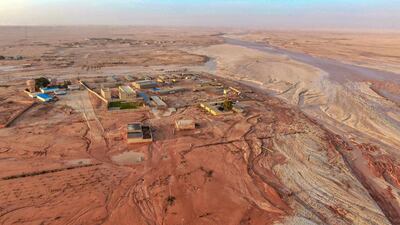
Storm Daniel broke dams and swept away entire neighbourhoods in the east of the country. Reuters -
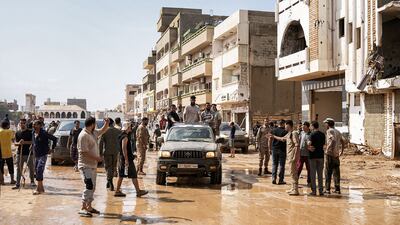
Streets flooded as a result of Storm Daniel in Benghazi. AFP -
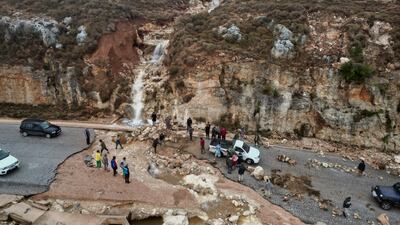
People stranded after Storm Daniel caused heavy rainfall in Shahat. Reuters -

A road in Shahat badly damaged by the storm. Reuters -
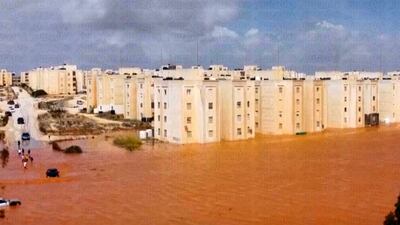
A residential street flooded in Marj. AP


Rescue efforts were under way to rescue the thousands of citizens reported missing in the wake of the destruction.
Daniel arrived three days after a 6.8 magnitude earthquake hit Morocco. It was the country’s deadliest earthquake in more than six decades that has claimed the lives of more than 2,800, with rescue efforts continuing.
The UAE has sent emergency aid to both Morocco and Libya.
Condolences and aid were also sent by other Arab leaders.
On Tuesday, Egyptian president Abdel Fattah El Sisi announced a three-day mourning period for the victims of both disasters.

