

While for most Egyptians Ramadan is associated with the crescent moon, the iftar cannon and fanous lanterns, for thousands of people in Alexandria, the holy month is also the time of the beloved El Falaki football tournament.
After being cancelled for the past two years because of Covid-19 restrictions, the annual event — which has been held in the Mediterranean port city since 1976 — returned this Ramadan to the delight of locals who turned out in their thousands.
-
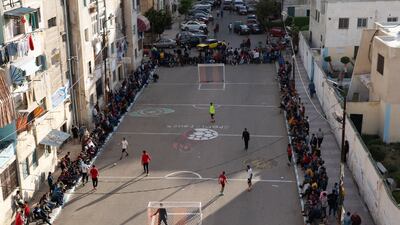
The Al Falaki tournament, Egypt's oldest Ramadan street football competition, is held in Alexandria. All photos by Mahmood Nasr/The National -
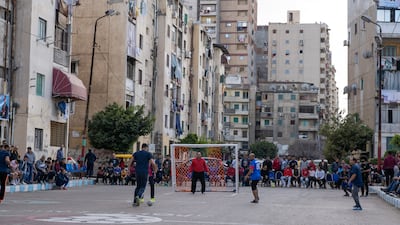
The Al Falaki tournament, Egypt's oldest Ramadan street football competition, is held in Alexandria. -

The Al Falaki tournament, Egypt's oldest Ramadan street football competition, is held in Alexandria. -
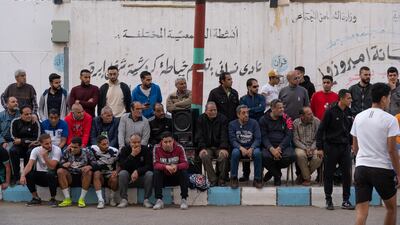
The Al Falaki tournament, Egypt's oldest Ramadan street football competition, is held in Alexandria. -
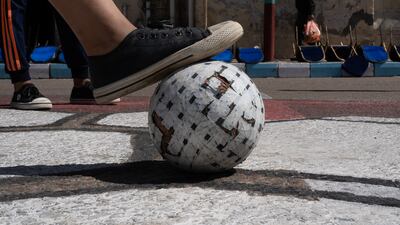
The Al Falaki tournament, Egypt's oldest Ramadan street football competition, is held in Alexandria. -
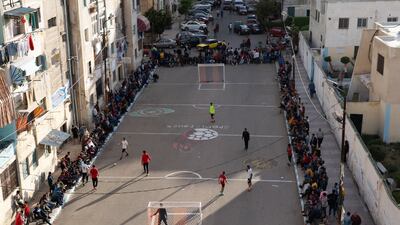
The Al Falaki tournament, Egypt's oldest Ramadan street football competition, is held in Alexandria. -
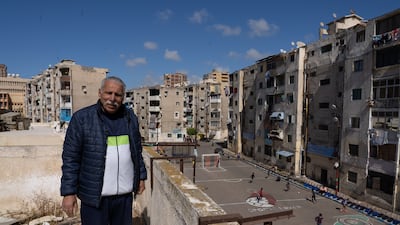
The Al Falaki tournament, Egypt's oldest Ramadan street football competition, is held in Alexandria. -

The Al Falaki tournament, Egypt's oldest Ramadan street football competition, is held in Alexandria. -
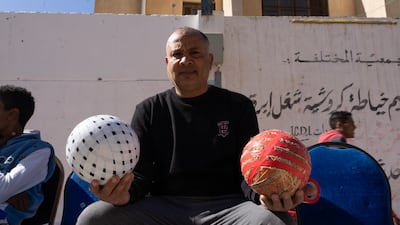
The Al Falaki tournament, Egypt's oldest Ramadan street football competition, is held in Alexandria. -
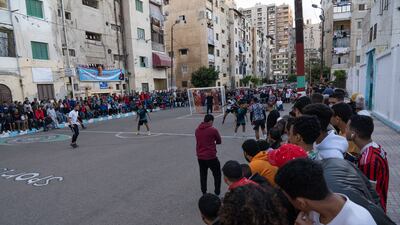
The Al Falaki tournament, Egypt's oldest Ramadan street football competition, is held in Alexandria. -
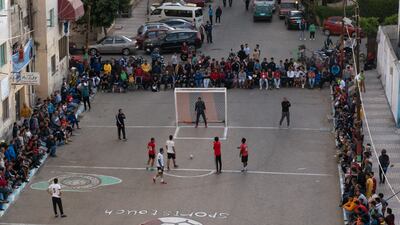
The Al Falaki tournament, Egypt's oldest Ramadan street football competition, is held in Alexandria. -
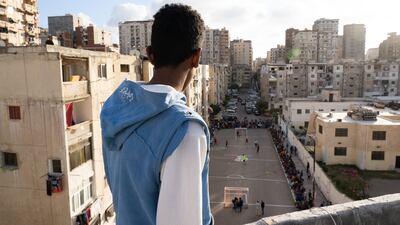
The Al Falaki tournament, Egypt's oldest Ramadan street football competition, is held in Alexandria. -
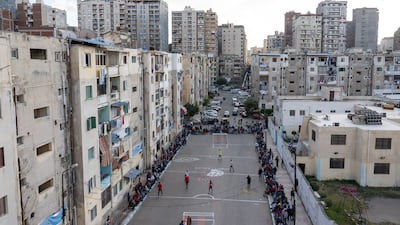
The Al Falaki tournament, Egypt's oldest Ramadan street football competition, is held in Alexandria. -
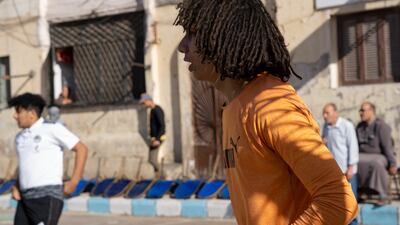
The Al Falaki tournament, Egypt's oldest Ramadan street football competition, is held in Alexandria.


The tournament was founded by four of Alexandria's most avid football fans, who wanted to give locals a platform upon which to play the sport and compete.
Named after two of its founders, brothers El Sayed and Loza El Falaki, to this day the tournament takes place in its historic home — the Lambroso Residences of Alexandria's Hadra Al Qibliya district.
“We launched the tournament to make people happy, first and foremost,” Mohamed Shaheen, the last surviving founder, told The National.
“There was a demand for a platform for people to play football and though our experience was limited in organising these kinds of events at the time, the first round was a smashing success,” he said.
The tournament is now made up of five leagues, categorised by age. A junior league features eight teams between the ages of 12 and 14. Another includes anyone above the age of 15. There are also two senior leagues, one with a minimum age of 35 and another for over-45s, which launched this year.
However, the tournament’s first league — the highlight of the 30-day event and the one most closely followed by spectators — has no age limits, allowing teams to choose their players freely.
Improvised footballs
The tournament is also known for its use of a “sock ball”. This is a crude football that local players — many of whom are poor — use because they often cannot afford a regulation ball.
When the tournament was first held, the ball was made of sponges formed into a sphere with thick string wound around them, then covered in industrial adhesive to hold it all together, Mr Shaheen said.
After two years however, they decided to switch to a softer material because the dried adhesive proved too hard on the players’ feet.
Today, players at the Falaki tournament use a size 3 basketball — much smaller than the footballs usually seen on professional pitches — wrapped in plastic tape to reduce its bounciness.
The ball has to be adjusted because the tournament is played on an asphalt pitch, Mr Shaheen said.
Hamed El Arabi, a member of the tournament’s five-person organising committee, said that though in the past a sock ball was used due to lack of funds, today, a smaller ball is still desirable because it makes it more challenging for players, helping them hone their skills.
This has helped him develop his own ball skills, said Mr El Arabi, who has been at every tournament since he was 11.
“If a player can get accustomed to executing complicated manoeuvres on the smaller ball, playing with the regular sized ball becomes a breeze,” Mr El Arabi said.
The tournament is brought alive each year by the dedication of Alexandria’s local fans, especially those who live near the makeshift pitch. Thousands gather to watch the day’s matches and the tournament runs until the final day of Ramadan.
“In the middle of a match, I will look up to the balconies around the pitch, the rooftops — every possible place with a line of sight to the pitch will be crowded with spectators. Their cheers will reverberate off the buildings when a team scores,” said Mr Shaheen.
“Most of the matches will be watched by between 3,000 and 4,000 spectators.”
He said the games are also a chance for talented players to make some extra cash through tip pledges made by avid fans of the tournament.
“People will keep coming up to our panel and offer 200 [Egyptian] pounds ($10.8) or so to the first person to score the first goal or if they block a certain number of goals, and so on,” said Mr Shaheen.
“People really want to keep it going, it’s a part of who they are.”
Aside from the small monetary rewards, trophies are given to the first, second and third teams of each league. A cup is also presented to the best player, the best goalkeeper and the best losing team in every league.
Over the decades, the tournament has been an important phase in the careers of some prominent footballers.
The tournament was also made famous after it was attended by Egyptian film star Adel Imam, who was studying for one of his most iconic roles as a football star in 1983 film El Hareef.

