


Cairo is divided over the introduction of a new parking system in Egypt's busy capital with debate raging online.
Anyone parking a car in central Cairo will be familiar with the sight of an "attendant" appearing to ask for payment.
However, until now, these attendants have been entirely unregulated and unofficial.
The government, keen to curb congestion in the traffic-choked city and regulate parking, announced new laws in 2020.
The rules, which came into force in parts of Greater Cairo this week, set fixed prices for different vehicles. The larger the vehicle and longer the stay, the higher the charge.
But the rules also set out who can become an official parking attendant.
Attendants must now register with the government for a licence, which they must show to drivers before they can charge money.
In the past, many people complained about touts demanding large sums of money to let them park on a particular street.
“I was really looking forward to this system coming into effect,” mass communications student Farida Magdy, 23, tells The National.
“If you have a nice car, they get greedy and ask for a lot of money for doing basically nothing. One guy asked me for 100 pounds ($6.37) and they get pretty aggressive about it, so you pay to avoid causing a scene.
"It’s a proud form of begging in my opinion since they don’t really do anything to help you park, nor do they attend to my car."
The lack of any background checks for those working in the field resulted in President Abdel Fattah El Sisi's decision to ratify the laws to stop criminals from exploiting the trade.
-
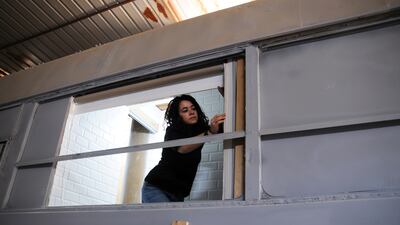
Egyptian engineer Yara Shalabi, 39, converted a bus into a home after rent and living expenses in her flat in Cairo, Egypt, became too high. -
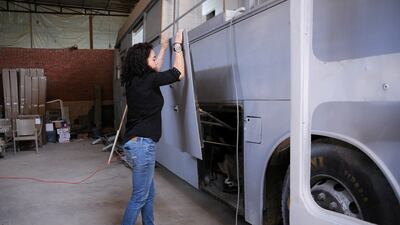
Yara Shalabi wanted to save on rent and start her retirement project early. -
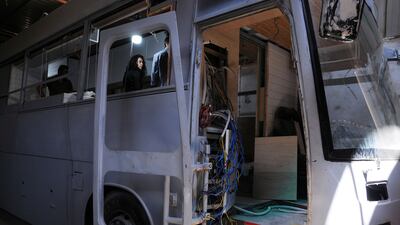
So she bought a bus and started renovating. -

Yara Shalabi works on converting the coach into a home. -

The decommissioned bus that Yara Shalabi converted into a home. -

Yara Shalabi looks out from her new home. -
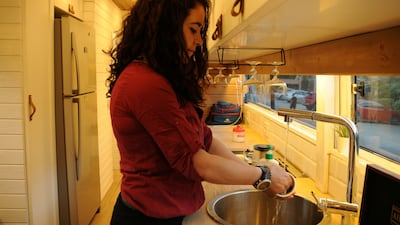
Yara Shalabi in the kitchen of her bus home. -
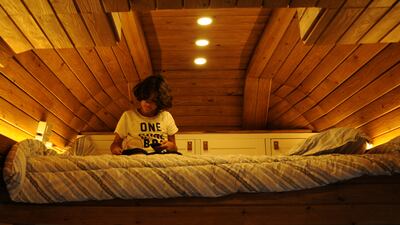
Yara Shalabi's son in their home on wheels. -
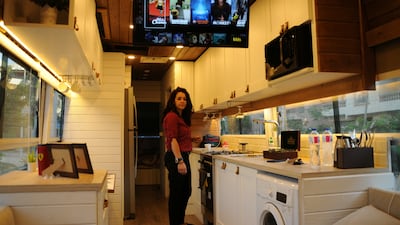
A view of the bus interior after Yara Shalabi's conversion. -
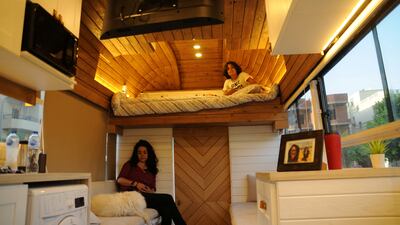
'I love driving and exploring natural spaces around us, and for financial reasons, I realised that I didn't have to wait until I was 60 or 70 to fulfil this dream,' Yara Shalabi says. -
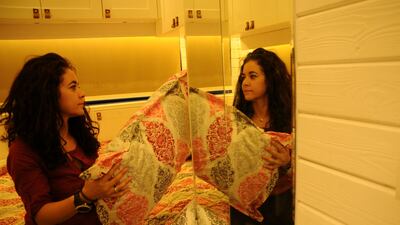
'I could start now, I could stop paying the rent that has been draining me for years and finally live in the place I'd always dreamt of living in when I grew up.' -

Yara Shalabi says: 'I can now use the money that I was paying in rent as instalments on a house for the next three to four years, and then buy my own place, and solve this rent problem.' -

Yara Shalabi plans to use the bus as a permanent home and as transport and lodgings combined for trips into Egypt's deserts.


To register as attendants, people must be over 21 and literate. They need to have served compulsory military service, or received an exemption, and have a clean criminal record and a valid driver’s licence.
Ali Hussein, 44, a doorman in the Cairene district of Heliopolis, says he sometimes helps residents park their cars to earn some extra cash.
But it’s not really a career option, he says.
“I park and clean cars for homeowners in my building as part of my duties as a doorman anyway so it wasn’t a stretch,” he explains.
Mr Hussein says he is against the new system because it will put those with criminal records out of work.
“I know for a fact that a lot of young men with a criminal past also look to it as a career, but why is that a bad thing? They are trying to make an honest living after making mistakes in their lives. The new law will put a lot of these young men out of work and many of them are good kids who come from poor families.”
While it may now cost 10 Egyptian pounds ($0.64) a day to park a private car on the streets of Cairo, residents can opt to pay 300 pounds ($19.10) for a whole month.
This monthly fee has caused the greatest reaction on social media, with many calling on the president to reduce the costs.
Some worry that, with the new regulation, even those living on the outskirts and in satellite towns where there is less congestion will now have to pay – and they have no alternative parking spaces.
Others drew comparisons with the price of staples in Egypt that have increased as the government reviews subsidies as part of a major economic shake-up.
Last month, the government announced that it was looking into reducing bread subsidies, after it had previously removed subsidies for fuel.
Omar Magdy, 27, says he has come to regret buying a car five years ago.
“Not only is traffic always a nightmare, but gas prices keep going up and now I have to pay a monthly 300 pounds to park my car under my home? That’s outrageous.”

