

An agreement between Israel and the Palestinian Authority that could lessen West Bank violence and revive Middle East peace talks generated controversy almost as soon as it was concluded in the Jordanian port city of Aqaba on Sunday.
The US said the Aqaba Communique commits Israel and the Palestinian Authority to “de-escalate and prevent further violence.”
“We recognise that this meeting was a starting point,” National Security Adviser Jake Sullivan said. “Implementation will be critical.”
What was in the Aqaba Communique?
The communique was jointly agreed upon by Israel, President Mahmoud Abbas's Palestinian Authority, the US, Jordan and Egypt at the end of a one-day meeting attended by senior security officials from each country.
Here are its main points:
Israel and the Palestinian Authority “confirmed their joint readiness” to work to end “unilateral measures”.
“This includes an Israeli commitment to stop discussion of any new settlement units for four months and to stop authorisation of any outposts for six months”, the communique says.
This line was widely misinterpreted as a commitment to freeze settlement building, but Israeli government officials quickly said that no such promise had been made.
The two sides “affirmed their commitment to all previous agreements”, and to work for “a just and lasting peace”.
“They reaffirmed the necessity of committing to de-escalation on the ground and to prevent further violence”, the communique said, without mentioning the rising violence in the West Bank or whether Israel would stop raids in the area.
-
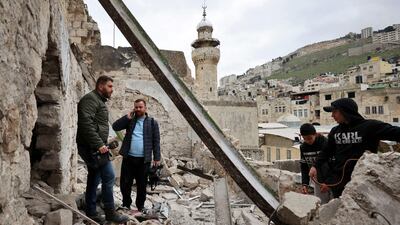
Palestinian men check a house that was demolished during an Israeli army raid in the Old City of Nablus the previous day. AFP -

A bullet-riddled windshield outside a house that was targeted in the raid. AFP -
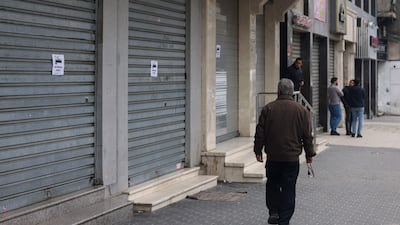
Shuttered shops in Gaza city during a general strike called to protest against the Israeli army raid in Nablus the previous day. AFP -
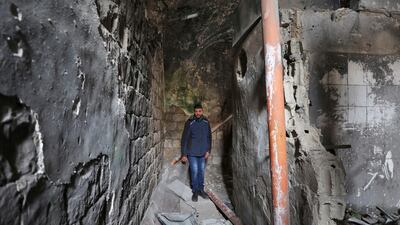
A Palestinian house that was demolished in the Israeli army raid -
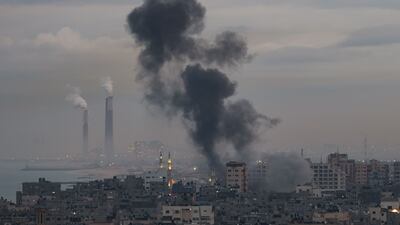
Smoke rises above buildings in Gaza city as Israel launches air strikes on the Palestinian enclave. AFP -
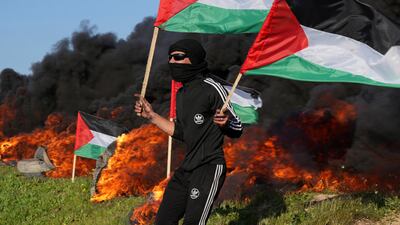
A Palestinian protesting after the military raid in the West Bank city of Nablus. AP -
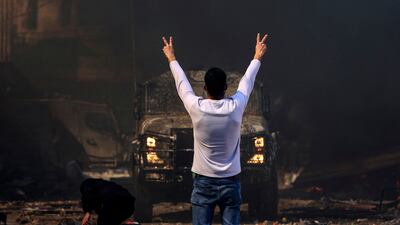
A defiant Palestinian fronts up to an Israeli military vehicle during the raid. AFP -
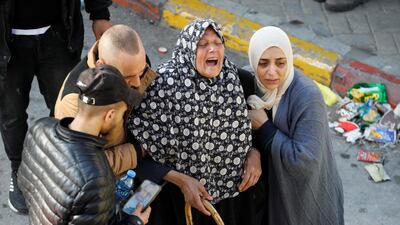
Grief at a funeral of 10 Palestinians, including gunmen, in Nablus. Reuters -
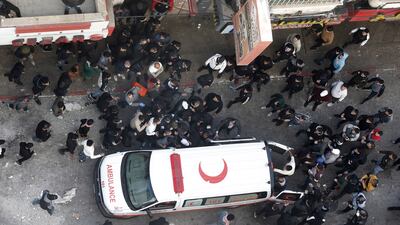
Palestinians carry a man wounded in the Israeli operation. EPA -
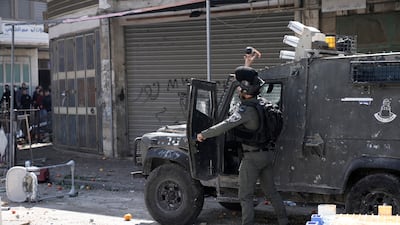
An Israeli officer throws teargas at Palestinians in Nablus. AP -
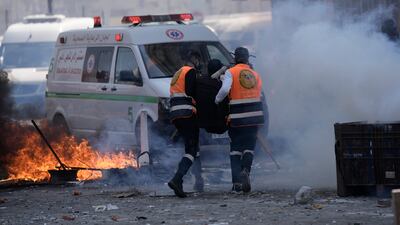
Medics carry a wounded Palestinian to receive treatment. AP -
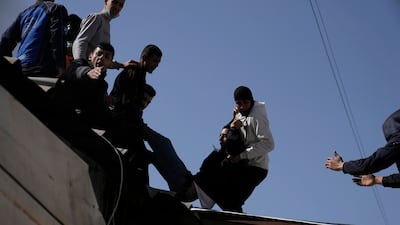
The city is known as a militant stronghold and the Israeli army frequently operates there. AP -
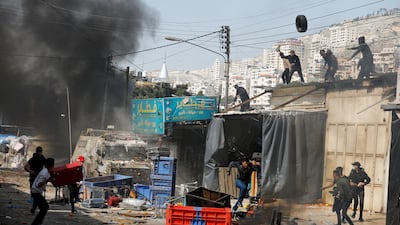
Palestinians clash with Israeli forces in Nablus. Reuters -
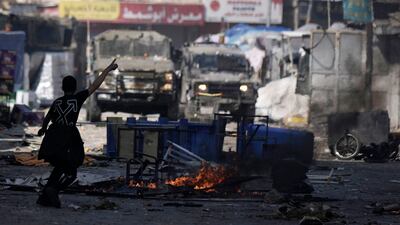
A Palestinian confronts Israeli military vehicles. AP -

Relatives outside a hospital mourn the death of a Palestinian killed in the Israeli raid. AFP -

Palestinians clash with Israeli forces during the raid in Nablus. Reuters -

Bystanders help a Palestinian woman wounded in the raid. AFP -
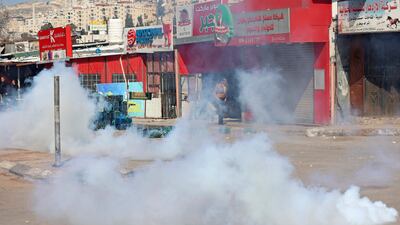
Teargas fills a street in Nablus during the Israeli raid. AFP -
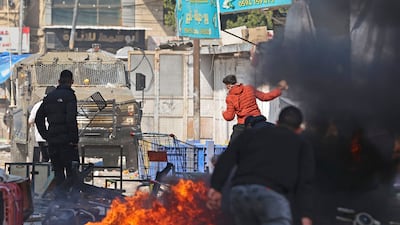
Palestinians confront Israeli forces. AFP -
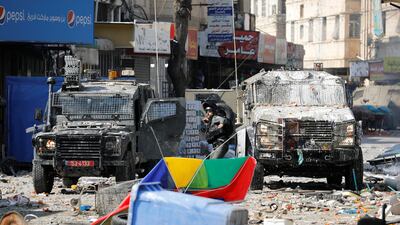
Israeli security forces during the raid. Reuters -
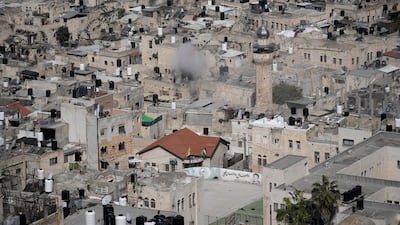
Smoke above a Nablus neighbourhood as Palestinians clash with Israeli forces. AP


Referring to a Jordanian claim of custodianship over ancient holy sites in Jerusalem, the communique said the five parties noted what it described as the Hashemite Custodianship, or special role of Jordan, in the context of “upholding unchanged the historic status quo at the holy sites” in the city.
“The participants also agreed to pursue confidence-building measures and strengthen mutual trust in order to address outstanding issues through direct dialogue”, the document said.
It said the Aqaba meeting was the first of its kind in years and that the participants “agreed to continue meeting under this formula, maintain positive momentum and expand this agreement towards wider political process leading to a just and lasting peace.”
Why did the Aqaba Communique cause confusion?
Washington appears to have kept the deal purposefully vague, especially regarding Israeli settlements in the occupied West Bank, to assuage the two sides.
President Mahmoud Abbas's Palestinian Authority has struggled to stem rising anger in the West Bank as more Palestinians see armed resistance as the main way of countering Israel's insistence on building more settlements.
On Sunday, two settlers in a car were shot dead near a West Bank town, days after an Israeli raid in Nablus killed 11 people.
On the Israeli side, Prime Minister Benjamin Netanyahu's coalition government came to power in late December through the support of ultra-right wing parties who are vehemently opposed to any change in settlement policy.
Mr Netanyahu is seen as a more pragmatic figure, although he is also a hardliner and well versed in using loopholes to advance ideological agendas.
The massive expansion of the settlements, however, has vastly undermined the possibility of executing a two-state solution, embedded in UN resolutions from as far back as the late 1940s.
Before the ink had dried on the Aqaba deal, Mr Netanyahu wrote on Twitter that “the building and authorisation” of settlements “will continue according to the original planning and building schedule, with no change.”
“There is not and will not be any freeze,” he said.
But the text of the Aqaba Communique indicates some kind of a curb, and Mr Netanyahu did not say what Israel had agreed to.
Quoting the paragraph about the settlements verbatim, Jordan's Foreign Ministry said the communique contains “important commitments” that could lead to “progress towards a larger political engagement”.
Why did the Aqaba Communique lack detail?
Vague language has been a hallmark of Middle East deals for decades.
UN Security Council Resolution 242, one of the first to address the 1967 Israeli occupation of Palestinian and other Arab territory, said a lasting peace should include the “withdrawal of Israel armed forces from territories occupied in the recent conflict”.
By omitting the word “the,” it does not explicitly refer to all the land occupied by Israel during the six-day conflict.
Some on the Arab side have taken advantage of cryptic language, such as the 1989 Taif Accord, which ended the Lebanese civil war but contained loopholes that covered what many Lebanese regarded as a de facto Syrian occupation of their country.
Similarly, the Geneva Declaration on the Syrian conflict, agreed between the US and Russia in 2012, stipulates a political transition in Syria without specifying what it means by such a transition.
In the Aqaba Communique, the most certain clause may be one about the two sides agreeing to meet again in Sharm El Sheikh in March.

