

Israeli Prime Minister-designate Benjamin Netanyahu will have until December 21 to form a new government after receiving an extension of about 10 days on Friday.
Mr Netanyahu was asked to try to form the next Israeli government after his centre-right nationalist party won the largest share of seats in the country’s elections on November 1.
While he has already got the backing of other parties in parliament in order to reach the threshold to govern, he has yet to finalise his coalition.
Israeli election — in pictures
-
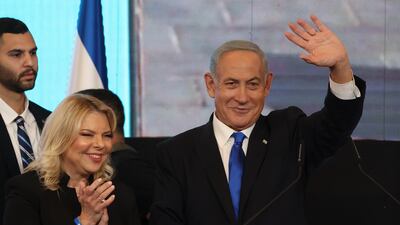
Former Israeli prime minister and leader of the Likud party Benjamin Netanyahu and his wife Sara greet supporters in Jerusalem as Israelis went to the polls on Tuesday. EPA -
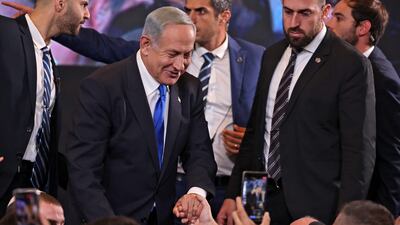
Mr Netanyahu greets supporters after the end of voting for the national elections. AFP -
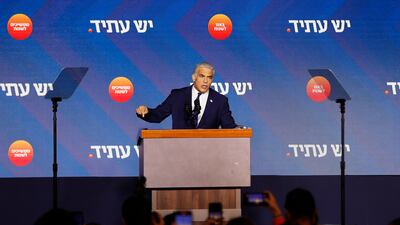
Prime Minister Yair Lapid addresses supporters at his campaign headquarters in Tel Aviv. EPA -
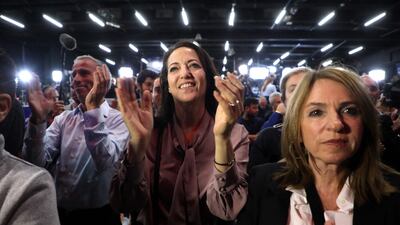
The prime minister's wife Lihi Lapid, centre, cheers her husband. AFP -

The leader of the Otzma Yehudit (Jewish Power) far-right party Itamar Ben Gvir at his party's campaign headquarters in Jerusalem. AFP -
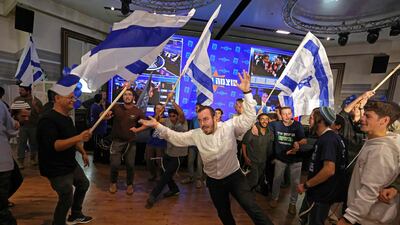
Otzma Yehudit party members in upbeat mood. AFP -
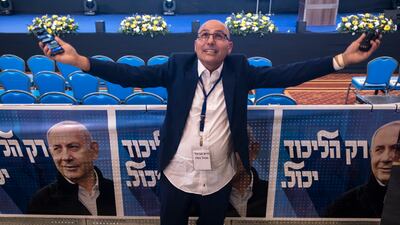
A Likud party supporter responds to favourable exit polls. Getty -
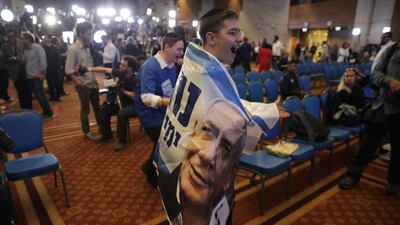
Supporters of Mr Netanyahu react as early exit polls suggest a comeback for the former leader. EPA -

An Ultra-Orthodox Jewish Israeli selects his ballot paper on the day of Israel's general election at a polling station in Jerusalem. Reuters -
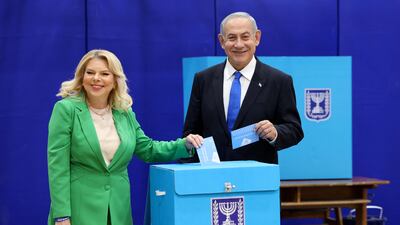
Mr Netanyahu and his wife Sara cast their ballot at a polling station in Jerusalem in the country's fifth election in less than four years. AFP -

A man kisses his dog after casting his ballot in Tel Aviv during the Israeli elections. AP -
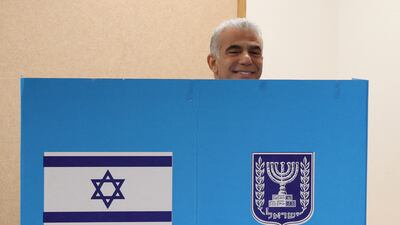
Israeli Prime Minister Yair Lapid smiles as he casts his vote at a polling station in Israel's coastal city of Tel Aviv. Mr Lapid urged the electorate to cast their ballot after voting in an election that might lead to veteran leader Benjamin Netanyahu making a comeback alongside far-right allies. Reuters -
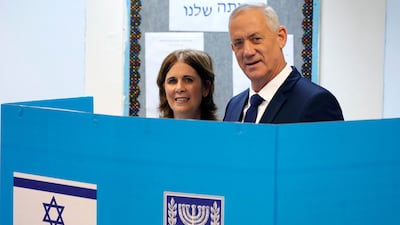
Israeli Defence Minister Benny Gantz, right, head of the new centre-right National Unity Party, and his wife Revital Gantz vote at a polling station in the city of Rosh Haayin in central Israel. AFP -

Ultra-Orthodox Jews watch their Rabbi Israel Hager vote during Israeli elections in Bnei Brak. AP -

An Ultra-Orthodox Jewish man votes in Israel's parliamentary election at a polling station in Bnei Brak. AP -
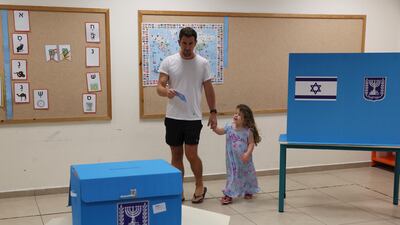
An Israeli man walks with a little girl towards the ballot box to cast his vote. AP -
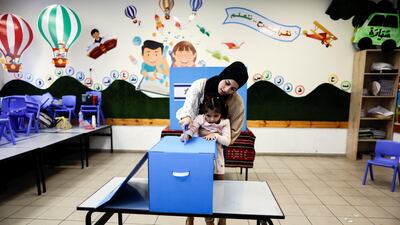
A little girl helps her mother cast her ballot on the day of Israel's general election at a polling station in Taibe, northern Israel. Reuters -

Israelis queue to cast their ballots on the day of Israel's general election at a polling station in Tel Aviv. Reuters -
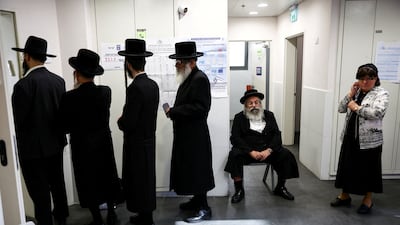
Ultra-Orthodox Jewish Israelis wait to cast their ballots at a polling station in Jerusalem. Reuters -
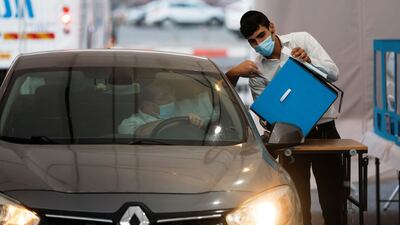
An Israeli man casts his ballot at a drive-through polling station for people quarantined as a result of Covid-19 in Jerusalem. Reuters


Sunday was the original deadline to form the government or another candidate may have been asked to try to form a coalition. Failing that, Israelis would have been sent back to the polls yet again to break the deadlock.
While Mr Netanyahu sought the maximum two-week extension allowed by law, President Isaac Herzog, whose job as head of state is largely ceremonial, gave him an extra 10 days.
Coalition talks have dragged on longer than expected since Mr Netanyahu from the outset had support from right-wing and religious parties that control 64 of the Knesset's 120 seats.
A major sticking point has been who gets which ministerial post and the distribution of power between them, Israeli media has reported.
The centrist opposition had urged Mr Herzog not to grant an extension, accusing Mr Netanyahu of buying time to pass divisive legislation.
One such bill would enable a senior partner of Mr Netanyahu to serve in the cabinet despite a criminal record.
On Thursday, Mr Netanyahu reached a coalition deal with the ultra-Orthodox Shas party led by longtime Likud ally Aryeh Deri, who was convicted of tax offences as part of a plea deal and placed on probation.
Under the latest deal, the Shas party will hold senior posts in ministries for religious services, social affairs, education and interior affairs.
Deri will serve half a term as the minister of health and interior affairs, before becoming finance minister. He will also hold the post of deputy prime minister.
The legal manoeuvre has drawn criticism that it undermines Israel’s democratic institutions. It “makes a mockery of this criminal procedure,” said Amir Fuchs, senior researcher at the Israeli Democracy Institute, a Jerusalem think tank.
A prolonged political stalemate has led to five elections in less than four years. An outgoing caretaker government remains in office.
“These are complex days for Israeli society when disputes over fundamental issues threaten to tear apart and ignite violence and hatred,” Mr Herzog said in a letter to Mr Netanyahu that his office made public.
He called for the formation of a government that represents the entire country and for a coalition that maintains a respectful dialogue between the branches of government.

