The antique bronze statue of the goddess Isis. Photo: Egyptian Foreign Ministry

Egypt repatriates goddess Isis bronze from Switzerland


Kamal Tabikha
  • English
  • Arabic

A bronze statue of the ancient Egyptian goddess Isis has been repatriated to Egypt from Switzerland, the Ministry of Tourism and Antiquities said.

The statue, which was smuggled out of the country illegally, dates back to the Late Period of Egypt’s history (664-332 BCE) and depicts the goddess Isis in a seated position with the baby Horus, another of ancient Egypt’s most prominent deities, on her lap.

With the return of yet another piece smuggled from Egypt, the ministry’s statement reaffirmed its commitment to continuing to reclaim more of the country’s stolen heritage.

The statue was found by Swiss customs officials in 2018 who notified Egypt’s Foreign Ministry, which sent a team of archaeologists to ascertain the origin and value of the piece.

The bronze piece, which dates back to 64-332 BCE, was smuggled out of Egypt illegally. Photo: Egyptian Foreign Ministry

The experts determined that the statue, which was not recorded on any of the ministry’s lists, must have been the product of illegal excavations which commonly take place in Egypt without the government’s knowledge.

The ministry’s statement in particular praised the efforts of the Swiss Federal Office for Cultural Affairs, with which the ministry signed an agreement in 2013, for returning the bronze.

The statue was received by Egypt’s ambassador to Switzerland, Wael Gad, on Tuesday and was expected to arrive in Cairo “very soon”.

The antiquities ministry this month said it had co-operated with US prosecutors to repatriate 16 smuggled pieces dating back to various eras of Egyptian history.

In July, the ministry said it had received more than 100 pieces from French authorities.

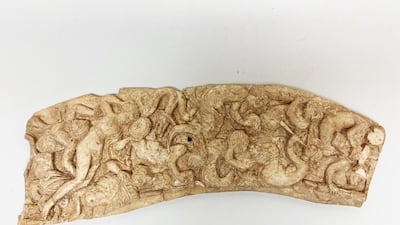
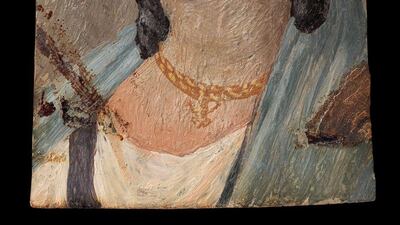
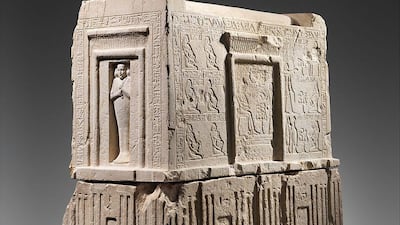
  • A mixed group of artefacts repatriated to Egypt from the US.
    A mixed group of artefacts repatriated to Egypt from the US.
  • The pieces were smuggled out at various times throughout Egypt's recent history.
    The pieces were smuggled out at various times throughout Egypt's recent history.
  • The pieces date back to various eras of Egypt's history, including the Roman, Byzantime, Ptolemaic and Pharaonic periods.
    The pieces date back to various eras of Egypt's history, including the Roman, Byzantime, Ptolemaic and Pharaonic periods.
  • Egypt’s antiquities ministry said it co-operated with New York prosecutors and Egyptian foreign ministry officials in the US to repatriate the pieces,
    Egypt’s antiquities ministry said it co-operated with New York prosecutors and Egyptian foreign ministry officials in the US to repatriate the pieces,
  • The pieces were smuggled out at various times in Egypt's recent history.
    The pieces were smuggled out at various times in Egypt's recent history.
  • Three separate American investigations were conducted into the matter, according to the antiquities ministry. The investigations conclusively determined that the artefacts were smuggled out of Egypt illegally.
    Three separate American investigations were conducted into the matter, according to the antiquities ministry. The investigations conclusively determined that the artefacts were smuggled out of Egypt illegally.
  • Egypt has intensified its efforts to combat rampant smuggling and repatriate smuggled pieces.
    Egypt has intensified its efforts to combat rampant smuggling and repatriate smuggled pieces.
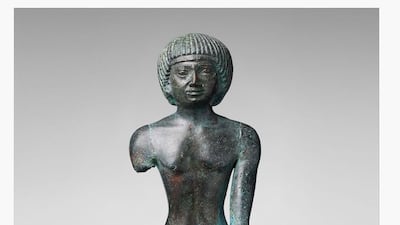
  • A bronze statue depicting a man kneeling.
    A bronze statue depicting a man kneeling.
  • In December last year 36 pieces were returned from Valencia, Spain after being smuggled out in 2014.
    In December last year 36 pieces were returned from Valencia, Spain after being smuggled out in 2014.
How to wear a kandura

Dos

  • Wear the right fabric for the right season and occasion 
  • Always ask for the dress code if you don’t know
  • Wear a white kandura, white ghutra / shemagh (headwear) and black shoes for work 
  • Wear 100 per cent cotton under the kandura as most fabrics are polyester

Don’ts 

  • Wear hamdania for work, always wear a ghutra and agal 
  • Buy a kandura only based on how it feels; ask questions about the fabric and understand what you are buying
The specs: 2019 Mini Cooper

Price, base: Dh141,740 (three-door) / Dh165,900 (five-door)
Engine: 1.5-litre four-cylinder (Cooper) / 2.0-litre four-cylinder (Cooper S)
Power: 136hp @ 4,500rpm (Cooper) / 192hp @ 5,000rpm (Cooper S)
Torque: 220Nm @ 1,480rpm (Cooper) / 280Nm @ 1,350rpm (Cooper S)
Transmission: Seven-speed automatic
Fuel consumption, combined: 4.8L to 5.4L / 100km

Expert advice

“Join in with a group like Cycle Safe Dubai or TrainYAS, where you’ll meet like-minded people and always have support on hand.”

Stewart Howison, co-founder of Cycle Safe Dubai and owner of Revolution Cycles

“When you sweat a lot, you lose a lot of salt and other electrolytes from your body. If your electrolytes drop enough, you will be at risk of cramping. To prevent salt deficiency, simply add an electrolyte mix to your water.”

Cornelia Gloor, head of RAK Hospital’s Rehabilitation and Physiotherapy Centre 

“Don’t make the mistake of thinking you can ride as fast or as far during the summer as you do in cooler weather. The heat will make you expend more energy to maintain a speed that might normally be comfortable, so pace yourself when riding during the hotter parts of the day.”

Chandrashekar Nandi, physiotherapist at Burjeel Hospital in Dubai
 

Updated: September 28, 2022, 3:08 PM