

Egypt is increasing the number of beneficiaries of government programmes designed to cushion its neediest against the economic impact of the Ukraine war.
President Abdel Fattah El Sisi's office said one million families would be added to a state programme that provides cash transfers, bringing the total number of beneficiaries to more than 20 million.
The “Solidarity and Dignity” programme, which began in 2015 and is funded by the World Bank, pays poor families a minimum of 350 Egyptian pounds ($18.50) a month.
Another nine million families will receive financial aid for the next six months at a total cost of one billion pounds.
Beneficiaries will include retirees whose monthly pension is less than 2,500 pounds ($130) and state employees whose salaries are below 2,700 pounds ($142), Mr El Sisi's office said.
The distribution of food packages sold at half price at army outlets would also be expanded, with two million of them offered for sale every month, the president's office said.
The decision to expand these social safety net programmes was decided in a meeting on Tuesday between Mr El Sisi and the ministers of supply, finance and social solidarity. It follows another government measure, to boost domestic production of wheat to improve food security.
-
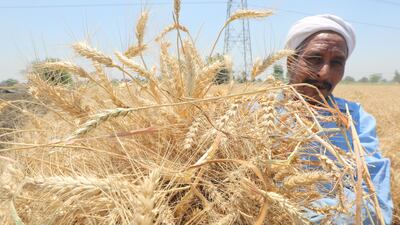
An man works in a wheat field in Banha, Egypt. All photos: EPA -
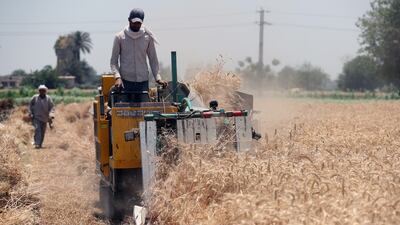
Egypt, the largest importer of wheat in the world, has been forced by the war in Ukraine to rethink its strategy and says it will now rely more on local production of the cereal as a way to reduce its reliance on international purchases in the coming years. -
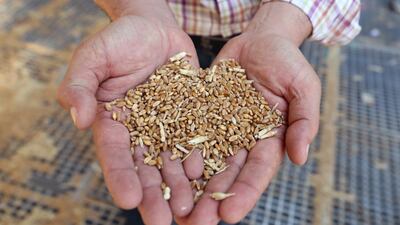
A man holds grains of wheat at the Banha grain silos, in Qalyubia Governorate. -
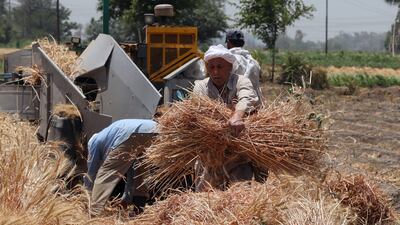
Bread is a staple for most of Egypt's 103 million people. -
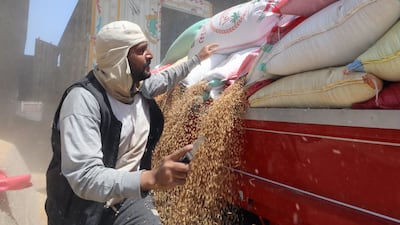
Workers unload wheat at the Banha grain silos. -

Local growers have been barred from selling wheat to anyone other than the government until August. -
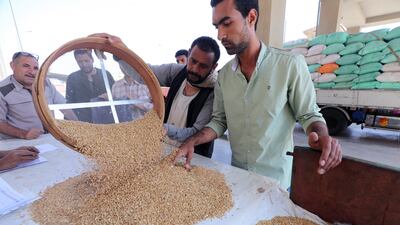
Previously, growers who failed to deliver 60 per cent of their wheat harvest to authorities faced penalties. -

Workers collect wheat at the Banha silos. -
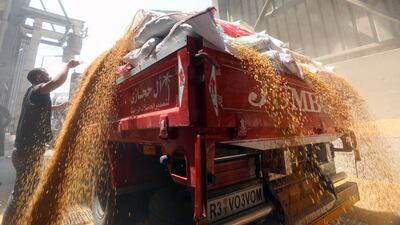
About 71 million people in the country rely on cheap bread under a state subsidised food card system. -
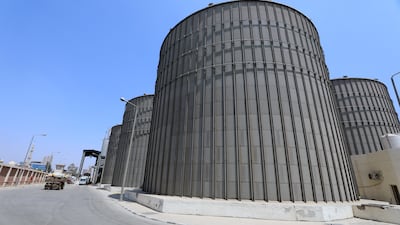
Egypt has 44 silos with a total capacity of 3. 1 million tonnes, across its governorates


The fallout from the Russia-Ukraine war has had a devastating impact on Egypt’s economy, catching the most populous Arab nation at a time when it was slowly recovering from the slowdown caused by the coronavirus pandemic.
The country has to import crude oil and refined fuel, whose prices have increased since the start of the conflict, after some countries joined a boycott of Russian oil exports.
Prices of basic food, including wheat and other staple grains, have also soared after Ukrainian exports through the Black Sea were curtailed due to the war.
Egypt’s annual inflation has risen to above 13 per cent and the country is again seeking the support of the International Monetary Fund.
The country’s vital tourism industry was also hit by the Ukraine-Russia war, which halted the arrival of tourists from the two warring nations.
Russians and Ukrainians accounted for more than 30 per cent of all visitors before the war.

