

Iraq has demanded that Turkey withdraw its troops from the country and stopped plans to appoint an ambassador in Ankara, accusing the Turkish army of a deadly artillery attack on a popular tourist destination in the country’s north.
“Turkey has disregarded the Iraqi demands to stop the violations against our sovereignty and the security of our citizens, and to respect the principle of good neighbourliness,” Iraq’s National Security Council said.
"We ask Turkey to offer an official apology and withdraw its military troops from all Iraqi territories."

The council held an emergency session on Wednesday night, shortly after nine people were killed and 28 others wounded in Dohuk province in the Kurdistan region.
Dohuk governor Ali Tatar said on Thursday that the bodies of the victims would be flown to Baghdad from Erbil, capital of the Kurdish region.
The victims – three men, three women and two children — were reported to be from southern Iraq and were on a holiday in the Barkh resort.
The mountainous area is often the target of Turkish military campaigns aimed at hideouts belonging to militants of the Kurdistan Workers’ Party (PKK).
Turkey has established, without the consent of the federal government in Baghdad, several military posts in the Kurdistan region since 1990s, including a military base in the town of Bashiqa after the takeover of Mosul by ISIS extremists in 2014. There is no official tally of the number of Turkish troops in Iraq but some Kurdish and Iraqi media outlets estimate there are about 250.
Turkey says the troops are in Iraq only to fight PKK fighters, accusing the militants of carrying out cross-border operations and bombings against Turkish troops.
Ankara says its military posts and troops are in the region in co-ordination with the Kurdish authorities.
Iraqi officials said on Wednesday that at least four shells hit the holiday area in the city of Zakho, which is a few kilometres from the border with Turkey.
The National Security Council said it had instructed troops on the border with Turkey to “take all necessary measures for self defence”.
“We have decided to recall the Iraqi charge d'affaires for consultation, stop the appointment of a new [Iraqi] ambassador to Turkey and make an urgent complaint to the UN Security Council,” the NSC said.
“Iraq will not allow using its territories as a launchpad for attacks against any country, or to be the scene for settling scores. Iraq flatly rejects the presence of any terrorist or militant organisation on its territories.”
Turkey has denied responsibility for the attack and called for a joint investigation with the Iraqi government.
It claimed that forces belonging to the PKK were behind the attacks.
-
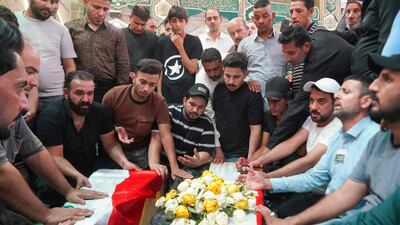
Iraqi mourners pray over the caskets of a woman and her niece, killed in artillery bombardment of a Kurdish hill village, at their funeral at the Imam Ali shrine in Najaf. AFP -
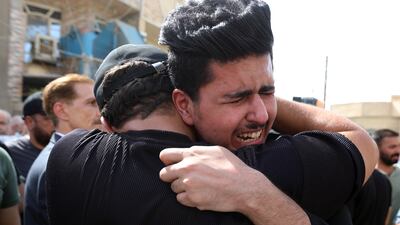
Iraqis mourn a victim killed in an alleged Turkish bombing in Dohuk city. EPA -

Protesters pray near the old Turkish embassy building during a demonstration against an attack on a mountain resort in Dohuk. Reuters -

An Iraqi police car hit during clashes between protesters and riot police. AFP -
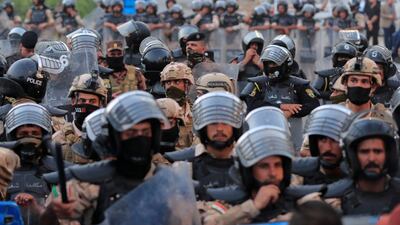
Security forces stand guard near the old Turkish embassy building in Dohuk. Reuters -
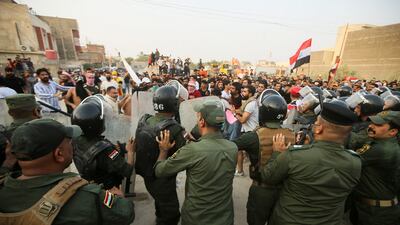
Police clash with demonstrators in Dohuk. Reuters -
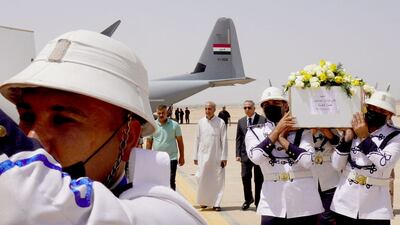
Honour guards carry the coffins of victims, who were killed in an attack on a mountain resort in Iraq's northern province of Dohuk, at a funeral ceremony at Baghdad International Airport. Photo: Iraqi Prime Minister's Media Office -
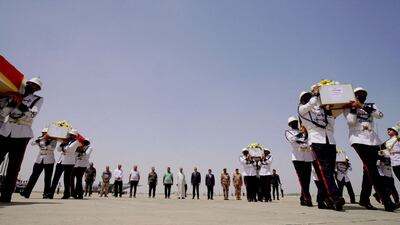
Funerals take place at Baghdad Airport. Photo: Iraqi Prime Minister's Media Office -
Prime Minister Mustafa Al Kadhemi and Iraqi officials arriving to take part in a ceremony at the Baghdad Airport. Photo: Iraqi Prime Minister's Office -
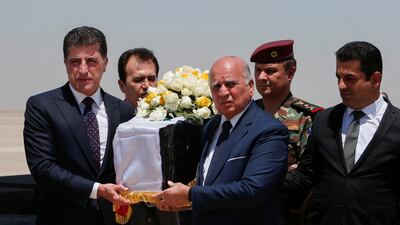
President of the Kurdistan region in Iraq Nechirvan Barzani carries the coffin of an Iraqi killed in an attack on a mountain resort in Iraq's northern province of Dohuk. Reuters -
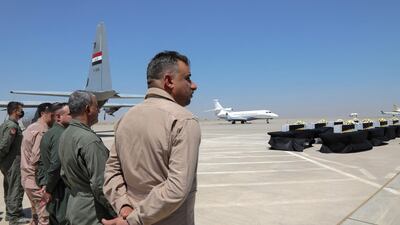
The coffins of victims killed in a Kurdish hill village in an attack blamed on Turkey, are lined up on the tarmac before being flown to their respective cities from the airport in Erbil, the capital of Iraq's northern Kurdish autonomous region. AFP -
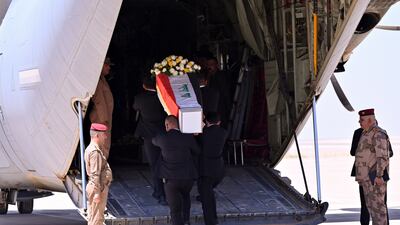
A coffin is carried aboard a military plane for repatriation, at the airport in Erbil, Iraq. EPA -
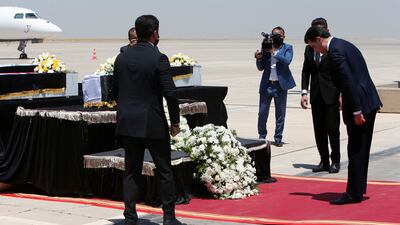
Mr Barzani attends the funeral ceremony at Erbil International Airport of those killed in the Dohuk attack. Reuters -
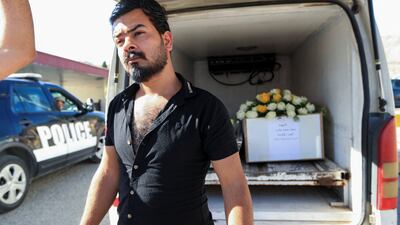
A father stands near an ambulance transporting a coffin of his daughter who was killed in the attack on a mountain resort in Iraq's northern province of Dohuk. Reuters -
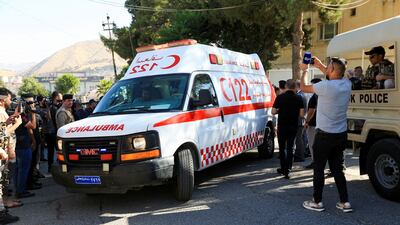
An ambulance transports a coffin of an Iraqi who was killed in what Iraq claims was a Turkish attack on a mountain resort in the northern province of Dohuk. Reuters -

Iraqis chant slogans demanding the expulsion of the Turkish ambassador outside the Turkish visa office in Baghdad, during a demonstration following the attack. AFP -
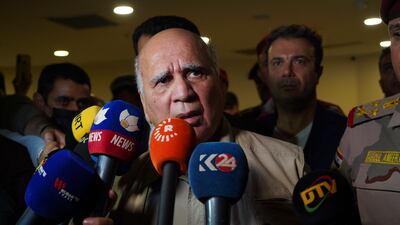
Iraqi Foreign Minister Fuad Hussein speaks to the media after visiting those wounded by shelling at a hospital in Zakho in Iraq's Kurdish region. Nine civilians including children were killed on July 20 by artillery fire that Baghdad blamed on Turkey, a country engaged in a cross-border offensive. AFP -
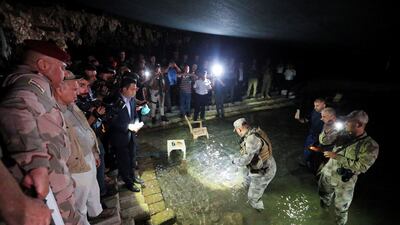
Abdul Ameer Al-Shammari, deputy commander of Iraq's military Joint Operation Command, and Mr Hussein inspect the site of the attack in Dohuk. Reuters -

Baghdad accused Ankara of carrying out the strike in Dohuk. Reuters -
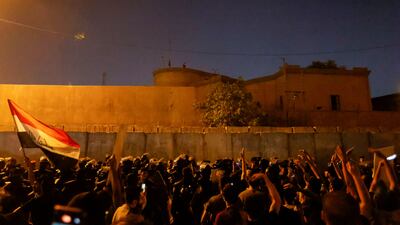
Riot police and protesters face off in front of a building belonging to the Turkish Embassy in Baghdad. The Turkish flag was taken down during a demonstration against the attack. Reuters -
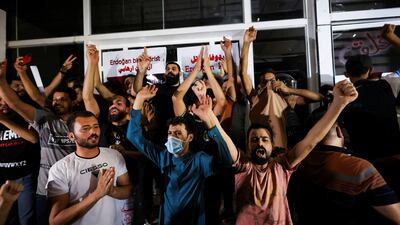
Demonstrators gather in front of the Turkish visa application centre in Najaf as they protest against the attack. Reuters -
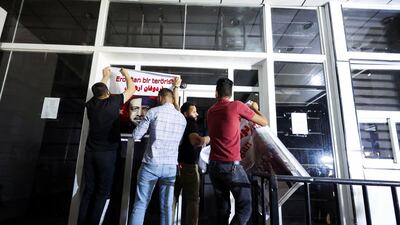
The cross-border offensive left nine civilians, including two children, dead, and 23 others were wounded. Reuters -

A riot police officer stands in front of a building belonging to the Turkish Embassy in Baghdad during a demonstration. Reuters -
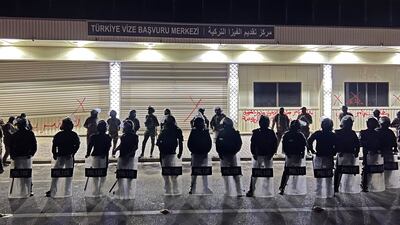
Iraqi security forces take up positions in front of a Turkish visa centre in Karbala during a demonstration against Ankara's military offensive in Iraq's Kurdistan region. AFP -
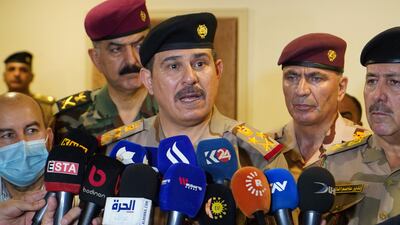
Gen Mohammed Al Bayati, the Iraqi prime minister's secretary, gives a statement after visiting the wounded at the hospital in Zakho in Iraq's Kurdistan region. AFP -
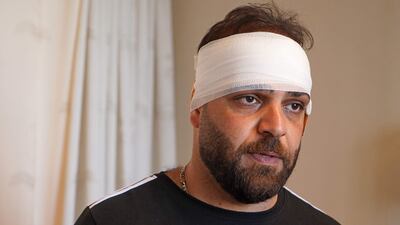
A wounded man awaits further treatment at a hospital in Zakho after the attack. AFP -

Saman Barzanji, centre, Health Minister in the Kurdistan Regional Government, visits the wounded at a hospital in Zakho. AFP -
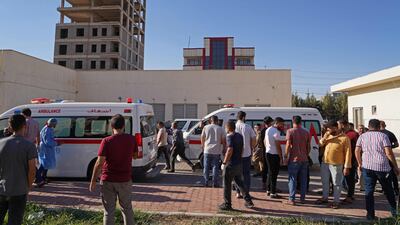
People gather outside a hospital in Zakho after Turkey shelled a mountain resort in Iraq's Kurdistan region. AFP


But the People’s Defence Forces (HPG), the armed wing of the PKK, said in a statement carried by Kurdish news website Rudaw that it did not have any of its fighters in the area of the attack, which it blamed on the Turkish army.
The PKK is designated as a terrorist organisation by Turkey, the US and the EU after a series of bombings and attacks against civilians in south-east Turkey during more than four decades of conflict. A ceasefire between the PKK and Turkey broke down in 2015 after two and a half years.
Turkey also views Kurdish-led militant and political groups in Syria as affiliated to the PKK.
Turkey has launched military operations and air raids on PKK strongholds in the mountains of northern Iraq for years, and is threatening to carry out a fourth incursion into north-east Syria.
Civilian casualties in northern Iraq have been reported and documented in several attacks in recent years.
On Wednesday night, Iraqis posted their photos and videos on social media as they burnt Turkish flags in the cities of Baghdad, Karbala and Nasiriyah.
Iraqi anti-riot police lined up outside the Turkish embassy as protesters gathered late at night, chanting against Turkey and asking their government for decisive action in response to the attack.
Attack condemned around the world
Wednesday’s attack drew strong international condemnation on Thursday.
The attack also stoked tensions in Iraq as an Iran-backed militia group claimed to have attacked Turkish forces in the north and protesters surrounded the Turkish embassy in Baghdad.
Some of the strongest condemnation came from the Iraqi Prime Minister Mustafa Al Kadhimi, who has in the past come under political attack for tolerating the presence of Turkish forces in the Kurdish-majority north.
Iraq reserves the "right to retaliate,” Mr Al Kadhimi warned Turkey. Other Iraqi politicians and Iraq’s foreign ministry used softer language, saying the issue would be raised at the UN Security Council. Iraq’s ministry of culture also said Iraqis must not travel to Turkey and visas were no longer being issued amid a protest outside the Turkish visa application office in Baghdad.
Safeen Dizayee, the head of the Kurdish Regional Government’s department of foreign relations, said Turkey should be involved in a joint investigation. Mr Al Kadhimi has already sent a team from the federal government to investigate the attack.
Next week, the Iraqi Parliament will hold an “urgent session” to discuss the presence of Turkish forces, who mainly operate from a base at Bashiqa, around 65 kilometres from Erbil.
Meanwhile, Iraqi paramilitary groups linked to Iran appeared to try and capitalise on public anger.
Iran-backed militia Ashab Al Kahf, which has claimed attacks on Turkish and US forces in recent years, said on Thursday it had attacked two Turkish positions with drones. The Turkish military made no comment on the attacks or whether there were casualties.
Iran-linked militias have previously launched attacks against US military and diplomatic targets in the Kurdish region, as well as Turkish forces.
In Tehran, the foreign ministry spokesman said: "Iran considers the security of Iraq as its own security and will not hesitate to provide any assistance in this regard".
In Baghdad, loudspeakers blared out patriotic songs as protesters chanted slogans demanding the expulsion of the Turkish ambassador, having gathered outside Turkey’s visa office, an AFP journalist reported.
Protesters brandished portraits of Turkish President Recep Tayyip Erdogan labelled "terrorist" and trampled Turkish flags underfoot.
"We want to burn down the embassy. The ambassador must be expelled," said demonstrator Ali Yassin, 53. "Our government is doing nothing."
There were similar protests on Wednesday night in the Shiite shrine cities of Najaf and Karbala and in the southern city of Nasiriyah.
Among the dead was Abbas Alaa, 24, an engineer married for barely a week, said a friend who gave his name as Nour.
Alaa was on his honeymoon — his first-ever trip, Nour said — and his wife was wounded.
"We can't believe it," said Nour who waited with other friends at a modest Baghdad home for relatives to return with his corpse.
"This doesn't happen in any other country, only Iraq."
International condemnation continued to pour in on Wednesday. Germany said it placed great importance on the “respect for Iraq’s state sovereignty and upholding international law.”
US Ambassador to Iraq Alina L Romanowski said the “killing of civilians is unacceptable, and all states must respect their obligations under international law, including obligations under international humanitarian law regarding the protection of civilians.”
Britain’s Foreign, Commonwealth and Development Office released a statement to “express our support for the Iraqi authorities in their investigations,"
Iraq and Turkey are trade partners but Ankara's successive offensives against PKK rear bases in the north have been a persistent source of tension in relations, particularly when they have caused civilian casualties.

