Farhat Bengdara, the new chief of Libya's National Oil Corporation, who was appointed by the Tripoli-based Prime Minister Abdul Hamid Dbeibah. AFP

Libya's PM Dbeibah says crude exports are set to resume in full


  • English
  • Arabic

Libyan crude exports are set for full resumption after months of outages, Prime Minister Abdul Hamid Dbeibah said on Sunday.

All oilfields and ports are restarting operations and electricity output will increase as well, Mr Dbeibah said at the first meeting of the new board of the National Oil Corporation.

The decision to replace the state-run oil company’s leadership last week was based on the consensus of Libyan groups and not part of a political deal, Mr Dbeibah was reported as saying by a local channel.

The overhaul of the NOC board has been rejected by former chairman Mustafa Sanalla and his supporters.

“We need to facilitate the entry of big oil companies, especially European ones, to help us increase production and develop the sector,” Mr Dbeibah said.

He vowed to use higher crude prices to pay bigger salaries to oil workers.

The old board would be welcome should they want to co-operate and return to work, but the government would respond in kind to any use of “force”, Mr Dbeibah said.

Production and shipments are resuming after a deal was reached with groups who had been blockading many of the major facilities since the first quarter, Farhat Bengdara, NOC's new head, said on Saturday.

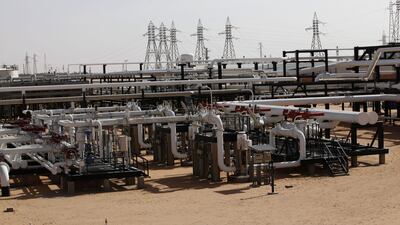
  • Libya's National Oil Corporation said armed militias had stormed Al Sharara oilfield on Saturday. Reuters
    Libya's National Oil Corporation said armed militias had stormed Al Sharara oilfield on Saturday. Reuters
  • Libya’s oil production returned to about 1 million barrels a day earlier this month. Reuters
    Libya’s oil production returned to about 1 million barrels a day earlier this month. Reuters
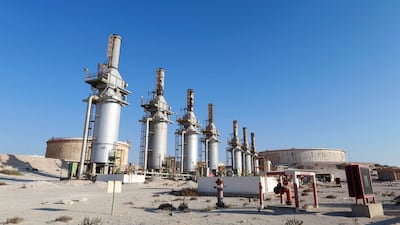
  • Al Sharara oilfield pumps out about 350,000 barrels per day. Reuters
    Al Sharara oilfield pumps out about 350,000 barrels per day. Reuters
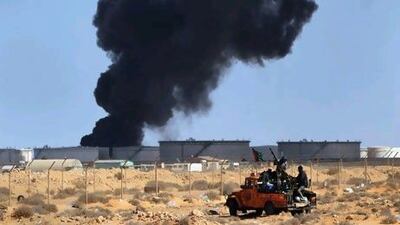
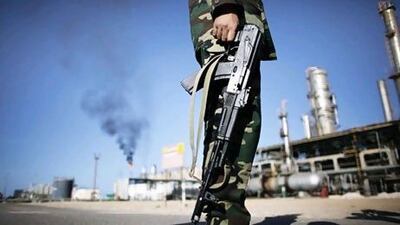
  • Smoke from a damaged oil facility darkens the sky in Ras Lanuf, Libya. The country's oil facilities were damaged during the civil war. Getty Images
    Smoke from a damaged oil facility darkens the sky in Ras Lanuf, Libya. The country's oil facilities were damaged during the civil war. Getty Images
  • After Libya's civil war, experts were pessimistic about the recovery of its oil sector. AFP
    After Libya's civil war, experts were pessimistic about the recovery of its oil sector. AFP
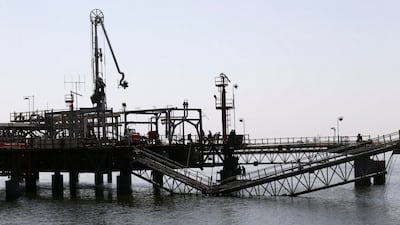
  • A Libyan oil worker at a refinery inside the Brega oil complex in Libya.
    A Libyan oil worker at a refinery inside the Brega oil complex in Libya.
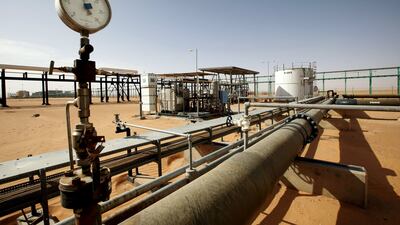
  • A pipeline at the Zueitina oil terminal, west of Benghazi. Reuters
    A pipeline at the Zueitina oil terminal, west of Benghazi. Reuters

The disruption had halved the Opec nation’s output and caused chronic electricity outages, stoking public anger.

The NOC said on Twitter on Sunday that an Italian-flagged tanker had entered the oil terminal at Brega to load a shipment.

Libya’s energy facilities have been at the heart of the country's conflicts over the past decade, with various groups shutting down oil output to press their political and economic demands.

Last Thursday, Mr Dbeibah appointed Mr Bengdara as NOC chairman, replacing Mr Sanalla, the long-term holder of the post.

Mr Sanalla had frequently been at odds with the Ministry of Oil that was reinstated by Mr Dbeibah’s Tripoli-based government.

Mr Dbeibah himself faces a challenge from a rival premier picked by Parliament, Fathi Bashagha, who has the support of some of the country’s numerous militias, raising fears of another round of conflict.


Red flags
  • Promises of high, fixed or 'guaranteed' returns.
  • Unregulated structured products or complex investments often used to bypass traditional safeguards.
  • Lack of clear information, vague language, no access to audited financials.
  • Overseas companies targeting investors in other jurisdictions - this can make legal recovery difficult.
  • Hard-selling tactics - creating urgency, offering 'exclusive' deals.

Courtesy: Carol Glynn, founder of Conscious Finance Coaching

Results

Stage 7:

1. Caleb Ewan (AUS) Lotto Soudal - 3:18:29

2. Sam Bennett (IRL) Deceuninck-QuickStep - same time

3. Phil Bauhaus (GER) Bahrain Victorious

4. Michael Morkov (DEN) Deceuninck-QuickStep

5. Cees Bol (NED) Team DSM

General Classification:

1. Tadej Pogacar (SLO) UAE Team Emirates - 24:00:28

2. Adam Yates (GBR) Ineos Grenadiers - 0:00:35

3. Joao Almeida (POR) Deceuninck-QuickStep - 0:01:02

4. Chris Harper (AUS) Jumbo-Visma - 0:01:42

5. Neilson Powless (USA) EF Education-Nippo - 0:01:45

Race card

6.30pm: Handicap (TB) $68,000 (Dirt) 1,200m

7.05pm: Meydan Cup – Listed Handicap (TB) $88,000 (Turf) 2,810m

7.40pm: UAE 2000 Guineas – Group 3 (TB) $125,000 (D) 1,600m

8.15pm: Firebreak Stakes – Group 3 (TB) $130,000 (D) 1,600m

9.50pm: Meydan Classic – Conditions (TB) $$50,000 (T) 1,400m

9.25pm: Dubai Sprint – Listed Handicap (TB) $88,000 (T) 1,200m

Updated: July 18, 2022, 6:17 AM