Sudan's Sovereign Council Chief General Abdel Fattah Al Burhan made a televised speech on Monday. Reuters

Army will withdraw from Sudan's democratic transition talks, says military chief


Hamza Hendawi
  • English
  • Arabic

Sudan’s army will withdraw from negotiations meant to find a way out of the country’s political crisis, its military leader Gen Abdel Fattah Al Burhan said on Monday in a major concession to the pro-democracy groups that have been calling on the military to step aside.

The decision leaves civilians to hammer out a political road map by themselves, after which Gen Burhan said he would dissolve the military-led Sovereign Council that he chairs when a civilian government is formed.

In a televised address to the nation, he said the military would abide by the solution the civilians would reach.

Gen Al Burhan's surprise announcement would allow the pro-democracy and other civilian groups to restore the political transition process derailed by a military coup last October that he led.

The announcement also comes at a time when the movement against the military was gaining steam after security forces killed nine protesters and wounded more than 600 last week during the largest anti-military rallies in months.

The latest deaths took the number of protesters killed since the October 25 coup to 114. About 6,000 others have been injured.

Gen Al Burhan's change of tack, however, also puts the resolve and unity of the pro-democracy groups to the test.

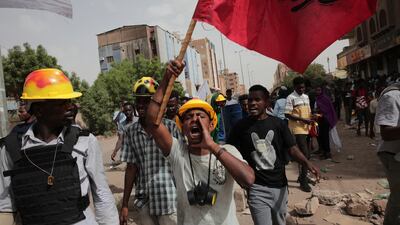
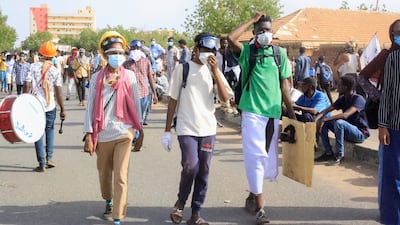
  • Anti-military protesters march in Khartoum, Sudan, a day after nine people were killed in demonstrations against the country’s ruling generals. AP
    Anti-military protesters march in Khartoum, Sudan, a day after nine people were killed in demonstrations against the country’s ruling generals. AP
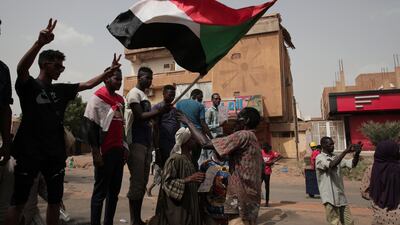
  • Anti-military protesters march in Khartoum. AP
    Anti-military protesters march in Khartoum. AP
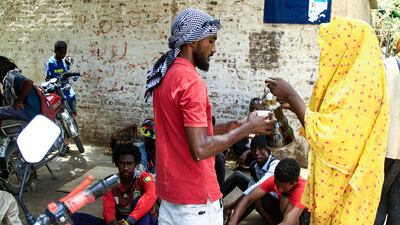
  • A woman serves tea to a Sudanese protester. AFP
    A woman serves tea to a Sudanese protester. AFP
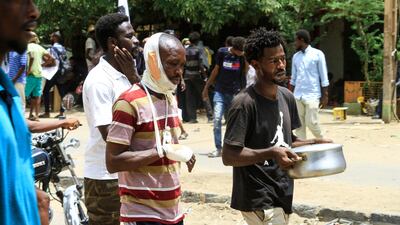
  • A wounded Sudanese demonstrator follows a protester carrying a pot of food. AFP
    A wounded Sudanese demonstrator follows a protester carrying a pot of food. AFP
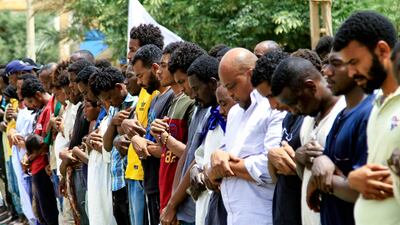
  • Sudanese demonstrators perform the Friday noon prayers in southern Khartoum. AFP
    Sudanese demonstrators perform the Friday noon prayers in southern Khartoum. AFP
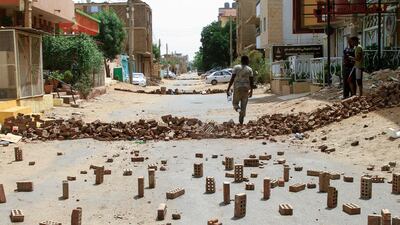
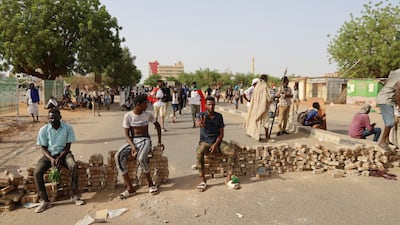
  • Blocks of brick are used to make barricades. AFP
    Blocks of brick are used to make barricades. AFP
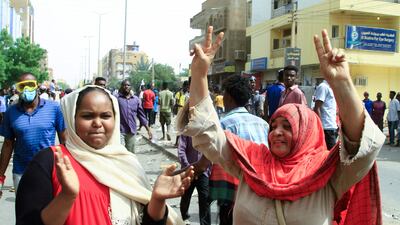
  • Hundreds of activists mass near the presidential palace and other areas of the capital. AFP
    Hundreds of activists mass near the presidential palace and other areas of the capital. AFP
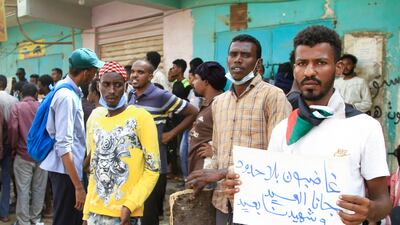
  • A Sudanese protester carries a placard which reads: 'Angry without borders, Eid is here and the martyr is absent' as he takes part in a rally in southern Khartoum. AFP
    A Sudanese protester carries a placard which reads: 'Angry without borders, Eid is here and the martyr is absent' as he takes part in a rally in southern Khartoum. AFP
  • Protesters take part in a rally against military rule, after the last coup and to commemorate the third anniversary of revolution, in Khartoum, Sudan. Reuters
    Protesters take part in a rally against military rule, after the last coup and to commemorate the third anniversary of revolution, in Khartoum, Sudan. Reuters
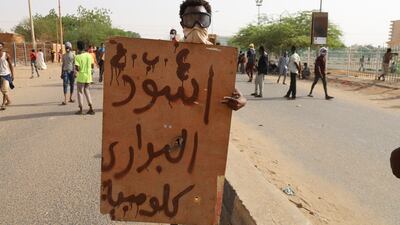
  • A protester holds a placard reading 'Barari Lions'. Reuters
    A protester holds a placard reading 'Barari Lions'. Reuters
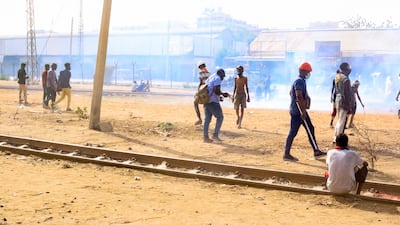
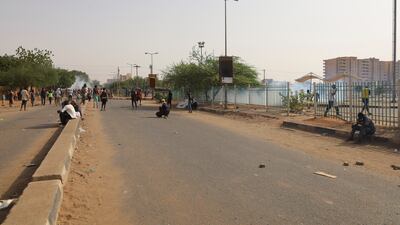
  • Sudanese security forces fired tear gas on Friday to disperse the hundreds of anti-military protesters. Reuters
    Sudanese security forces fired tear gas on Friday to disperse the hundreds of anti-military protesters. Reuters
  • Protesters try to block the road during a rally against military rule in Khartoum. Reuters
    Protesters try to block the road during a rally against military rule in Khartoum. Reuters
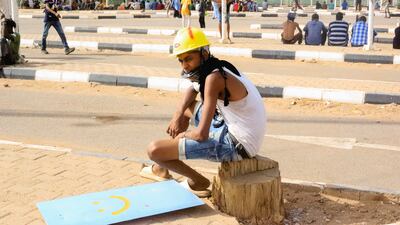
  • A sit-in protest. Reuters
    A sit-in protest. Reuters
  • The actions of Sudan’s security forces against protesters have been condemned. Reuters
    The actions of Sudan’s security forces against protesters have been condemned. Reuters
  • The pro-democracy protesters remain determined to end the rule of the generals. Reuters
    The pro-democracy protesters remain determined to end the rule of the generals. Reuters

They have been beset by differences and internal divisions, exchanging accusations of opportunism or betrayal of the principles of the 2018-19 uprising that toppled the 29-year regime of dictator Omar al Bashir.

Gen Al Burhan said the aim of his decision to withdraw the military from the negotiations is to "allow the political and revolutionary forces along with other national factions to sit down and form a government of independent technocrats that takes care of the requirements of the transitional period".

"The armed forces will not be used as a bridge for any political force to reach power and will be committed to the implementation of the outcome of that dialogue," said Gen Al Burhan.

"I hope that these forces will immediately start a serious dialogue that restores the unity of the Sudanese people."

After the formation of the government, he said, the military-led Sovereign Council that he chairs will be dissolved and a supreme council of the armed forces will be formed to take charge of security and defense issues.

Gen Al Burhan's announcement followed the indefinite postponement last month of the negotiations facilitated by the UN, the African Union and the regional IGAD group.

The postponement followed the boycott of the process by virtually all opposition groups. The United Nations said the boycott rendered the negotiations meaningless.


57%20Seconds
%3Cp%3E%3Cstrong%3EDirector%3A%3C%2Fstrong%3E%20Rusty%20Cundieff%0D%3Cbr%3E%3Cstrong%3EStars%3A%20%3C%2Fstrong%3EJosh%20Hutcherson%2C%20Morgan%20Freeman%2C%20Greg%20Germann%2C%20Lovie%20Simone%0D%3Cbr%3E%3Cstrong%3ERating%3A%20%3C%2Fstrong%3E2%2F5%0D%3Cbr%3E%0D%3Cbr%3E%3C%2Fp%3E%0A
Other acts on the Jazz Garden bill

Sharrie Williams
The American singer is hugely respected in blues circles due to her passionate vocals and songwriting. Born and raised in Michigan, Williams began recording and touring as a teenage gospel singer. Her career took off with the blues band The Wiseguys. Such was the acclaim of their live shows that they toured throughout Europe and in Africa. As a solo artist, Williams has also collaborated with the likes of the late Dizzy Gillespie, Van Morrison and Mavis Staples.
Lin Rountree
An accomplished smooth jazz artist who blends his chilled approach with R‘n’B. Trained at the Duke Ellington School of the Arts in Washington, DC, Rountree formed his own band in 2004. He has also recorded with the likes of Kem, Dwele and Conya Doss. He comes to Dubai on the back of his new single Pass The Groove, from his forthcoming 2018 album Stronger Still, which may follow his five previous solo albums in cracking the top 10 of the US jazz charts.
Anita Williams
Dubai-based singer Anita Williams will open the night with a set of covers and swing, jazz and blues standards that made her an in-demand singer across the emirate. The Irish singer has been performing in Dubai since 2008 at venues such as MusicHall and Voda Bar. Her Jazz Garden appearance is career highlight as she will use the event to perform the original song Big Blue Eyes, the single from her debut solo album, due for release soon.

White hydrogen: Naturally occurring hydrogenChromite: Hard, metallic mineral containing iron oxide and chromium oxideUltramafic rocks: Dark-coloured rocks rich in magnesium or iron with very low silica contentOphiolite: A section of the earth’s crust, which is oceanic in nature that has since been uplifted and exposed on landOlivine: A commonly occurring magnesium iron silicate mineral that derives its name for its olive-green yellow-green colour

How to apply for a drone permit
  • Individuals must register on UAE Drone app or website using their UAE Pass
  • Add all their personal details, including name, nationality, passport number, Emiratis ID, email and phone number
  • Upload the training certificate from a centre accredited by the GCAA
  • Submit their request
What are the regulations?
  • Fly it within visual line of sight
  • Never over populated areas
  • Ensure maximum flying height of 400 feet (122 metres) above ground level is not crossed
  • Users must avoid flying over restricted areas listed on the UAE Drone app
  • Only fly the drone during the day, and never at night
  • Should have a live feed of the drone flight
  • Drones must weigh 5 kg or less
Bridgerton%20season%20three%20-%20part%20one
%3Cp%3E%3Cstrong%3EDirectors%3A%20%3C%2Fstrong%3EVarious%3C%2Fp%3E%0A%3Cp%3E%3Cstrong%3EStarring%3A%3C%2Fstrong%3E%20Nicola%20Coughlan%2C%20Luke%20Newton%2C%20Jonathan%20Bailey%3C%2Fp%3E%0A%3Cp%3E%3Cstrong%3ERating%3A%20%3C%2Fstrong%3E3%2F5%3C%2Fp%3E%0A
Our legal columnist

Name: Yousef Al Bahar

Advocate at Al Bahar & Associate Advocates and Legal Consultants, established in 1994

Education: Mr Al Bahar was born in 1979 and graduated in 2008 from the Judicial Institute. He took after his father, who was one of the first Emirati lawyers

Updated: July 04, 2022, 9:08 PM