


Tens of thousands of protesters swarmed the streets of Sudan's capital, Khartoum, on Friday to mark the third anniversary of the violent break-up of a sit-in protest outside the army headquarters, witnesses said.
A medical group aligned with the pro-democracy movement, the Central Committee of Sudan's Doctors, said a protester died after being shot in the chest by security forces. The victim was identified as 22-year-old Al Nouir Halwai.
His death takes to 99 the number of protesters killed in the near daily anti-military street rallies that began across much of Sudan in response to the October 25 military coup staged by army chief Gen Abdel Fattah Al Burhan.
-
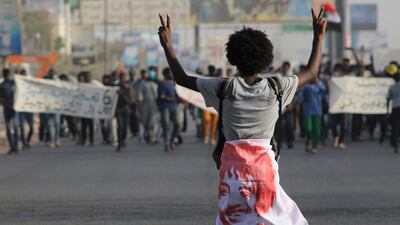
Sudanese protesters rally in Kartoum against military rule on the anniversary of previous popular uprisings. AFP -
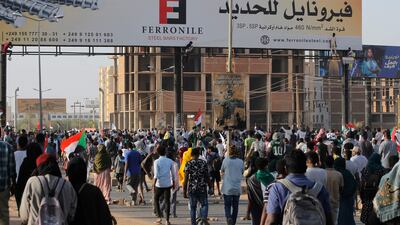
Pro-democracy activists have warned of a people power 'earthquake of April 6' - a momentous day in Sudan's history that was key in bringing down earlier strongmen. AFP -
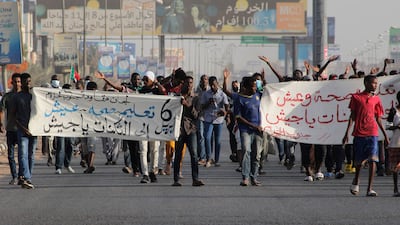
In 1985, the day saw the removal of former president Jaafar Nimeiri following a popular uprising. AFP -
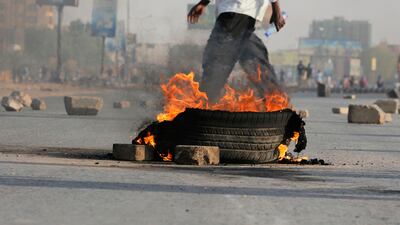
In 2019 it marked the start of a mass sit-in outside army headquarters, after months of protests against Omar Al Bashir's three decades in power. AFP -
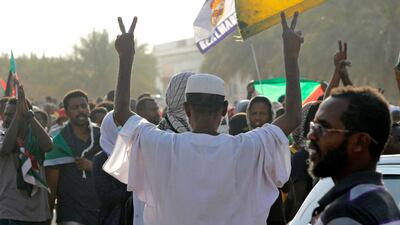
The rallies have been met with the deployment of thousands of police across the Sudanese capital. AFP -

Wednesday's protesters braved unforgiving heat and, for many, also the hunger and thirst of the dawn-to-dusk fast Muslims observe during the holy month of Ramadan. AP Photo -
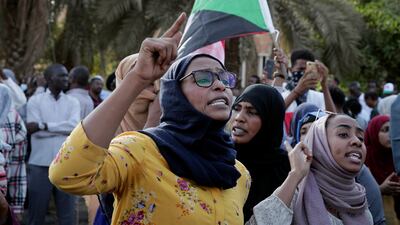
At least 92 protesters have been killed and about 3,000 injured since a crackdown against opposition. AP Photo -
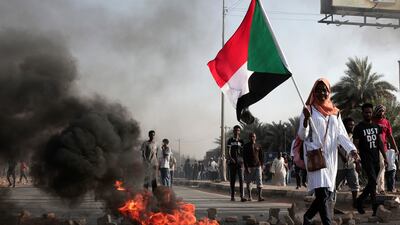
US State Department spokesman Ned Price called on Sudan's military rulers on Tuesday to allow peaceful protests 'to continue without fear of violence'. AP Photo -
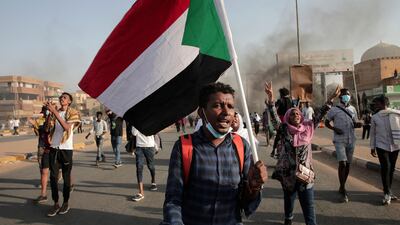
Most Sudanese are unable to make ends meet in the face of rising prices of essential food items and fuel. AP Photo


The protesters demand an end to military rule and a return to the civilian-led democratic transition upended by the coup.
The Ministry of Health reported that an unspecified number of policemen were seriously wounded when the vehicle they were travelling in overturned during Friday's protests. The circumstances in which the vehicle overturned were not immediately clear.
Witnesses said security forces also used tear gas to disperse the crowds on Friday.
Earlier on Friday, authorities in the capital ordered the city’s Nile bridges closed off to traffic, a tactic regularly used to deny the protesters the opportunity to assemble in large numbers. Two suburban bridges several kilometres from the city centre were left open, according to the local government.
The witnesses said concrete barriers and barbed wire were placed around the military headquarters near the capital’s city centre. Roads leading to the army headquarters and the nearby Nile-side Republican palace were sealed off, they said.
The largest concentration of troops, paramilitary forces and police was at the city centre, home to the palace and government offices, according to the witnesses.
The 2019 break-up of the sit-in outside the army headquarters left at least 100 people dead. The bodies of some of the victims were thrown into the Nile, while female protesters were sexually assaulted by the attacking forces.
A high-level investigation was begun soon after the incident but, three years later, its findings are yet to be published. Pro-democracy activists say the inquiry has been stymied by the ruling military for fear that its findings will implicate top army and paramilitary generals.

“The break-up of the sit-in is a very painful memory, but that will not make us forget that it was an example of the Sudan we aspire to have,” said activist Nagdah Mansour, alluding to the ethnic, social and religious diversity of the tens of thousands who took part in the sit-in.
The US, Norway and Britain meanwhile issued a joint statement to mark the anniversary.
“The Troika stands in solidarity with the survivors and victims and joins [the] Sudanese in calling for the prompt resolution of the government-appointed investigation into the massacre and disclosure of the findings to the public,” the statement said.
“We urge the military authorities to bring those accountable for these horrendous crimes against peaceful civilian protesters to justice,” according to the statement released on Friday by the US embassy in Khartoum.
Friday’s rallies, which ended shortly before sunset, were organised by the Resistance Committees, a leading pro-democracy group that has been at the forefront of street protests since the October 25 coup.
“Here we are back on the streets that we haven’t really abandoned,” said the committees when announcing Friday’s rallies.
“We enter decisive rounds to bring down the coup regime and throw the military totally out of the political process and bring to justice all those responsible for violence, killings, firing live rounds, rape and all other violations towards peaceful revolutionaries.”
Friday’s protests come just two days after the United Nations, the African Union and the regional Igad group announced the commencement next week of direct negotiations between Sudan’s stakeholders. The talks will aim to chart a way out of the political crisis engulfing the country since the coup.
No precise date has been set for the start of the negotiations. No list of participants was announced either.
The military said it will be represented by a four-man team of top generals, but most of the pro-democracy groups, including the Resistance Committees, said they were boycotting the talks.
The protesters and the pro-democracy groups behind them have long stated their refusal to negotiate with the military. They also accuse the UN-led effort of treating the party that derailed the democratic transition — the military ― and those advocating democratic rule as equals.
According to groups opposed to the military government, the UN-led process has inadvertently given the generals time to strengthen their grip on power and forge alliances. This could, critics argue, ensure they continue to have the final say in the impoverished country even when not directly represented in government.

