

Egypt will push countries to fulfil their climate pledges and allow protests when it hosts the next UN summit on climate change, Cop27, the incoming president of the event has said.
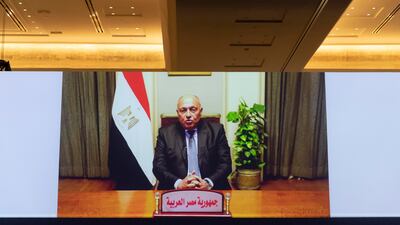
Egyptian Foreign Minister Sameh Shoukry called his overall goal “implementation" as he prepares to preside over Cop27, which will be held in Sharm El Sheikh in November.
He is eager for countries to deliver on promises to reduce greenhouse-gas emissions sharply, facilitate “non-adversarial” talks on compensation to developing countries for global-warming impacts, and allow climate activists to protest.
Mr Shoukry said the last summit, held in Glasgow, Scotland, in 2021, finalised many commitments made during the Paris Agreement in 2015. The pledges aimed to reduce emissions to limit global warming to 1.5ºC (2.7F) since pre-industrial times.
“The commitments and the pledges now have to be implemented in all sectors of the climate change agenda, whether it’s in adaptation, mitigation or finance, loss and damage,” Mr Shoukry said in an interview on Monday with the Associated Press, at the World Economic Forum in Davos, Switzerland.
In recent years, many developing nations and activists have increased long-standing calls to compensate poor countries for devastation wrought by climate change. They say the devastation has been disproportionately caused by rich countries because of past emissions.
The call was rejected during last year’s summit. Many supporters of the idea, often called “loss and damage,” hope to make progress on it in November. Their arguments could receive a boost by the symbolic significance of this conference being held in Egypt, a developing nation in North Africa.
“We hope that the discussion (on loss and damage) is comprehensive, but it is non-adversarial,” Mr Shoukry said. He added that there should be a recognition among all countries “that we are all in the same boat and for us to succeed, we all have to succeed.”
Mr Shoukry said protests would be allowed during the conference.
Egyptian authorities crack down on demonstrations not sanctioned by the government and retain the right to cancel or postpone any protests. This leads activists to wonder what, if any, demonstrations would be able to happen, a common occurrence at previous Cop events.
-
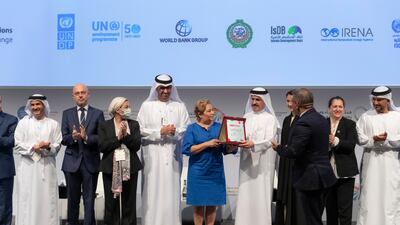
The official opening ceremony of MENA Climate Week 2022 at Atlantis, The Palm in Dubai. All photos: Antonie Robertson / The National -
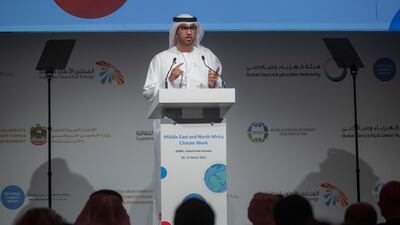
Dr Sultan Al Jaber, Ministry of Industry and Advanced Technology and the UAE's Special Envoy for Climate Change, addresses delegates. -
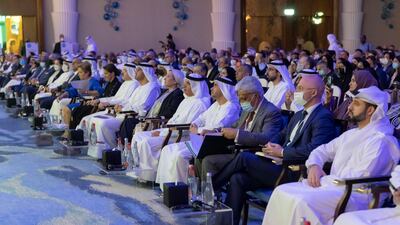
Dr Al Jaber called on governments to keep investing in 'low-cost, low-carbon energies'. -
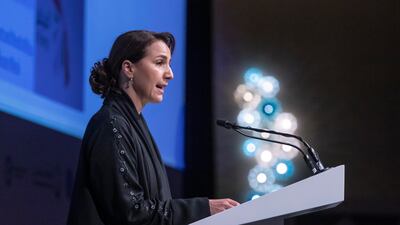
Mariam Al Mheiri, Minister of Climate Change and Environment, speaks at the conference. -

Patricia Espinosa, executive secretary of the United Nations Framework Convention on Climate Change, said the climate crisis was the most lethal threat facing humanity. -
More from the first day. -
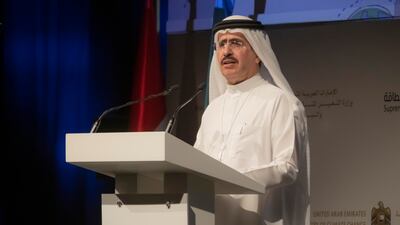
Saeed Mohammed Al Tayer, chairman of the World Green Economy Organisation and managing director and chief executive of Dewa. -
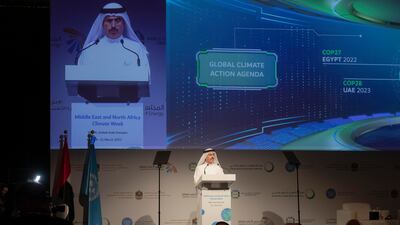
The audience listens to the Dewa chief executive's address. -
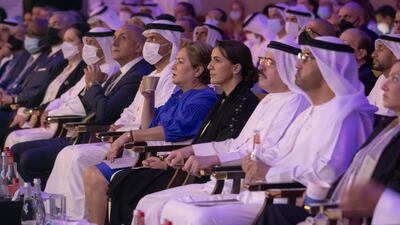
There was no benefit to ditching existing energy models if people could not afford to use the alternatives, Dr Al Jaber told those in attendance. -

Dr Al Jaber said any transition to clean energy should be sustainable.


“We are developing a facility adjacent to the conference centre that will provide them the full opportunity of participation, of activism, of demonstration, of voicing that opinion,” Mr Shoukry said. “And we will also provide them access, as is traditionally done on one day of the negotiations, to the negotiating hold itself.”
Protests at global UN climate conferences often fill the streets with floats and banners and persist for days. The protests, as well as booths and press conferences outside the official venues, comprise a conference of their own — although they are not where critical language on carbon commitments is hammered out.
Mr Shoukry said during meetings about climate pledges in Denmark earlier this month that he had invited protesters who were outside to speak with him. He called the meeting “productive” and that Egypt’s climate goals lined up with those of many protesters.
“We recognise their impact, their determination, their commitment to keep us all honest as governmental representatives and parties that we should not be delinquent, and rise to the occasion and deal with this very important issue,” he said.
Before hosting the conference, Egypt has been racing to launch many agreements around renewable energies. In March, Egypt and Norway signed an agreement for several projects around green hydrogen and building green infrastructure projects in African countries.
Egypt and clean energy company Scatec also signed a $5 billion deal to establish a plant in the Suez Canal area for producing green ammonia from green hydrogen. Such deals come on the heels of years of steady investment in wind and solar technologies.
Mr Shoukry said Egypt was relying as much as possible on renewable energy in the building of several new cities, including a new administrative capital east of Cairo. Critics have called it a “vanity project,” but the government has said it is necessary to absorb Cairo’s booming population, expected to double to 40 million by 2050.
Mr Shoukry said a rapid shift to renewable energies presented enormous opportunities for investors, a common argument of proponents.
When asked whether fossil fuel companies could or should be part of the transition to renewable energies, an argument made by oil and gas companies, including many at the Davos conference, Mr Shoukry disagreed.
“I can’t say that fossil fuels are part of the solution. Fossil fuels have been the problem,” he said. “We might see in gas a transitional source of energy with certainly fewer emissions. But I think we have to really move quickly to the net-zero goal and we have to apply ourselves more effectively in new technologies, in renewable energy.”

