


South Sudan’s president and his deputy signed an agreement on Sunday to unify the command of the security forces, easing political tension in the African country.
Clashes in recent days between government troops and forces loyal to Vice President Riek Machar raised the threat of another outbreak of serious fighting.
In a letter to regional mediators, Mr Machar accused President Salva Kiir of breaching a 2018 truce with attacks on his forces.
Sunday’s agreement calls for a unified structure in the security services, including the army and the police, with 60 per cent in favour of Mr Kiir’s side.
Other details, including the positions given to each party, were not immediately available.
Mr Kiir and Mr Machar witnessed the signing ceremony in Juba, the South Sudanese capital, where on Monday there was heavy military presence, highlighting growing tension.
“This is to inform everyone that we have agreed to unify the military command,” said Tut Gatluak, a presidential adviser on national security.
"We are for peace and that all of us should strive for peace."
Martin Gama Abucha, the mining minister who is a member of Mr Machar’s team, said the event was key to maintaining peace in the country.
“It is important that we silence the guns so that South Sudan can prosper,” Mr Abucha aid.
There were high hopes for peace and stability when oil-rich South Sudan gained its long battle for independence from Sudan in 2011.
But the country slid into civil war in December 2013, largely based on ethnic divisions, when forces loyal to Mr Kiir battled those loyal to Mr Machar.
-
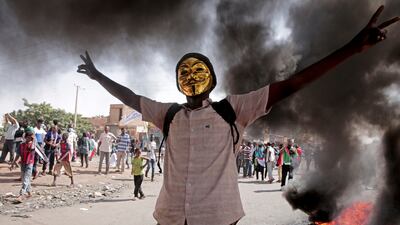
A man flashes the victory sign during a protest in Khartoum to denounce the October 2021 military coup in Sudan. AP -
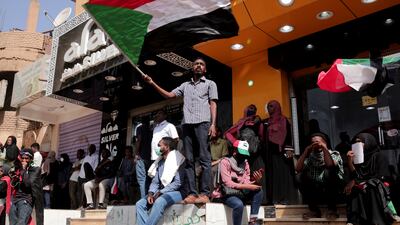
The UN said it would hold talks in Sudan to try to set the country's transition to democracy back on track. AP -
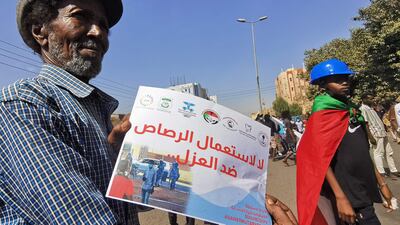
A Sudanese man , in the capital Khartoum holds a poster that reads in Arabic: ‘No to the use of live bullets against the unarmed’ during a protest against the October 2021 military coup. AFP -
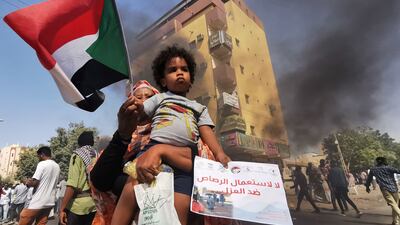
A Sudanese woman carries a child during a protest against the October 2021 military coup. AFP -
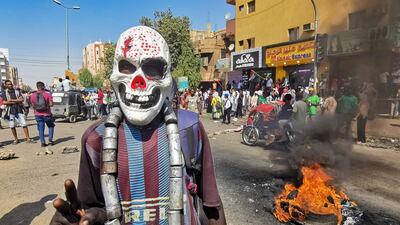
The coup on October 25, led by army chief General Abdel Fattah Al Burhan, derailed a power-sharing transition between the military and civilians that had been painstakingly established after longtime dictator Omar Al Bashir was removed in 2019. AFP -
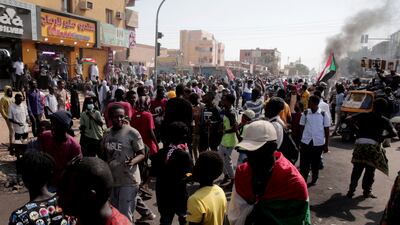
People chant slogans during a protest to denounce the coup. AP -
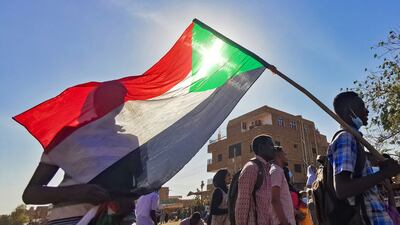
A Sudanese man carries the national flag during an anti-coup demonstration. AFP -
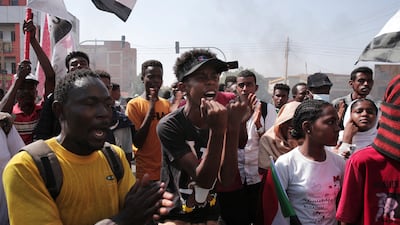
People chant slogans during a protest to denounce the military takeover. AP -
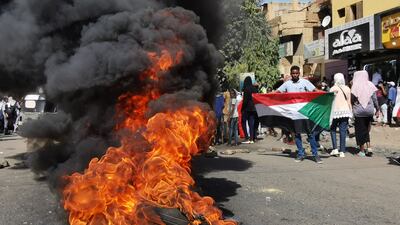
Sudanese protesters walk past burning tyres during a rally. AFP -
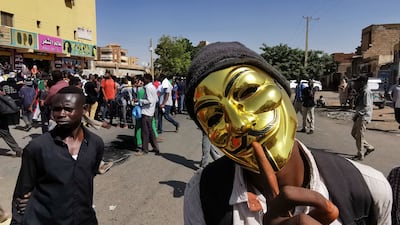
A mask-clad Sudanese protester attends a demonstration. AFP


Tens of thousands of people were killed in the civil war that ended with a 2018 peace agreement, brought Mr Kiir and Mr Machar together in a government of national unity.
But challenges remained, including the government’s failure to implement promised reforms such as completing the unification of the army command.
The US, the UK and Norway, supporting South Sudan’s peace deal, said recently they were concerned that the new outbreak of fighting threatened to undermine the government’s unity.

