

Tunisians are free to express their views on a new political system for the country, President Kais Saied said in a televised address on Monday, before a referendum on constitutional changes scheduled for July.
He spoke after about 2,000 people protested in the capital Tunis on Sunday, calling for greater political rights and the return of a multiparty government.
"Work will continue to go to a referendum on July 25, after which everyone will be involved in expressing their opinions and suggestions for the new political system," Mr Saied said.
-
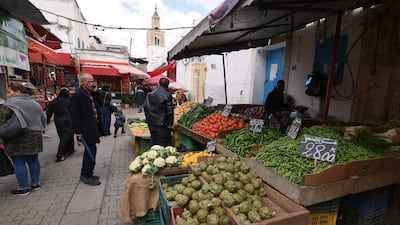
Tunisia, roiled by years of political turmoil that deepened with President Kais Saied's power grab last July, is mired in a deep recession. All photos: AFP -
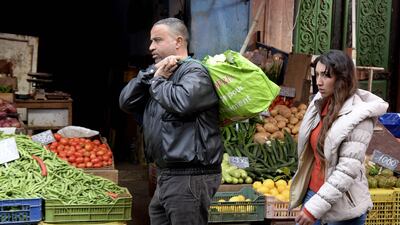
Surging prices and job losses have hurt families that were already struggling before the coronavirus pandemic. -
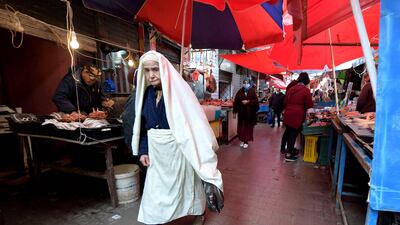
This week, Tunisia started preliminary talks with the International Monetary Fund over a bailout package. -
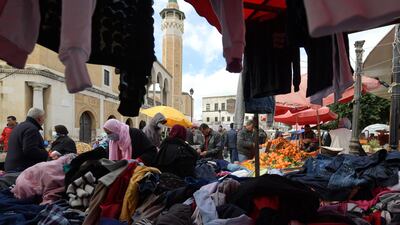
Such a deal would probably mean cuts to subsidies and public sector wages, which many fear would spell more suffering for the most vulnerable. -

That could fuel the same kind of grievances that sparked a revolution a decade ago and brought down Zine El Abidine Ben Ali after 23 years in power. -

Tunisian grocer Bilel Jani sees the reality of a biting economic crisis. -
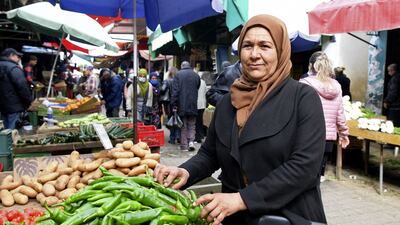
Tunisian Delila Dridi said life is a struggle on her salary from the education ministry.


His comments also came at the expiry of a deadline for an online consultation that started two months ago, which officials said was designed to determine the views of Tunisians on political and economic issues.
Only about 500,000 people participated in the process, in a country of 12 million.
Public opinion will feed into a panel reviewing constitutional amendments, Mr Saied has said.
The president has been accused of returning the country to authoritarian rule that had ended with a national uprising in 2011.
Last year, he froze executive authorities and suspended parliament, giving himself power to rule by decree.
Sunday's speech may imply that Mr Saied could accept talks with political opponents, although he has previously said he rejects "sterile dialogue" with those he calls corrupt and traitors.
Mr Saied approved three decrees late on Sunday, including reconciliation with businessmen accused of involvement in corruption cases in exchange for development projects in interior regions, state TV reported.
Before Mr Saied’s takeover, Tunisia’s political scene was highly factionalised, dogged by corruption and wrangling between rival parties. Economic growth was sluggish with high unemployment, which grew to nearly 20 per cent in 2021, according to government data.
But critics of Mr Saied doubt he has a workable plan to address the country’s continuing economic crisis, which includes soaring public debt and a bloated public sector.
Structural economic problems have been compounded not only by Covid-19 and the subsequent collapse in tourism revenues but also, the sharp rise in commodity prices this year, which have caused a spike in the cost of living.
The president has also been focused on far-reaching political devolution, rather than the deep economic reform analysts say is necessary to create growth.
Mr Saied did not say how people could express their views in the new system, although key players, such as the powerful labour union UGTT, feel the only way forward is through national dialogue on political and economic reforms.
Sunday's protesters in the capital called for the return of the democratic system.
Most political parties have dismissed the online consultation as a fraud and a bid by Mr Saied to impose his political project, although the leader called it an embodiment of the slogan of the Tunisian revolution, "The people want".

