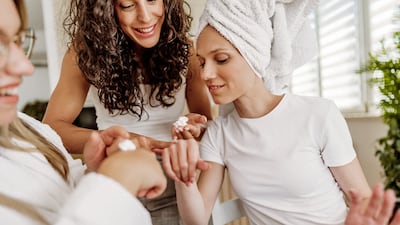
With so many aspects of life upturned and disrupted by a cancer diagnosis and subsequent treatment, some women find that sticking to usual routines can support emotional stability and a sense of control during an uncertain period.
“For me, maintaining my skincare routine was a way of looking after myself and holding on to a sense of normality during a challenging time,” says breast cancer survivor Azza Mohammed. “Throughout my treatment, I continued taking care of my skin and never allowed the illness to take away my sense of self or negatively affect my outlook on life.”
Something as simple as investing in a rich cream for weakened skin, oil for sore nails, or a balm for cracked skin requires little physical effort but can have a huge effect on mental health and self-esteem.


“I think it's incredibly important, and not just for the skin,” says Dr Parisa Khonsari at Sequoia Clinic, Dubai. “Going through breast cancer treatment can be physically and emotionally exhausting. On top of dealing with the diagnosis and treatment itself, women may experience hair loss, changes in their skin, weight fluctuations, surgical scars and changes in how they recognise themselves in the mirror.

“I think we sometimes underestimate how much that can affect someone's confidence and emotional well-being,” she adds. “For many women, skincare, make-up or going to the salon is more than just a beauty routine. It's a little bit of normality. It's something familiar that they enjoy, and something they still have control over when so much else feels outside their control.”
What effect can cancer treatments have on skin?
Cancer treatments affect skin by disrupting fast-growing cells, altering the skin barrier, and causing inflammation, with different therapies having different dermatological impacts.
“Cancer treatments affect the skin in three main ways,” says onco-dermatology specialist Dr Catherine Borysiewicz. “They weaken the skin barrier, causing dryness, itching, roughness and painful cracks. They target the hair and nails, and they alter the immune and cellular pathways in the skin.”
The wide range of therapies used to treat breast cancer each come with their own side effects. Chemotherapy causes hair loss, changes to the nails and hand–foot syndrome – a painful tingling, redness, swelling and peeling of the palms and soles. When it comes to radiotherapy, “even with today’s highly targeted techniques, around 95 per cent of patients develop some degree of radiation dermatitis in the treated area, ranging from mild pinkness to moist, weeping skin,” says Borysiewicz.

“Targeted therapies can cause acne-like eruptions and nail fold [the skin around the nail] inflammation, immunotherapy can cause intense itching and eczema-like rashes, and hormone therapies can bring on menopausal skin changes, including dryness, thinning and loss of elasticity,” Borysiewicz explains.
What beauty ingredients or treatments should cancer patients avoid?
Patients are advised to avoid certain ingredients found in beauty and cosmetic products, not because they will adversely affect treatment, but because of their potential effects on skin immunity and integrity, wound healing and the risk of bleeding or infection.
“Women undergoing breast cancer treatment may need to modify or postpone certain beauty treatments,” says Dr Ankita Tuknayat, dermatology specialist at Aster Clinic. “Treatments like deep tissue sculpting, Botox, dermal fillers, aggressive chemical peels, lasers, high-intensity focused ultrasound and even manicures or pedicures should be avoided during active treatment for breast cancer.”
She added: “Patients with neuropathy [nerve damage] should also take extra care with hot water and heated foot spas.”
With the skin barrier compromised, ingredients such as fragrances and essential oils found in perfumed moisturisers, body washes and bath oils can irritate skin and cause allergic reactions, while alcohol-based products such as those found in toners, perfumes and scented body sprays can dry out the skin.
“This isn’t the time for anything that works the skin hard,” says facialist Rosie Osbourne. “I’d pause retinoids, strong exfoliating acids, benzoyl peroxide and fragrance or essential oils. Some women with hormone-sensitive cancers also prefer to avoid parabens or plant oestrogens. Strip it right back and always check with your oncology team first.”

Retinoids are found in most anti-ageing serums, night creams and eye creams, as well as exfoliating acids in toners, peel pads and products that promise a “glow”. Benzoyl peroxide is found in spot treatments.
“Packaging also matters more than most people realise,” says Borysiewicz. “Pumps and tubes reduce the risk of bacterial contamination [compared to open-mouth jars], which is important when skin is fragile and immunity may be lowered.”
For UAE resident Fadwa Hussein, who was diagnosed with breast cancer in 2017, her self-care routine became about adaptation rather than complete change.
“I underwent chemotherapy and surgery – specifically, a bilateral mastectomy,” she says. “Regarding my daily routine and the products I used, I started using an eyebrow pencil because I lost my eyebrows due to chemotherapy, and I used very little make-up. During radiation therapy, the doctor recommended washing with baby shampoo, so I used the brands Johnson’s and Sebamed.”
Can women with breast cancer still go to the spa?
In a word, yes. Self-care and taking time for yourself outside treatment and other commitments are great ways to relax and quiet the mind.
“During active treatment, we usually start with facials,” says Salina Handa, founder and creative director of Sensasia spas. “They’re calm, they don’t involve the body, and they give back something cancer treatment often takes away, which is an hour where you’re the one being looked after, not examined. Many women tell us that feeling good about their skin again helps them feel like themselves.”

Gentleness is vital, with regular treatments adapted to suit the client rather than using an entirely different treatment.
“After a client’s oncology team gives the all-clear or once she’s finished treatment, we would offer body treatments, but adapted,” adds Handa. “This would mean lighter pressure, slower strokes and shorter sessions, supportive positioning with pillows, fragrance-free or very low-fragrance products, no heat and no work on scars, surgery sites, radiotherapy areas, ports, or any limb at risk of lymphoedema [a build-up of lymphatic fluid causing swelling].”
There are also treatments designed for people undergoing cancer care. In 2025, Jumeirah's Talise Spa began collaborating with Ground, an Irish-born skincare collection focused on natural products, with a dermatologist-tested spa ritual line designed specifically to support people living with or recovering from cancer. Talise Spa also introduced massages designed specially for those undergoing treatment.
Are there any beauty products specifically for breast cancer patients?

Some products are formulated specifically for women undergoing cancer treatment, while others work because their ingredients won’t irritate weakened skin.
“Think barrier repair, fragrance-free products and minimal ingredients,” says Osbourne. “La Roche-Posay Cicaplast, Avene Cicalfate+ and Aquaphor are trusted by oncologists. Brands like Jennifer Young are formulated specifically for people going through cancer treatment. My essentials are a creamy cleanser, a ceramide-rich moisturiser, a rich balm for lips and cuticles and a mineral SPF every single day.”
“Several dermo-cosmetic brands now have oncology-focused ranges developed with dermatologists, oncologists and patient groups,” adds Borysiewicz. “However, ‘oncology’ products are not regulated differently; what matters is a gentle, well-tested formulation and a consistent routine, ideally started before treatment begins.”

