



Saudi jewellery designer Laila El Mehelmy has helped create an intriguing necklace to highlight the value of water in the climate crisis.
Called the OoOoooOoooOh la l'ice necklace, it is made from a string of silver beads encased in seven ice cubes. When worn against the skin, the ice melts after 30 minutes.
It was created with the Parisian design studio Golem and is the brainchild of founder Ariel Claudet, who came up with the idea after watching clubgoers in Berlin trying to cool off by rubbing ice cubes on their skin.
"At a time when water sources are being privatised and water scarcity is striking all countries across the globe, water is turning from an overlooked commodity into one of the most sought-after luxury goods," Claudet told design publication Dezeen.

For the project, Claudet asked Jeddah-born designer El Mehelmy, who works from Amsterdam, to create a string of silver beads that could have water frozen onto them, likening the value of water to precious gemstones.
The result is a necklace of polished silver beads, with seven larger beads, to show where the ice cubes should sit.
The idea is that when worn, body heat will melt the ice, thus highlighting the fragility of the natural ecosystem, but also cooling down the wearer.
"This process induced by the heat from the wearer's body reflects the human impact on natural cycles," Claudet explained. "It shows how humankind acts as a catalyst to natural processes and dangerously accelerates global warming and desertification."
Sold with a custom-made silicone ice tray, the necklace can be refrozen endlessly, without damaging the beads.
While it's meant to be worn encased in ice, it's also a beautiful piece in its own right, said Claudet.
“When not iced, oooOoooOoooh la l’ice can be worn as a silver beaded necklace, or doubled as a choker.”
Huge 170-carat pink diamond discovered in Angola could be largest found in 300 years — in pictures
-
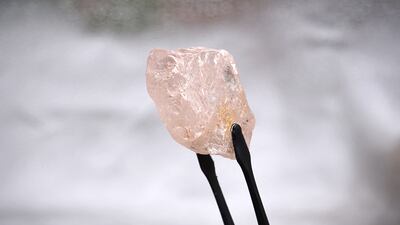
A 170 carat pink diamond - nicknamed The Lulo Rose – has been mined in north-eastern Angola. AFP -
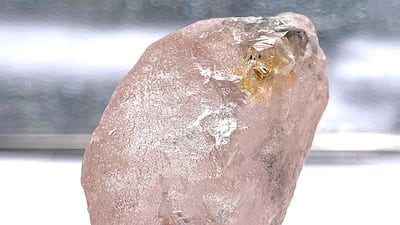
The gemstone was unearthed at the Lulo mine in Angola's diamond-rich region. AFP -
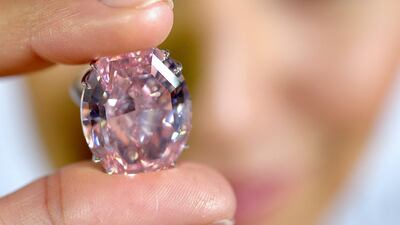
A Sotheby's employee shows The Pink Star diamond weighing 59.6 carats, the most valuable diamond ever to be sold at auction. AP -
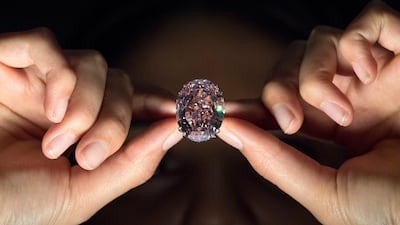
The Pink Star was sold in Hong Kong in 2017 for $71.2 million. AFP -
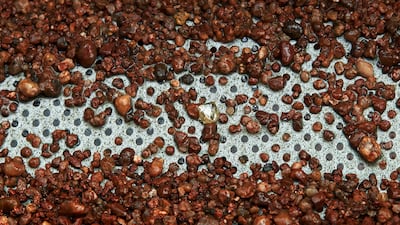
An estimated 7-carat diamond was found in March 2013 near an undisclosed Angolan village not far from the Congolese border. Getty -

Miner carries bags filled with excess earth in 2013 to expose the diamond-rich layers near the undisclosed village in Angola. Getty -

Miners toiled at the Angolan site around the clock in March 2013, in a bid to unearth valuable diamonds. Getty



