
Like the Arabian majlis, the Uzbek supa represents warmth, hospitality and the opportunity to spend quality time with loved ones. The raised platform is encircled by plush seating – and is a common sight in homes and courtyards in Uzbekistan, the Central Asian country known for its rich spices and hearty dishes.
It is this spirit of warmth and togetherness that inspired Tashkent-based restaurateurs Nodir Mahmud and Nodir Takhirov to name their first Dubai venue after the traditional gathering space.
First impressions

The aroma of fresh cumin mingles with that of fermented apricots as my party of four makes its way into Supa. We follow our noses to discover a wall lined with sacks of Uzbeki condiments, from the aforementioned zira and turshak, to star anise, barberries and salted apricot kernels.

As we walk further into the bright and airy restaurant, we see latticework windows, geometric black-and-white tilework, Suzani and Bukara-style carpets underfoot and as wall tapestries – and reams of curtains.
These, explains co-founder Takhirov, are meant to give diners privacy without the feeling of being closed in by screen partitions. The central section of the 85-seater restaurant, for instance, can double as a private party room for 20 when the curtains on either end are drawn.
The three “supa” booths for smaller groups can be cordoned off with heavy mahogany curtains, with guests meant to remove their footwear before settling down on the velvet seating surrounding the low central platforms.
This section of the restaurant even has a stone waterspout, in keeping with the Uzbeki custom of washing your hands immediately before digging into a meal.
The vibe is both cosy and elegant, putting us at ease and ready for the feast.

The menu
Dishes are divided into hot and cold appetisers, a fire and charcoal section and signature dishes. Many of the ingredients are imported from Uzbekistan, right down to the tomatoes.
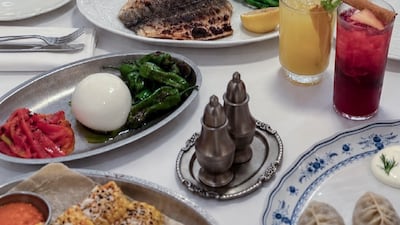
Yusupov tomatoes are a highlight of the cuisine, “to the point that it’s hard to find the best quality within the country itself as they are reserved for export purposes”, says Takhirov. The distinct sweet-sour profile of the ingredient shines through in the achichuk salad (Dh33) and tomato-garnished burrata, served here with grilled Padron peppers (Dh59).

Meat, especially lamb, is another cuisine staple. It comes in kebab form (Dh44); minced with an onion-cumin mix in the freshly baked samsa (Dh22); as a slow-simmered shurpa soup (Dh45); and as one of the most delectable lamb chop dishes I’ve tasted in Dubai – which is saying something.
The French-cut, Uzbek-marinated lamb chops (Dh88) are chargrilled rather than fried, yet are buttery-soft inside, offset by an almost crunchy cumin-marinated crust. The spiced potato accompaniment is roasted in the lamb fat, creating a moreish and memorable dish.
The one vegetarian in our party makes approving noises about the hummus (Dh25) and one incidental taste of the dip – served at Supa with cumin, smoked paprika, chilli-infused oil and on a bed of crispy chickpeas – turns into a repeat order.

The beef manti dumplings do not quite match up to the premium taste of the other items we try, most notably the star of this culinary show: the Uzbek plov.
Standout dish
At Uzbek restaurants, the plov is usually the piece de resistance – a symbol of indulgence and abundance. At Supa, the fragrant long-grain laser rice is laced with spices, tender lamb and barberries, and garnished with quail eggs and garlic. Although it is cooked in lamb fat, the dish has a texture that is more silky than greasy. The game-changer here is the batonnets of yellow carrot, or sariq sabzi, an heirloom vegetable native to Central Asia. The carrots' herbal notes, soft without being mushy, change the dish from tasty to Supa-lative. The fact it’s priced at Dh55 is just the currant on top.

A chat with the owner
Co-founder Takhirov is a proud ota (“father” in Uzbek) when it comes to his “month-old baby, Supa”. Having worked at the Uzbek restaurant Zor in Fairmont The Palm, the restaurateur says he realised focusing solely on one cuisine might not do the trick for attracting discerning UAE diners.
“Yes, Supa is a proudly Uzbek restaurant, but if we want to appeal to more guests and have them coming back, I think it’s important to offer some variety without losing the essence of what we stand for,” he says. “We’ve included a handful of European, Lebanese and Georgian dishes, but with our own twist.”
The hummus with a crunchy chickpea base, and burrata with Uzbek tomatoes and Padron peppers are delicious examples.
Takhirov and team are also big on quality, and Supa does not use any frozen produce. “Our meat and fish are either bought fresh or chilled, and the plov is only cooked hot, never reheated, which can change the texture of the rice,” he explains.
“Uzbek cuisine is, first and foremost, about family, and about food made with pride, with love and with soul. Growing up in Tashkent, some of my happiest memories were family meals gathered around the supa under an apricot tree. We wanted this namesake restaurant to capture a little of that feeling, to be somewhere warm and relaxed where people can sit, share food and stay a while.”
Save or splurge
A three-course meal at Supa can cost between Dh101 and Dh213.
On the high end of the price spectrum lie appetisers including beef carpaccio, burrata or khachapuri (Dh59 each); medallion steak or a mixed grill platter for mains (Dh99 each); and Snow Dust Napoleon (Dh55) for dessert.
The three most reasonable dishes across starter, main and dessert are freshly baked samsa (Dh22), chicken shashlik with toum (Dh34) and saffron milk cake (Dh45).
Contact details
Supa – Uzbek Culinary House at Millennium Al Barsha is open daily from 11am to 11pm. Reservations can be made by contacting 054 204 7777.
This review was conducted at the invitation of the restaurant

