The "here today, gone tomorrow" culture has become a firm fixture on the UAE foodscape, as pop-up restaurants and vendors mushroom across the UAE. You can seek out or stumble across everything from plant-based delights and steak burgers sprinkled with gold flakes, to beachside food trucks and intimate 12-seater chef’s tables.
Inspired by supper clubs dating back to the 1960s, pop-ups and underground dining were all the rage half a century ago. The trend has made a comeback as discerning modern-day diners are forever on the lookout for alternatives to usual eateries, as well as, in part, the uncertainty brought about by the pandemic (even the current World’s Best Restaurant, Noma in Copenhagen, launched a pop-up burger joint in May 2020).
Pop-ups are also a great platform to showcase a chef’s culinary talent, catering to both in-the-know foodies and curious passers-by. The limited time and seats serve to generate buzz and create a sense of urgency. Also great for young and emerging brands, pop-ups can offer everything from an exclusive one-night food event to a dining experience that stretches across the UAE’s cooler months.
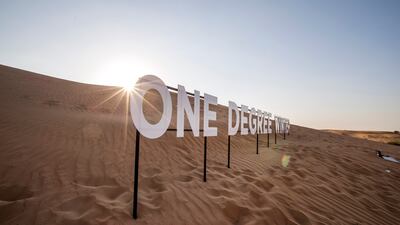
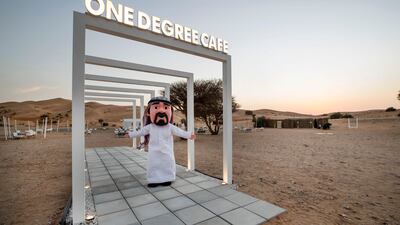
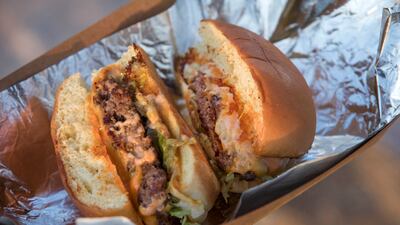
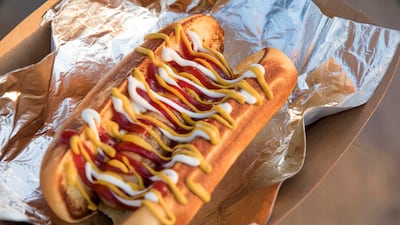
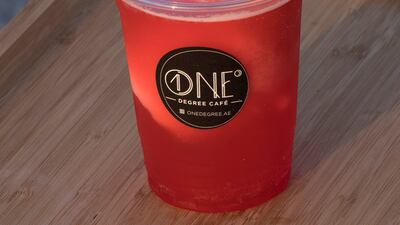
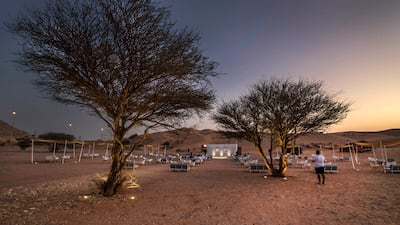
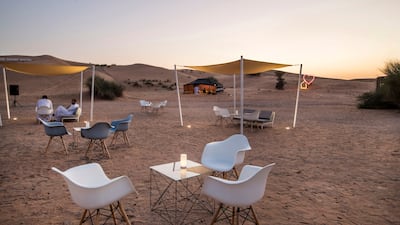
One Degree Cafe, for example, is a winter pop-up located on the Dubai-Sharjah border, about a 40-minute drive from Downtown Dubai. Located in the middle of the desert, it offers guests dune views, majlis-style seating and dishes such as burgers, hot dogs and chips, plus high-quality tea, coffee and shakes.
Due to its short-term nature – that leaves a small margin for word of mouth – attracting repeat customers is perhaps one of the cons of a pop-up stall, but, then again, this exclusivity is also its USP. Arguably, the cult following that One Degree Cafe enjoys is down to the fact it closes as soon as the weather gets warm.
A seasonal trend
The festive season and other time-bound events, too, lend themselves well to pop-up culture. Case in point, the various “winter wonderlands” custom-created at malls around the Emirates, which offer everything from gingerbread and turkey stations to homemade cookies and candy cane trees.
The Abu Dhabi Grand Prix, meanwhile, saw a number of pop-ups by The Italian Way by Peroni Nastro Azzurro, which had a presence in Filini Garden at Radisson Blu Hotel, Amici Terrace at W Abu Dhabi and Stills at Crowne Plaza Abu Dhabi. A branch of Dubai's Il Borro Tuscan Kitchen also popped up at Yas Marina Circuit, as well as Nobu, making its Abu Dhabi debut.
So what's the appeal to business owners?
“It's a safe bet where we don't have to risk it all and has a lot of potential for developing the brand we're showcasing for the future,” says Hamad Alawar, co-founder of High Joint and The Phil by High, a Philadelphia cheesesteak pop-up that’s currently serving rib eye, grilled Wagyu and other prime cuts (alongside provolone cheese and caramelised onions inside a buttery roll) at Market Outside the Box, which is part of the Dubai Shopping Festival, in Burj Park until December 31.
Another vendor to look out for during DSF is Mihbash Bubble Tea. Founder Yazan says “pop-ups such as the ones organised by DSF are impactful and strategic for food and beverage outlets. Through such events, businesses can test out a new turf of different markets and customer bases that they would not normally be exposed to in their flagship branches, without the heavy expenses of a new shop.”
Marcus Sutton, general manager, Zabeel House by Jumeirah, The Greens, agrees. “Pop-ups, such as Vista Del Verde, our Mexican concept, are a great way for us to showcase new ideas. It gives us the freedom to be flexible and has a cost factor advantage that we don't get with permanent spaces. It also gives the team an edge to be more creative and test out unique ideas, and build a reputation and following.”
'Making products more accessible'
While most entrepreneurs seek to attract a wider customer base with their makeshift stalls, sometimes a vendor will, well, pop up to cater to a specific culinary group. Earlier this year, online boutique Not Just For Vegans teamed up with Thrift For Good to launch a day-long vegan market in Palm Jumeirah. On offer were brands such as Grawtitude, which makes plant-based cheeses; Veghana, which serves okra, fonio and other plant-based dishes from West African cuisine; and natural ice lollies brand House of Pops.
“It’s about making people more aware and making these products more accessible,” says Carly Dubery, founder of Not Just For Vegans.
One golden oldie that is often found at various pop-up events around the country is Sugargram. Taking advantage of its stall, the brand serves not only its signature bite-sized cupcakes, but also offers limited-time creations. At the recently concluded Beach Canteen and the ongoing MOTB, for example, it launched a unicorn-inspired ice cream in pink vanilla and chocolate flavours, topped with sprinkles and sauces.
“As we are an online brand, pop-ups are a great opportunity to interact with our customers” says Elaf Patel, founder of Sugargram. "It’s also been so fun to create the Uni-Cone, something everyone in the ‘sugarfam’ has been obsessed with, but that we could never deliver.
"The best part of being at a pop-up is the guests we’re meeting; you get the impression they are consciously seeking out local businesses to support.”
Local brands are also all the rage at the various farmers’ markets that sprout up in parks across the UAE. The popular Ripe Market brand, for example, introduces visitors to home-grown vendors who display and sell everything from sauces and chutneys to artisanal breads and other baked goods.
On a more global stage, popular Sri Lankan restaurant Ministry of Crab erects pop-ups across the world, from Abu Dhabi to London, with the latest passing through Dubai last month.
Over at the Expo 2020 Dubai site is Bombay Brasserie, Taj Dubai’s Indian restaurant, which is hosting a dining pop-up at the India Pavilion, offering visitors a chance to sample flavours from various states around the country.
“The expression ‘good things come in small packages’ fits perfectly for F&B pop-up concepts,” says Raghu Deora, executive chef at Taj Hotels. “For a chef and his team, it is an exciting challenge to work outside of the comfort of their kitchen, it allows for more creativity and can expand the outlet’s demographic and geography.
“For a guest, a pop-up is a great chance to either get familiar with a ‘lighter version’ of the original outlet or sample the best selection in a different, often more affordable, location. Traditionally, a pop-up features a selection of bestsellers, which allows the culinary team to diversify offerings and change the menu regularly. And guests are provided with an enhanced experience.
“For example, at the Bombay Brasserie pop-up, we have a regional thali that changes every two weeks. This way, we can cater to multicultural visitors. In a competitive market like Dubai, the pop-up scene is full of high-quality, exciting and popular outlets that provide guests with multiple options, suitable for anyone from a food connoisseur to a casual passer-by interested in a quick bite.”
The end game is to build enough loyalty and curiosity to draw customers to the flagship restaurant once the makeshift walls of pop-up have been taken down.

Ten tax points to be aware of in 2026
1. Domestic VAT refund amendments: request your refund within five years
If a business does not apply for the refund on time, they lose their credit.
2. E-invoicing in the UAE
Businesses should continue preparing for the implementation of e-invoicing in the UAE, with 2026 a preparation and transition period ahead of phased mandatory adoption.
3. More tax audits
Tax authorities are increasingly using data already available across multiple filings to identify audit risks.
4. More beneficial VAT and excise tax penalty regime
Tax disputes are expected to become more frequent and more structured, with clearer administrative objection and appeal processes. The UAE has adopted a new penalty regime for VAT and excise disputes, which now mirrors the penalty regime for corporate tax.
5. Greater emphasis on statutory audit
There is a greater need for the accuracy of financial statements. The International Financial Reporting Standards standards need to be strictly adhered to and, as a result, the quality of the audits will need to increase.
6. Further transfer pricing enforcement
Transfer pricing enforcement, which refers to the practice of establishing prices for internal transactions between related entities, is expected to broaden in scope. The UAE will shortly open the possibility to negotiate advance pricing agreements, or essentially rulings for transfer pricing purposes.
7. Limited time periods for audits
Recent amendments also introduce a default five-year limitation period for tax audits and assessments, subject to specific statutory exceptions. While the standard audit and assessment period is five years, this may be extended to up to 15 years in cases involving fraud or tax evasion.
8. Pillar 2 implementation
Many multinational groups will begin to feel the practical effect of the Domestic Minimum Top-Up Tax (DMTT), the UAE's implementation of the OECD’s global minimum tax under Pillar 2. While the rules apply for financial years starting on or after January 1, 2025, it is 2026 that marks the transition to an operational phase.
9. Reduced compliance obligations for imported goods and services
Businesses that apply the reverse-charge mechanism for VAT purposes in the UAE may benefit from reduced compliance obligations.
10. Substance and CbC reporting focus
Tax authorities are expected to continue strengthening the enforcement of economic substance and Country-by-Country (CbC) reporting frameworks. In the UAE, these regimes are increasingly being used as risk-assessment tools, providing tax authorities with a comprehensive view of multinational groups’ global footprints and enabling them to assess whether profits are aligned with real economic activity.
Contributed by Thomas Vanhee and Hend Rashwan, Aurifer
Avatar: Fire and Ash
Director: James Cameron
Starring: Sam Worthington, Sigourney Weaver, Zoe Saldana
Rating: 4.5/5
Mercer, the investment consulting arm of US services company Marsh & McLennan, expects its wealth division to at least double its assets under management (AUM) in the Middle East as wealth in the region continues to grow despite economic headwinds, a company official said.
Mercer Wealth, which globally has $160 billion in AUM, plans to boost its AUM in the region to $2-$3bn in the next 2-3 years from the present $1bn, said Yasir AbuShaban, a Dubai-based principal with Mercer Wealth.
“Within the next two to three years, we are looking at reaching $2 to $3 billion as a conservative estimate and we do see an opportunity to do so,” said Mr AbuShaban.
Mercer does not directly make investments, but allocates clients’ money they have discretion to, to professional asset managers. They also provide advice to clients.
“We have buying power. We can negotiate on their (client’s) behalf with asset managers to provide them lower fees than they otherwise would have to get on their own,” he added.
Mercer Wealth’s clients include sovereign wealth funds, family offices, and insurance companies among others.
From its office in Dubai, Mercer also looks after Africa, India and Turkey, where they also see opportunity for growth.
Wealth creation in Middle East and Africa (MEA) grew 8.5 per cent to $8.1 trillion last year from $7.5tn in 2015, higher than last year’s global average of 6 per cent and the second-highest growth in a region after Asia-Pacific which grew 9.9 per cent, according to consultancy Boston Consulting Group (BCG). In the region, where wealth grew just 1.9 per cent in 2015 compared with 2014, a pickup in oil prices has helped in wealth generation.
BCG is forecasting MEA wealth will rise to $12tn by 2021, growing at an annual average of 8 per cent.
Drivers of wealth generation in the region will be split evenly between new wealth creation and growth of performance of existing assets, according to BCG.
Another general trend in the region is clients’ looking for a comprehensive approach to investing, according to Mr AbuShaban.
“Institutional investors or some of the families are seeing a slowdown in the available capital they have to invest and in that sense they are looking at optimizing the way they manage their portfolios and making sure they are not investing haphazardly and different parts of their investment are working together,” said Mr AbuShaban.
Some clients also have a higher appetite for risk, given the low interest-rate environment that does not provide enough yield for some institutional investors. These clients are keen to invest in illiquid assets, such as private equity and infrastructure.
“What we have seen is a desire for higher returns in what has been a low-return environment specifically in various fixed income or bonds,” he said.
“In this environment, we have seen a de facto increase in the risk that clients are taking in things like illiquid investments, private equity investments, infrastructure and private debt, those kind of investments were higher illiquidity results in incrementally higher returns.”
The Abu Dhabi Investment Authority, one of the largest sovereign wealth funds, said in its 2016 report that has gradually increased its exposure in direct private equity and private credit transactions, mainly in Asian markets and especially in China and India. The authority’s private equity department focused on structured equities owing to “their defensive characteristics.”
The five pillars of Islam
SPEC%20SHEET%3A%20APPLE%20IPAD%20PRO%20(12.9%22%2C%202022)
%3Cp%3E%3Cstrong%3EDisplay%3A%3C%2Fstrong%3E%2012.9-inch%20Liquid%20Retina%20XDR%2C%202%2C732%20x%202%2C048%2C%20264ppi%2C%20wide%20colour%2C%20True%20Tone%2C%20ProMotion%2C%201%2C600%20nits%20max%2C%20Apple%20Pencil%20hover%3C%2Fp%3E%0A%3Cp%3E%3Cstrong%3EChip%3A%3C%2Fstrong%3E%20Apple%20M2%2C%208-core%20CPU%2C%2010-core%20GPU%2C%2016-core%20Neural%20Engine%3C%2Fp%3E%0A%3Cp%3E%3Cstrong%3EMemory%3A%3C%2Fstrong%3E%20Storage%20%E2%80%93%20128GB%2F256GB%2F512GB%20%2F%201TB%2F2TB%3B%20RAM%20%E2%80%93%208GB%2F16GB%3C%2Fp%3E%0A%3Cp%3E%3Cstrong%3EPlatform%3A%3C%2Fstrong%3E%20iPadOS%2016%3C%2Fp%3E%0A%3Cp%3E%3Cstrong%3EMain%20camera%3A%3C%2Fstrong%3E%20Dual%2012MP%20wide%20(f%2F1.8)%20%2B%2010MP%20ultra-wide%20(f%2F2.4)%2C%202x%20optical%2F5x%20digital%2C%20Smart%20HDR%204%3C%2Fp%3E%0A%3Cp%3E%3Cstrong%3EVideo%3A%3C%2Fstrong%3E%20ProRes%204K%20%40%2030fps%2C%204K%20%40%2024%2F25%2F30%2F60fps%2C%20full%20HD%20%40%2025%2F30%2F60fps%2C%20slo-mo%20%40%20120%2F240fps%3C%2Fp%3E%0A%3Cp%3E%3Cstrong%3EFront%20camera%3A%3C%2Fstrong%3E%20TrueDepth%2012MP%20ultra-wide%20(f%2F2.4)%2C%202x%2C%20Smart%20HDR%204%2C%20Centre%20Stage%2C%20Portrait%2C%20Animoji%2C%20Memoji%3B%20full%20HD%20%40%2025%2F30%2F60fps%3C%2Fp%3E%0A%3Cp%3E%3Cstrong%3EAudio%3A%3C%2Fstrong%3E%20Four-speaker%20stereo%3C%2Fp%3E%0A%3Cp%3E%3Cstrong%3EBiometrics%3A%3C%2Fstrong%3E%20Face%20ID%2C%20Touch%20ID%3C%2Fp%3E%0A%3Cp%3E%3Cstrong%3EI%2FO%3A%3C%2Fstrong%3E%20USB-C%2C%20smart%20connector%20(for%20folio%2Fkeyboard)%3C%2Fp%3E%0A%3Cp%3E%3Cstrong%3EBattery%3A%3C%2Fstrong%3E%20Up%20to%2010%20hours%20on%20Wi-Fi%3B%20up%20to%20nine%20hours%20on%20cellular%3C%2Fp%3E%0A%3Cp%3E%3Cstrong%3EFinish%3A%3C%2Fstrong%3E%20Silver%2C%20space%20grey%3C%2Fp%3E%0A%3Cp%3E%3Cstrong%3EIn%20the%20box%3A%3C%2Fstrong%3E%20iPad%2C%20USB-C-to-USB-C%20cable%2C%2020-watt%20power%20adapter%3C%2Fp%3E%0A%3Cp%3E%3Cstrong%3EPrice%3A%3C%2Fstrong%3E%20WiFi%20%E2%80%93%20Dh4%2C599%20(128GB)%20%2F%20Dh4%2C999%20(256GB)%20%2F%20Dh5%2C799%20(512GB)%20%2F%20Dh7%2C399%20(1TB)%20%2F%20Dh8%2C999%20(2TB)%3B%20cellular%20%E2%80%93%20Dh5%2C199%20%2F%20Dh5%2C599%20%2F%20Dh6%2C399%20%2F%20Dh7%2C999%20%2F%20Dh9%2C599%3C%2Fp%3E%0A
BUNDESLIGA FIXTURES
Friday (UAE kick-off times)
Cologne v Hoffenheim (11.30pm)
Saturday
Hertha Berlin v RB Leipzig (6.30pm)
Schalke v Fortuna Dusseldof (6.30pm)
Mainz v Union Berlin (6.30pm)
Paderborn v Augsburg (6.30pm)
Bayern Munich v Borussia Dortmund (9.30pm)
Sunday
Borussia Monchengladbach v Werder Bremen (4.30pm)
Wolfsburg v Bayer Leverkusen (6.30pm)
SC Freiburg v Eintracht Frankfurt (9on)
Electric scooters: some rules to remember
- Riders must be 14-years-old or over
- Wear a protective helmet
- Park the electric scooter in designated parking lots (if any)
- Do not leave electric scooter in locations that obstruct traffic or pedestrians
- Solo riders only, no passengers allowed
- Do not drive outside designated lanes
The Baghdad Clock
Shahad Al Rawi, Oneworld
Why it pays to compare
A comparison of sending Dh20,000 from the UAE using two different routes at the same time - the first direct from a UAE bank to a bank in Germany, and the second from the same UAE bank via an online platform to Germany - found key differences in cost and speed. The transfers were both initiated on January 30.
Route 1: bank transfer
The UAE bank charged Dh152.25 for the Dh20,000 transfer. On top of that, their exchange rate margin added a difference of around Dh415, compared with the mid-market rate.
Total cost: Dh567.25 - around 2.9 per cent of the total amount
Total received: €4,670.30
Route 2: online platform
The UAE bank’s charge for sending Dh20,000 to a UK dirham-denominated account was Dh2.10. The exchange rate margin cost was Dh60, plus a Dh12 fee.
Total cost: Dh74.10, around 0.4 per cent of the transaction
Total received: €4,756
The UAE bank transfer was far quicker – around two to three working days, while the online platform took around four to five days, but was considerably cheaper. In the online platform transfer, the funds were also exposed to currency risk during the period it took for them to arrive.