People who are fighting off the flu have a higher risk of heart attack for a week after they have been diagnosed with the virus, a new study suggests.
The risk of a heart attack can be as much as six times higher in the seven days after testing positive for the virus compared with the year before or afterwards, experts say.
The study's findings underline the importance of the flu vaccination programme, researchers said, and awareness of heart attack symptoms among doctors treating patients with the virus.
A team of Dutch researchers analysed test results from 16 laboratories across the Netherlands and compared them with death and hospital records.
The laboratories confirmed 26,221 cases of influenza between 2008 and 2019.
Among this group, 401 patients had a heart attack in the year before or after a bout of flu. Some of them suffered more than one, with the researchers reporting 419 heart attacks in total.
Of the 419 heart attacks, 25 were in the first seven days after flu diagnosis, 217 in the year before and 177 in the year after, not including the first seven days.
Just over a third (35 per cent) of patients who had a heart attack, or 139 people, died of any cause within a year of being diagnosed with the flu, says the study.
It is being presented to the European Congress of Clinical Microbiology and Infectious Diseases in Copenhagen in April.
The researchers calculated that people were 6.16 times more likely to have a heart attack in the seven days after a flu diagnosis than in the year before or later.
But when they excluded data from death records, the increase in heart attack risk in the first week was 2.42 times greater compared with the year before or after flu.
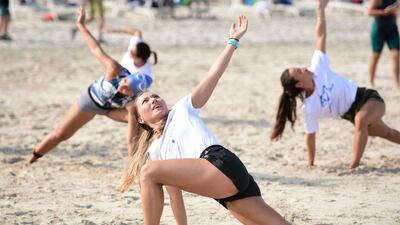
Keeping the heart healthy - in pictures
Experts suggest that the combination of the body’s response to the flu virus and the virus’s ability to make the blood more “sticky” could be behind the link.
“With the potential public health implications of an association between influenza virus infection and acute heart attacks, showing robustness of results in a different study population is important," said lead author Dr Annemarijn de Boer, from the University Medical Centre Utrecht in the Netherlands.
“Our results endorse strategies to prevent influenza infection, including vaccination.
“They also advocate for a raised awareness among physicians and hospitalised flu patients for symptoms of heart attacks.
“While it isn’t clear from our results if those with less severe flu are also at risk, it is prudent for them to be aware of the link.”
Dr Sonya Babu-Narayan, associate medical director at the British Heart Foundation, said: “These recent preliminary data from the Netherlands are in keeping with what we know, which is that heart attacks can happen more often during or shortly after an episode of the flu.
“It supports the need to raise public awareness of heart attack symptoms, and reinforces the importance of preventing flu in the first place, particularly among older people.”

The specs
Engine: Turbocharged four-cylinder 2.7-litre
Power: 325hp
Torque: 500Nm
Transmission: 10-speed automatic
Price: From Dh189,700
On sale: now
Results
2.30pm: Park Avenue – Conditions (PA) Dh80,000 (Dirt) 2,000m; Winner: Rb Seqondtonone, Abdul Aziz Al Balushi (jockey), Helal Al Alawi (trainer)
3.05pm: Al Furjan – Maiden (TB) Dh82,500 (Turf) 1,200m; Winner: Bosphorus, Dane O’Neill, Bhupat Seemar
3.40pm: Mina – Rated Condition (TB) Dh105,000 (D) 1,600m; Winner: Royal Mews, Tadhg O’Shea, Bhupat Seemar
4.15pm: Aliyah – Handicap (TB) Dh87,500 (T) 1,900m; Winner: Ursa Minor, Ray Dawson, Ahmad bin Harmash
4.50pm: Riviera Beach – Rated Conditions (TB) Dh95,000 (D) 2,200m; Winner: Woodditton, Saif Al Balushi, Ahmad bin Harmash
5.25pm: Riviera – Handicap (TB) Dh2,000 (T) 2,000m; Winner: Al Madhar, Antonio Fresu, Musabah Al Muhairi
6pm: Creek Views – Handicap (TB) Dh95,000 (T) 1,400m; Winner: Al Salt, Dane O’Neill, Erwan Charpy
What are the influencer academy modules?
- Mastery of audio-visual content creation.
- Cinematography, shots and movement.
- All aspects of post-production.
- Emerging technologies and VFX with AI and CGI.
- Understanding of marketing objectives and audience engagement.
- Tourism industry knowledge.
- Professional ethics.
Why it pays to compare
A comparison of sending Dh20,000 from the UAE using two different routes at the same time - the first direct from a UAE bank to a bank in Germany, and the second from the same UAE bank via an online platform to Germany - found key differences in cost and speed. The transfers were both initiated on January 30.
Route 1: bank transfer
The UAE bank charged Dh152.25 for the Dh20,000 transfer. On top of that, their exchange rate margin added a difference of around Dh415, compared with the mid-market rate.
Total cost: Dh567.25 - around 2.9 per cent of the total amount
Total received: €4,670.30
Route 2: online platform
The UAE bank’s charge for sending Dh20,000 to a UK dirham-denominated account was Dh2.10. The exchange rate margin cost was Dh60, plus a Dh12 fee.
Total cost: Dh74.10, around 0.4 per cent of the transaction
Total received: €4,756
The UAE bank transfer was far quicker – around two to three working days, while the online platform took around four to five days, but was considerably cheaper. In the online platform transfer, the funds were also exposed to currency risk during the period it took for them to arrive.
Key figures in the life of the fort
Sheikh Dhiyab bin Isa (ruled 1761-1793) Built Qasr Al Hosn as a watchtower to guard over the only freshwater well on Abu Dhabi island.
Sheikh Shakhbut bin Dhiyab (ruled 1793-1816) Expanded the tower into a small fort and transferred his ruling place of residence from Liwa Oasis to the fort on the island.
Sheikh Tahnoon bin Shakhbut (ruled 1818-1833) Expanded Qasr Al Hosn further as Abu Dhabi grew from a small village of palm huts to a town of more than 5,000 inhabitants.
Sheikh Khalifa bin Shakhbut (ruled 1833-1845) Repaired and fortified the fort.
Sheikh Saeed bin Tahnoon (ruled 1845-1855) Turned Qasr Al Hosn into a strong two-storied structure.
Sheikh Zayed bin Khalifa (ruled 1855-1909) Expanded Qasr Al Hosn further to reflect the emirate's increasing prominence.
Sheikh Shakhbut bin Sultan (ruled 1928-1966) Renovated and enlarged Qasr Al Hosn, adding a decorative arch and two new villas.
Sheikh Zayed bin Sultan (ruled 1966-2004) Moved the royal residence to Al Manhal palace and kept his diwan at Qasr Al Hosn.
Sources: Jayanti Maitra, www.adach.ae
A list of the animal rescue organisations in the UAE
RESULT
Norway 1 Spain 1
Norway: King (90 4')
Spain: Niguez (47')
How does ToTok work?
The calling app is available to download on Google Play and Apple App Store
To successfully install ToTok, users are asked to enter their phone number and then create a nickname.
The app then gives users the option add their existing phone contacts, allowing them to immediately contact people also using the application by video or voice call or via message.
Users can also invite other contacts to download ToTok to allow them to make contact through the app.
The specs
Engine: 4.0-litre flat-six
Torque: 450Nm at 6,100rpm
Transmission: 7-speed PDK auto or 6-speed manual
Fuel economy, combined: 13.8L/100km
On sale: Available to order now
White hydrogen: Naturally occurring hydrogen
Chromite: Hard, metallic mineral containing iron oxide and chromium oxide
Ultramafic rocks: Dark-coloured rocks rich in magnesium or iron with very low silica content
Ophiolite: A section of the earth’s crust, which is oceanic in nature that has since been uplifted and exposed on land
Olivine: A commonly occurring magnesium iron silicate mineral that derives its name for its olive-green yellow-green colour
The Sand Castle
Director: Matty Brown
Stars: Nadine Labaki, Ziad Bakri, Zain Al Rafeea, Riman Al Rafeea
Rating: 2.5/5