



A wildlife documentary about an Omani filmmaker's home nation will soon be broadcast on European channels.
Maisa Al Hooti, a wildlife photographer and conservationist from the sultanate, shot Wild Oman: The Wonder of Arabia during the pandemic and it had its premiere in September.
Ms Al Hooti has signed deals with Arte France, a European public-service channel dedicated to culture, and ZDF, a German public-service television broadcaster.
She said both channels were working on dates to broadcast the documentary.
Filming was mostly carried out during the pandemic with the help of photographers, filmmakers and directors who travelled to Oman after receiving special permission from the authorities.
Ms Al Hooti, who worked closely with producer, director and writer Stefania Miller, said the idea to work on a documentary came to her while taking pictures of marine animals and travelling through Oman to see rare and endangered species.
"Oman is rich in history and wildlife and I want the world to know that the natural beauty and wildlife from Musandam to Dhofar," she told The National.
“Despite the Covid challenges, we managed to get permission to travel around the country and capture the wildlife. The restrictions were an advantage as animals were walking freely without the fear of humans.
“Our team had the opportunity to capture some rare and unique footage. We got on camera some of the world’s rarest and most endangered animals, including the Arabian leopard, Arabian Sea humpback whale, and several sea turtles."
Ms Al Hooti said she had to go 80 kilometres out to sea and wait for weeks to film the humpback whale.
“We were sitting in the boat and wondering if we would ever see a whale and then the boat started shaking and we saw a whale’s tail hitting the hull gently. It was a happy moment for the crew,” she said.
“We had to climb mountains, camp and wait for hours and days, just to be able to photograph these amazing creatures."
Ms Al Hooti studied photography in the UK and won the Hamdan bin Mohammed bin Rashid Al Maktoum International Photography Award in 2015. Her picture of marine life in Anilao, Philippines, won the Best Instagram Photo category.
“I experience awe whenever I go diving. Oman's underwater beauty and its wonderful creatures have captured my heart" she said.
“The Sultanate has so much natural beauty, and it is our responsibility to conserve it and keep it safe for future generations.”
Oman's Dhofar region during monsoon — in pictures
-
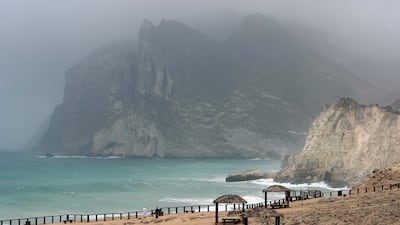
The Dhofar Mountains shrouded in mist, west of Salalah, Oman. Stephen Lock for The National -
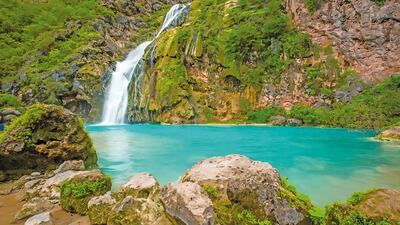
The waterfalls in Ayn Khor, Salalah. Photo: Aqil Al-Hamdani -
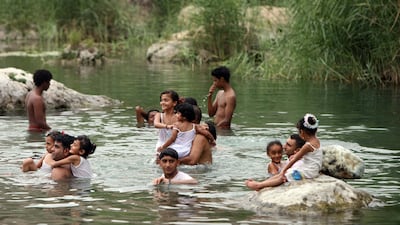
People swim in a natural spring at Ayn Razat, east of Salalah. Stephen Lock for The National -
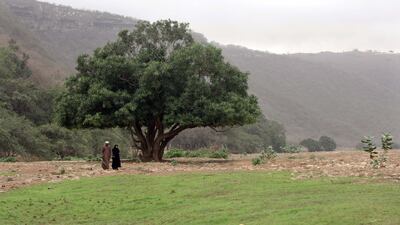
A couple take a stroll along the lush green Wadi Darbat, east of Salalah. Stephen Lock for The National -
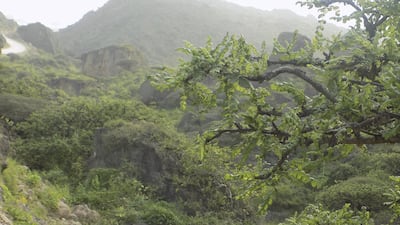
The cliffs of Fazayah. Anna Zacharias for The National -
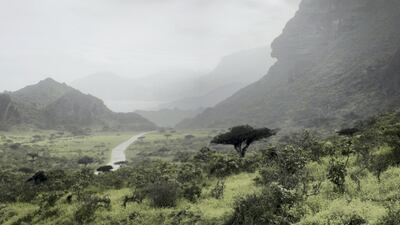
Fazayah, east of Salalah, is known for its greenery and pristine beaches. Anna Zacharias for The National -
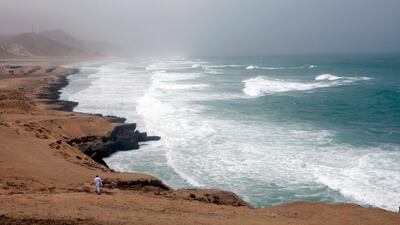
The rugged coastline west of Samalah at the Al Mughsayl blow holes. Stephen Lock for The National -

The waterfalls at Ayn Athum in Salalah, Dhofar province. Reuters -
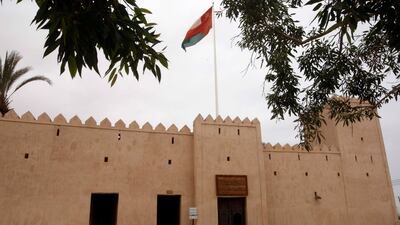
Taqah Castle, east of Salalah. Stephen Lock for The National



