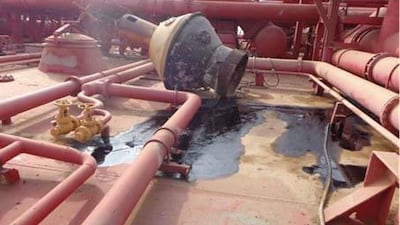
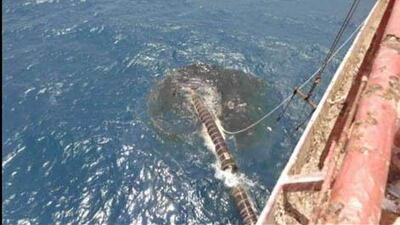
David Gressly, the UN's Resident and Humanitarian Co-ordinator for Yemen, is touring the Gulf to mobilise $80 million in funds desperately needed to replace the oil tanker FSO Safer.
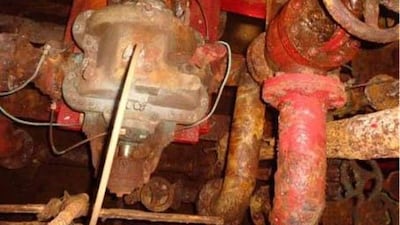
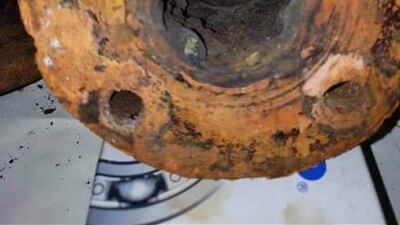
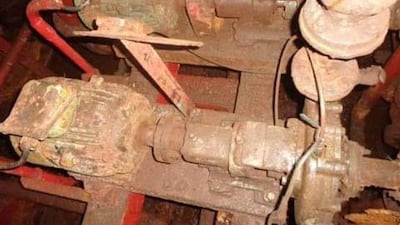
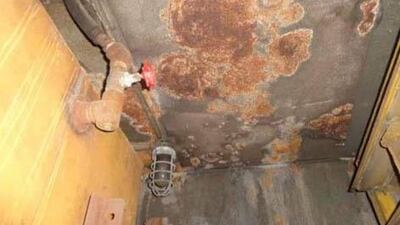
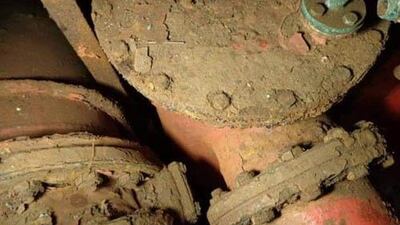
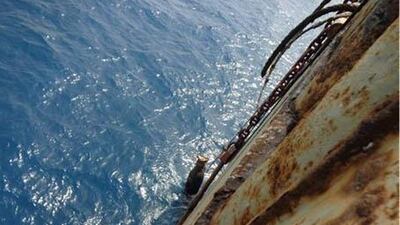
The “floating time bomb” was moored in the Red Sea off the coast of Yemen in 2015 and has remained there unmaintained since Houthi militias took control of the coastline. Experts fear the vessel's deteriorating hull could be breached by corrosion, causing a devastating oil spill or that gases building up in its chambers could cause an explosion.
The fund-raising is part of a wider effort to ensure that a UN-brokered plan to offload the 1.1 million barrels of oil aboard Safer takes place before September when the seasons change and currents are especially strong, making the ship’s deterioration more likely.
It comes weeks into a truce declared between the Houthi rebels and the Yemeni government and its coalition partners which began on April 2.
As part of the plan, a temporary ship would contain the barrels of oil, as the Safer is cleaned then taken off the water, while a longer-term replacement is secured - a process which could take 18 months.
In the meantime, another complex issue is being discussed, the fate of the oil.
“There are a lot of issues over selling the oil — the question of who owns it and the quality of it, how valuable it is or not,” Mr Gressly told The National.
“Any sale of the oil will require clearance from the [Saudi] coalition, the government of Yemen and the authorities that control the vessel in Sanaa.”
However, Mr Gressly said these talks cannot pause the operation to eventually dismantle and replace Safer.
“We cannot wait for those discussions to conclude before safeguarding the oil in a temporary vessel.”
There are several options as to what would happen to Safer itself, which, as a Floating Storage and Offloading (FSO) vessel is obsolete.
“It has a good scrap value. The company that we are working to contract this with would clean up the vessel so it’s ready to be towed for salvage. We are looking at how this could offset costs for a replacement vessel,” Mr Gressly said.
However, for now, there have been no solid agreements as to what will happen to either the oil or the vessel.
Procuring a temporary ship to contain Safer’s oil barrels is in its “final stages,” Mr Gressly said, noting that the $80m required for the operation has yet to be raised although the prospects look promising.
All of this, however, is not enough if the agreement reached between the Houthis and the UN is not met.
“In order to gain the confidence of the authorities in Sanaa, their expectation that the FSO will be replaced, so we need to focus on the temporary [ship] but especially the replacement in order to continue to secure their co-operation. Without that, we might find the obstacles we have in the past.”
“So while we may want to focus on getting the $80 million upfront, it can’t be the end of the effort and we can’t act like that’s the end of our objective.”
‘We don’t want to give assistance forever’
The impact of a UN-brokered truce that went into effect on April 2 was almost immediate.
Mr Gressly said Yemen's soaring fuel prices have already gone down with the influx of fuel through the port of Hodeida, and the currency has strengthened in southern parts of the country.
“The truce offers opportunities in helping the business environment. A large part of the reason for the humanitarian crisis is the collapse of the economy.”
Businesses have a hard time operating in Yemen's economic climate even without the massive costs imposed by years of war. Imports are very expensive and have become even higher with the war in Ukraine.
“You have a perverse system of reduced incomes and higher prices and this pushes people into food insecurity,” Mr Gressly said.
“We don't want to give humanitarian assistance forever and the way to get out of that is to fix the economy and reinforce the truce over time.”
After Yemen's first truce in six years, more fuel imports are on the way and Sanaa airport is also expected to reopen, amid growing unity in the government's ranks.
UN Special Envoy Hans Grundberg has said he hopes the truce will “give Yemenis a necessary break from violence, relief from the humanitarian suffering, and most importantly hope that an end to this conflict is possible.”
Whether the ceasefire can extend to all of those scenarios, and the salvaging of FSO Safer, remains to be seen.

How to join and use Abu Dhabi’s public libraries
• There are six libraries in Abu Dhabi emirate run by the Department of Culture and Tourism, including one in Al Ain and Al Dhafra.
• Libraries are free to visit and visitors can consult books, use online resources and study there. Most are open from 8am to 8pm on weekdays, closed on Fridays and have variable hours on Saturdays, except for Qasr Al Watan which is open from 10am to 8pm every day.
• In order to borrow books, visitors must join the service by providing a passport photograph, Emirates ID and a refundable deposit of Dh400. Members can borrow five books for three weeks, all of which are renewable up to two times online.
• If users do not wish to pay the fee, they can still use the library’s electronic resources for free by simply registering on the website. Once registered, a username and password is provided, allowing remote access.
• For more information visit the library network's website.
The specs: 2017 Porsche 718 Cayman
Price, base / as tested Dh222,500 / Dh296,870
Engine 2.0L, flat four-cylinder
Transmission Seven-speed PDK
Power 300hp @ 6,500rpm
Torque 380hp @ 1,950rpm
Fuel economy, combined 6.9L / 100km
AUSTRALIA SQUAD
Tim Paine (captain), Sean Abbott, Pat Cummins, Cameron Green, Marcus Harris, Josh Hazlewood, Travis Head, Moises Henriques, Marnus Labuschagne, Nathan Lyon, Michael Neser, James Pattinson, Will Pucovski, Steve Smith, Mitchell Starc, Mitchell Swepson, Matthew Wade, David Warner
NYBL PROFILE
Company name: Nybl
Date started: November 2018
Founder: Noor Alnahhas, Michael LeTan, Hafsa Yazdni, Sufyaan Abdul Haseeb, Waleed Rifaat, Mohammed Shono
Based: Dubai, UAE
Sector: Software Technology / Artificial Intelligence
Initial investment: $500,000
Funding round: Series B (raising $5m)
Partners/Incubators: Dubai Future Accelerators Cohort 4, Dubai Future Accelerators Cohort 6, AI Venture Labs Cohort 1, Microsoft Scale-up
Points tally
1. Australia 52; 2. New Zealand 44; 3. South Africa 36; 4. Sri Lanka 35; 5. UAE 27; 6. India 27; 7. England 26; 8. Singapore 8; 9. Malaysia 3
The specs
Engine: 2.0-litre 4-cyl turbo
Power: 247hp at 6,500rpm
Torque: 370Nm from 1,500-3,500rpm
Transmission: 10-speed auto
Fuel consumption: 7.8L/100km
Price: from Dh94,900
On sale: now
GOLF’S RAHMBO
- 5 wins in 22 months as pro
- Three wins in past 10 starts
- 45 pro starts worldwide: 5 wins, 17 top 5s
- Ranked 551th in world on debut, now No 4 (was No 2 earlier this year)
- 5th player in last 30 years to win 3 European Tour and 2 PGA Tour titles before age 24 (Woods, Garcia, McIlroy, Spieth)
Mercer, the investment consulting arm of US services company Marsh & McLennan, expects its wealth division to at least double its assets under management (AUM) in the Middle East as wealth in the region continues to grow despite economic headwinds, a company official said.
Mercer Wealth, which globally has $160 billion in AUM, plans to boost its AUM in the region to $2-$3bn in the next 2-3 years from the present $1bn, said Yasir AbuShaban, a Dubai-based principal with Mercer Wealth.
“Within the next two to three years, we are looking at reaching $2 to $3 billion as a conservative estimate and we do see an opportunity to do so,” said Mr AbuShaban.
Mercer does not directly make investments, but allocates clients’ money they have discretion to, to professional asset managers. They also provide advice to clients.
“We have buying power. We can negotiate on their (client’s) behalf with asset managers to provide them lower fees than they otherwise would have to get on their own,” he added.
Mercer Wealth’s clients include sovereign wealth funds, family offices, and insurance companies among others.
From its office in Dubai, Mercer also looks after Africa, India and Turkey, where they also see opportunity for growth.
Wealth creation in Middle East and Africa (MEA) grew 8.5 per cent to $8.1 trillion last year from $7.5tn in 2015, higher than last year’s global average of 6 per cent and the second-highest growth in a region after Asia-Pacific which grew 9.9 per cent, according to consultancy Boston Consulting Group (BCG). In the region, where wealth grew just 1.9 per cent in 2015 compared with 2014, a pickup in oil prices has helped in wealth generation.
BCG is forecasting MEA wealth will rise to $12tn by 2021, growing at an annual average of 8 per cent.
Drivers of wealth generation in the region will be split evenly between new wealth creation and growth of performance of existing assets, according to BCG.
Another general trend in the region is clients’ looking for a comprehensive approach to investing, according to Mr AbuShaban.
“Institutional investors or some of the families are seeing a slowdown in the available capital they have to invest and in that sense they are looking at optimizing the way they manage their portfolios and making sure they are not investing haphazardly and different parts of their investment are working together,” said Mr AbuShaban.
Some clients also have a higher appetite for risk, given the low interest-rate environment that does not provide enough yield for some institutional investors. These clients are keen to invest in illiquid assets, such as private equity and infrastructure.
“What we have seen is a desire for higher returns in what has been a low-return environment specifically in various fixed income or bonds,” he said.
“In this environment, we have seen a de facto increase in the risk that clients are taking in things like illiquid investments, private equity investments, infrastructure and private debt, those kind of investments were higher illiquidity results in incrementally higher returns.”
The Abu Dhabi Investment Authority, one of the largest sovereign wealth funds, said in its 2016 report that has gradually increased its exposure in direct private equity and private credit transactions, mainly in Asian markets and especially in China and India. The authority’s private equity department focused on structured equities owing to “their defensive characteristics.”
Drishyam 2
Directed by: Jeethu Joseph
Starring: Mohanlal, Meena, Ansiba, Murali Gopy
Rating: 4 stars
The%20specs
%3Cp%3E%3Cstrong%3EEngine%3A%3C%2Fstrong%3E%201.8-litre%204-cyl%20turbo%0D%3Cbr%3E%3Cstrong%3EPower%3A%20%3C%2Fstrong%3E190hp%20at%205%2C200rpm%0D%3Cbr%3E%3Cstrong%3ETorque%3A%3C%2Fstrong%3E%20320Nm%20from%201%2C800-5%2C000rpm%0D%3Cbr%3E%3Cstrong%3ETransmission%3A%20%3C%2Fstrong%3ESeven-speed%20dual-clutch%20auto%0D%3Cbr%3E%3Cstrong%3EFuel%20consumption%3A%3C%2Fstrong%3E%206.7L%2F100km%0D%3Cbr%3E%3Cstrong%3EPrice%3A%3C%2Fstrong%3E%20From%20Dh111%2C195%0D%3Cbr%3E%3Cstrong%3EOn%20sale%3A%20%3C%2Fstrong%3ENow%3C%2Fp%3E%0A
The Voice of Hind Rajab
Starring: Saja Kilani, Clara Khoury, Motaz Malhees
Director: Kaouther Ben Hania
Rating: 4/5
Uefa Nations League: How it Works
The Uefa Nations League, introduced last year, has reached its final stage, to be played over five days in northern Portugal. The format of its closing tournament is compact, spread over two semi-finals, with the first, Portugal versus Switzerland in Porto on Wednesday evening, and the second, England against the Netherlands, in Guimaraes, on Thursday.
The winners of each semi will then meet at Porto’s Dragao stadium on Sunday, with the losing semi-finalists contesting a third-place play-off in Guimaraes earlier that day.
Qualifying for the final stage was via League A of the inaugural Nations League, in which the top 12 European countries according to Uefa's co-efficient seeding system were divided into four groups, the teams playing each other twice between September and November. Portugal, who finished above Italy and Poland, successfully bid to host the finals.