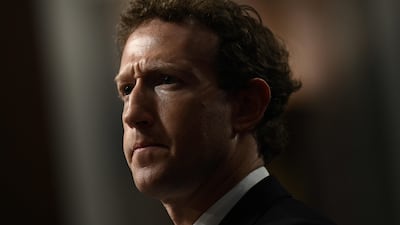

Meta, the owner of Facebook, Instagram, WhatsApp and Threads, has agreed to a major settlement over allegations about the addictiveness of its social platforms for children.
According to court filings, the social media giant could pay as much as $17.1 billion to settle the litigation.
The technology company has recently been on the losing end of several US lawsuits that alleged it failed to disclose how younger users could be vulnerable to becoming addicted to its platforms. Meta denies the allegations.

Meta has also been accused of failing to implement adequate safeguards to protect children and teenagers from online predators and other nefarious people.
As a result of the settlement with 47 states, as well as the capital, Washington, and other territories, Meta has also broadly agreed to implement features that would apply to younger users, such as daily time limits, fewer notifications and a cut-off to stop several of its platforms from functioning at night.
“Today, we are announcing an agreement with a bipartisan group of 52 attorneys general across US states, territories, and the District of Columbia, building on our long-standing efforts to empower parents and support teens,” Meta said in a statement on Wednesday.
The company, however, then pivoted in the statement and called out other Big Tech firms that it says teenagers often use.
“For meaningful progress to happen, we urge TikTok and YouTube to join us and state attorneys general in adopting this new standard, to ensure teens use social media in a healthy and responsible way.”
The litigation has been bruising for the company in terms of public perception. Executives taking the stand have been criticised as aloof and indifferent when answering questions about evidence suggesting negligence about how the company's products affected children.

On Tuesday, Instagram boss Adam Mosseri said in the witness box that it was “news to him” that his staffers were often told by a company lawyer to filter out data that gave a closer look at the safety of young users.
Brian Schwalb, Attorney General for District of Columbia, did not mince his words in reaction to the announcement that Meta had agreed to settle.
“Meta intentionally endangered children for profit and then lied about it,” he said. “This is the largest big tech settlement ever.”
Broader fallout for Meta
From the earliest days of personal computing, companies have sought to find ways to keep users from getting bored and instead to spend more time on their devices.
In 1982, IBM employee Walter Doherty wrote a research paper in which he discussed how fast computers should respond to, process and display keystrokes to keep users interested – a concept that became known as the Doherty Threshold.
Global debate has ensued and, for the most part, social media companies have been reluctant to address the core concerns of parents and legislators.
In recent years, however, governments have started to step in and fill the regulatory vacuum that had been largely untouched since the debut of Facebook in 2004.
Australia was one of the first countries to limit the use of social media apps among young people, and the UK recently announced plans to do something similar.
The UAE became the first country in the Arab world to announce that children under 15 would not be allowed to use social media.
Britain is preparing to implement restrictions that would ban children under 16 from the main social media platforms, starting next year.
In the US, while there has not been much broad support among federal legislators for introducing a nationwide ban or policy, several states have sought to make changes on their own.
The latest settlement from Meta would be the closest thing in the US to significant and broad changes impacting how young people use social media.
In its statement on Wednesday, Meta tried to portray the settlement in an altruistic light.
“We want to ensure teens benefit from this new industry standard,” the company said, referring to its promises to implement muted notifications during school hours, daily time limits and new controls for parents.
California Attorney General Rob Bonta, representing one of the states leading the Meta litigation, gave a pointed speech shortly after the settlement was announced.
"We can't adequately protect children from the things that Meta is lying about and with this settlement that will soon be changing," he said.
California is home to Meta and countless other technology companies.
"I urge other companies to take note that our door is always open, and I'd much rather work with California's business community than having to take them to court," he said.