The Abu Dhabi Global Market is one of the world's fastest-growing financial districts, and its reputation as a step-ahead regulator is reflected in its strategy when it comes to digital assets.
On Friday, its Financial Services Regulatory Authority signed a preliminary agreement with the UAE Ministry of Interior to boost its fight against crimes in this sector.
The points of collaboration include information exchange, boosting risk mitigation frameworks and supporting the UAE's national strategy to protect the financial system against evolving threats in the digital asset landscape, in addition to joint training programmes and enhanced investigative efforts. it said.
“The FSRA is focused on collaboration with UAE authorities to proactively fight against financial crime. Financial crime is constantly evolving and it is crucial that regulators stay ahead of potential threats," Emmanuel Givanakis, chief executive of the FSRA, said in a statement.
That is also the latest in a long list of programmes designed by ADGM to encourage and protect investors in the growing space, helping the FSRA to become one of the first jurisdictions worldwide to implement a comprehensive and robust regulatory framework for crypto and digital asset activities since 2018.
Detailed guidance
Part of ADGM's mission is to support the development of digital assets under a comprehensive and progressive regulatory framework, "as part of its holistic approach".
In its multipronged guiding principles governing its approach to virtual asset supervision, the FSRA has made it clear that only the "high[est] level" of regulations and co-operation are to be implemented to ensure the credibility of the sector.
These principles include a robust and transparent risk-based regulatory framework, high standards for authorisation, preventing money laundering and other financial crime, risk-sensitive supervision, commitment to enforce on regulatory breaches and international co-operation. These have been the basis of Abu Dhabi's numerous initiatives rolled out to encourage the use of digital assets.
These, in turn, are helping address the "full range" of risks associated with digital asset activities, including risks relating to money laundering and financial crime, consumer protection, technology governance, custody and exchange operations, according to the FSRA.
Tailored events
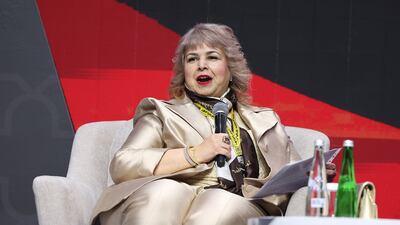
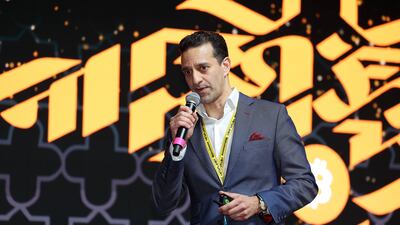
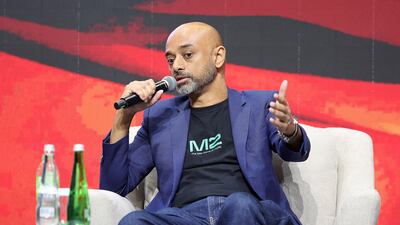
Abu Dhabi Finance Week, which held its third edition at ADGM earlier this month, has become a fixture in the capital's financial scene, attracting the world's biggest industry players and thought leaders.
The summit is one of the ways ADGM is able to tap experts to provide insights on the state of digital assets and where they are headed.
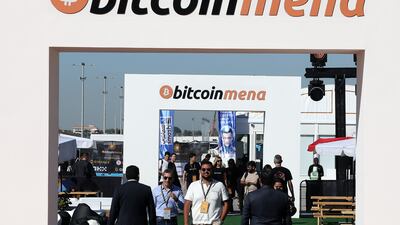
The capital also hosted the inaugural Abu Dhabi Business Week and Bitcoin Mena earlier in December, where cryptocurrencies and other digital assets were front and centre.
In addition, ADGM also helped launch the Middle East, Africa and Asia Crypto and Blockchain Association, a non-profit organisation comprising industry majors such as Binance and Crypto.com to help draw up strategies addressing the industry's challenges.
Operational licence grants
Several global cryptocurrency players have sought to establish a foothold in the UAE and ADGM's efforts have been able to attract some of the biggest names, such as eToro and M2, allowing these companies to operate as a brokers for securities, derivatives and crypto assets, and platforms institutional and retail investors to buy, sell and hold custody of virtual assets.
The rising stock of virtual assets has prompted governments to figure out rules to rein in the largely unregulated industry. ADGM has continuously sought to address this in order for Abu Dhabi to become an attractive destination.
Never-ending improvement
ADGM continuously seeks to improve its already-robust digital asset strategies, keeping in step or even ahead of its peers globally. ADGM has rolled out a slew of updated guidelines to improve those already in place in order to further boost confidence in the sector.
Earlier this month, the FSRA introduced a regulatory framework for the issuance of fiat-referenced tokens – a category of stablecoins backed by high-quality and liquid assets denominated in the same currency – which expands the suite of digital assets that can be offered in a regulated environment.
The FSRA said this is aimed to ensure financial stability and investor protection in facets such as reserve assets, governance and integrity, and transparent disclosure, among others.
Gathering opinion
Public consultation is key in drawing up frameworks for regulation. For instance, earlier this month, ADGM announced the publication of a new consultation paper that sets out proposed amendments to its regulatory framework for authorised persons conducting regulated activities involving virtual assets.
In addition, ADGM is also seeking feedback on the criteria to be applied in determining whether non-ADGM issued fiat-referenced tokens should be accepted within ADGM. The paper also proposes to expand the scope of investments in which venture capital funds may invest. The consultation period for this paper will close on January 31.
Penalties for offenders
No sector is perfect, and there are instances in which financial services providers would run afoul of the law. ADGM takes this very seriously.
While no company directly engaged in digital assets has been fined for violations, ADGM has meted out penalties to financial companies such as Pyppl, Sarwa Digital Wealth and Aarna Capital for various breaches.
This serves as a deterrent for companies to ensure they uphold the highest standards and promote transparency in their operations, especially for those in digital assets, whose regulations are still evolving and trust needs to be strengthened.
Crime-fighting
Friday's announcement comes as virtual assets – known to be high-risk assets – have become an emerging favourite target for hackers: the value of cryptocurrencies stolen in 2024 hit about $2.2 billion, a 21 per cent leap from last year, as attacks hit a record 302, Chainalysis said in its 2025 Crypto Crime Report on Thursday.
Any threat to digital assets will cause severe reputational and financial consequences, which is why ADGM has pledged to "protect the financial ecosystem and lead regulatory efforts in line with international best practices and federal laws", Mr Givanakis said on Friday.
"Our goal is to build long lasting partnerships across the UAE to ensure prevention of financial crime … including the use of virtual assets. We also seek to raise awareness internally and locally to ensure proper understanding of financial crime risks and assist actively in the efforts conducted on a national level."

Springtime in a Broken Mirror,
Mario Benedetti, Penguin Modern Classics
Profile
Company name: Jaib
Started: January 2018
Co-founders: Fouad Jeryes and Sinan Taifour
Based: Jordan
Sector: FinTech
Total transactions: over $800,000 since January, 2018
Investors in Jaib's mother company Alpha Apps: Aramex and 500 Startups
The five pillars of Islam
The bio
Favourite food: Japanese
Favourite car: Lamborghini
Favourite hobby: Football
Favourite quote: If your dreams don’t scare you, they are not big enough
Favourite country: UAE
Winners
Best Men's Player of the Year: Kylian Mbappe (PSG)
Maradona Award for Best Goal Scorer of the Year: Robert Lewandowski (Bayern Munich)
TikTok Fans’ Player of the Year: Robert Lewandowski
Top Goal Scorer of All Time: Cristiano Ronaldo (Manchester United)
Best Women's Player of the Year: Alexia Putellas (Barcelona)
Best Men's Club of the Year: Chelsea
Best Women's Club of the Year: Barcelona
Best Defender of the Year: Leonardo Bonucci (Juventus/Italy)
Best Goalkeeper of the Year: Gianluigi Donnarumma (PSG/Italy)
Best Coach of the Year: Roberto Mancini (Italy)
Best National Team of the Year: Italy
Best Agent of the Year: Federico Pastorello
Best Sporting Director of the Year: Txiki Begiristain (Manchester City)
Player Career Award: Ronaldinho
THE SPECS
Engine: six-litre W12 twin-turbo
Transmission: eight-speed dual clutch auto
Power: 626bhp
Torque: 900Nm
Price: Dh940,160 (plus VAT)
On sale: Q1 2020
Our legal columnist
Name: Yousef Al Bahar
Advocate at Al Bahar & Associate Advocates and Legal Consultants, established in 1994
Education: Mr Al Bahar was born in 1979 and graduated in 2008 from the Judicial Institute. He took after his father, who was one of the first Emirati lawyers
Mercer, the investment consulting arm of US services company Marsh & McLennan, expects its wealth division to at least double its assets under management (AUM) in the Middle East as wealth in the region continues to grow despite economic headwinds, a company official said.
Mercer Wealth, which globally has $160 billion in AUM, plans to boost its AUM in the region to $2-$3bn in the next 2-3 years from the present $1bn, said Yasir AbuShaban, a Dubai-based principal with Mercer Wealth.
“Within the next two to three years, we are looking at reaching $2 to $3 billion as a conservative estimate and we do see an opportunity to do so,” said Mr AbuShaban.
Mercer does not directly make investments, but allocates clients’ money they have discretion to, to professional asset managers. They also provide advice to clients.
“We have buying power. We can negotiate on their (client’s) behalf with asset managers to provide them lower fees than they otherwise would have to get on their own,” he added.
Mercer Wealth’s clients include sovereign wealth funds, family offices, and insurance companies among others.
From its office in Dubai, Mercer also looks after Africa, India and Turkey, where they also see opportunity for growth.
Wealth creation in Middle East and Africa (MEA) grew 8.5 per cent to $8.1 trillion last year from $7.5tn in 2015, higher than last year’s global average of 6 per cent and the second-highest growth in a region after Asia-Pacific which grew 9.9 per cent, according to consultancy Boston Consulting Group (BCG). In the region, where wealth grew just 1.9 per cent in 2015 compared with 2014, a pickup in oil prices has helped in wealth generation.
BCG is forecasting MEA wealth will rise to $12tn by 2021, growing at an annual average of 8 per cent.
Drivers of wealth generation in the region will be split evenly between new wealth creation and growth of performance of existing assets, according to BCG.
Another general trend in the region is clients’ looking for a comprehensive approach to investing, according to Mr AbuShaban.
“Institutional investors or some of the families are seeing a slowdown in the available capital they have to invest and in that sense they are looking at optimizing the way they manage their portfolios and making sure they are not investing haphazardly and different parts of their investment are working together,” said Mr AbuShaban.
Some clients also have a higher appetite for risk, given the low interest-rate environment that does not provide enough yield for some institutional investors. These clients are keen to invest in illiquid assets, such as private equity and infrastructure.
“What we have seen is a desire for higher returns in what has been a low-return environment specifically in various fixed income or bonds,” he said.
“In this environment, we have seen a de facto increase in the risk that clients are taking in things like illiquid investments, private equity investments, infrastructure and private debt, those kind of investments were higher illiquidity results in incrementally higher returns.”
The Abu Dhabi Investment Authority, one of the largest sovereign wealth funds, said in its 2016 report that has gradually increased its exposure in direct private equity and private credit transactions, mainly in Asian markets and especially in China and India. The authority’s private equity department focused on structured equities owing to “their defensive characteristics.”
Results
Female 49kg: Mayssa Bastos (BRA) bt Thamires Aquino (BRA); points 0-0 (advantage points points 1-0).
Female 55kg: Bianca Basilio (BRA) bt Amal Amjahid (BEL); points 4-2.
Female 62kg: Beatriz Mesquita (BRA) v Ffion Davies (GBR); 10-2.
Female 70kg: Thamara Silva (BRA) bt Alessandra Moss (AUS); submission.
Female 90kg: Gabreili Passanha (BRA) bt Claire-France Thevenon (FRA); submission.
Male 56kg: Hiago George (BRA) bt Carlos Alberto da Silva (BRA); 2-2 (2-0)
Male 62kg: Gabriel de Sousa (BRA) bt Joao Miyao (BRA); 2-2 (2-1)
Male 69kg: Paulo Miyao (BRA) bt Isaac Doederlein (USA); 2-2 (2-2) Ref decision.
Male 77kg: Tommy Langarkar (NOR) by Oliver Lovell (GBR); submission.
Male 85kg: Rudson Mateus Teles (BRA) bt Faisal Al Ketbi (UAE); 2-2 (1-1) Ref decision.
Male 94kg: Kaynan Duarte (BRA) bt Adam Wardzinski (POL); submission.
Male 110kg: Joao Rocha (BRA) bt Yahia Mansoor Al Hammadi (UAE); submission.
Brief scores:
QPR 0
Watford 1
Capoue 45' 1
Indika
%3Cp%3E%3Cstrong%3EDeveloper%3A%3C%2Fstrong%3E%2011%20Bit%20Studios%3Cbr%3E%3Cstrong%3EPublisher%3A%3C%2Fstrong%3E%20Odd%20Meter%3Cbr%3E%3Cstrong%3EConsole%3A%3C%2Fstrong%3E%20PlayStation%205%2C%20PC%20and%20Xbox%20series%20X%2FS%3Cbr%3E%3Cstrong%3ERating%3A%3C%2Fstrong%3E%204%2F5%3C%2Fp%3E%0A
Who's who in Yemen conflict
Houthis: Iran-backed rebels who occupy Sanaa and run unrecognised government
Yemeni government: Exiled government in Aden led by eight-member Presidential Leadership Council
Southern Transitional Council: Faction in Yemeni government that seeks autonomy for the south
Habrish 'rebels': Tribal-backed forces feuding with STC over control of oil in government territory
Company Profile
Name: JustClean
Based: Kuwait with offices in other GCC countries
Launch year: 2016
Number of employees: 130
Sector: online laundry service
Funding: $12.9m from Kuwait-based Faith Capital Holding
Real estate tokenisation project
Dubai launched the pilot phase of its real estate tokenisation project last month.
The initiative focuses on converting real estate assets into digital tokens recorded on blockchain technology and helps in streamlining the process of buying, selling and investing, the Dubai Land Department said.
Dubai’s real estate tokenisation market is projected to reach Dh60 billion ($16.33 billion) by 2033, representing 7 per cent of the emirate’s total property transactions, according to the DLD.
'Outclassed in Kuwait'
Taleb Alrefai,
HBKU Press
Coffee: black death or elixir of life?
It is among the greatest health debates of our time; splashed across newspapers with contradicting headlines - is coffee good for you or not?
Depending on what you read, it is either a cancer-causing, sleep-depriving, stomach ulcer-inducing black death or the secret to long life, cutting the chance of stroke, diabetes and cancer.
The latest research - a study of 8,412 people across the UK who each underwent an MRI heart scan - is intended to put to bed (caffeine allowing) conflicting reports of the pros and cons of consumption.
The study, funded by the British Heart Foundation, contradicted previous findings that it stiffens arteries, putting pressure on the heart and increasing the likelihood of a heart attack or stroke, leading to warnings to cut down.
Numerous studies have recognised the benefits of coffee in cutting oral and esophageal cancer, the risk of a stroke and cirrhosis of the liver.
The benefits are often linked to biologically active compounds including caffeine, flavonoids, lignans, and other polyphenols, which benefit the body. These and othetr coffee compounds regulate genes involved in DNA repair, have anti-inflammatory properties and are associated with lower risk of insulin resistance, which is linked to type-2 diabetes.
But as doctors warn, too much of anything is inadvisable. The British Heart Foundation found the heaviest coffee drinkers in the study were most likely to be men who smoked and drank alcohol regularly.
Excessive amounts of coffee also unsettle the stomach causing or contributing to stomach ulcers. It also stains the teeth over time, hampers absorption of minerals and vitamins like zinc and iron.
It also raises blood pressure, which is largely problematic for people with existing conditions.
So the heaviest drinkers of the black stuff - some in the study had up to 25 cups per day - may want to rein it in.
Rory Reynolds
Quick%20facts
%3Cul%3E%0A%3Cli%3EStorstockholms%20Lokaltrafik%20(SL)%20offers%20free%20guided%20tours%20of%20art%20in%20the%20metro%20and%20at%20the%20stations%3C%2Fli%3E%0A%3Cli%3EThe%20tours%20are%20free%20of%20charge%3B%20all%20you%20need%20is%20a%20valid%20SL%20ticket%2C%20for%20which%20a%20single%20journey%20(valid%20for%2075%20minutes)%20costs%2039%20Swedish%20krone%20(%243.75)%3C%2Fli%3E%0A%3Cli%3ETravel%20cards%20for%20unlimited%20journeys%20are%20priced%20at%20165%20Swedish%20krone%20for%2024%20hours%3C%2Fli%3E%0A%3Cli%3EAvoid%20rush%20hour%20%E2%80%93%20between%209.30%20am%20and%204.30%20pm%20%E2%80%93%20to%20explore%20the%20artwork%20at%20leisure%3C%2Fli%3E%0A%3C%2Ful%3E%0A
ABU%20DHABI'S%20KEY%20TOURISM%20GOALS%3A%20BY%20THE%20NUMBERS
%3Cp%3EBy%202030%2C%20Abu%20Dhabi%20aims%20to%20achieve%3A%3C%2Fp%3E%0A%3Cp%3E%3Cstrong%3E%E2%80%A2%2039.3%20million%20visitors%2C%3C%2Fstrong%3E%20nearly%2064%25%20up%20from%202023%3C%2Fp%3E%0A%3Cp%3E%3Cstrong%3E%E2%80%A2%20Dh90%20billion%20contribution%20to%20GDP%2C%3C%2Fstrong%3E%20about%2084%25%20more%20than%20Dh49%20billion%20in%202023%3C%2Fp%3E%0A%3Cp%3E%3Cstrong%3E%E2%80%A2%20178%2C000%20new%20jobs%2C%3C%2Fstrong%3E%20bringing%20the%20total%20to%20about%20366%2C000%3C%2Fp%3E%0A%3Cp%3E%3Cstrong%3E%E2%80%A2%2052%2C000%20hotel%20rooms%2C%3C%2Fstrong%3E%20up%2053%25%20from%2034%2C000%20in%202023%3C%2Fp%3E%0A%3Cp%3E%3Cstrong%3E%E2%80%A2%207.2%20million%20international%20visitors%2C%3C%2Fstrong%3E%20almost%2090%25%20higher%20compared%20to%202023's%203.8%20million%3C%2Fp%3E%0A%3Cp%3E%3Cstrong%3E%E2%80%A2%203.9%20international%20overnight%20hotel%20stays%2C%3C%2Fstrong%3E%2022%25%20more%20from%203.2%20nights%20in%202023%3C%2Fp%3E%0A