



A 75,000-year-old Neanderthal skeleton of a woman who died in her mid-forties has been discovered in the foothills of Iraq, according to researchers who pieced the skull back together.
Found at the Shanidar Cave site 500 miles north of Baghdad, the skull of the skeleton, named Shanidar Z, has been recreated as part of a new Netflix documentary called Secrets Of The Neanderthals.
The skull had been flattened to about 2cm thick when it was discovered by archaeologists from Cambridge University and Liverpool John Moores in 2018.
It had been crushed, possibly by rockfall soon after the death of the woman and then compacted further by tens of thousands of years of sediment.
More than 200 pieces of the skull were pieced together freehand.
Without pelvic bones, the team relied on sequencing tooth enamel proteins to determine the sex of the skeleton, believed to be a female who died in her mid-forties.
Teeth were also used to gauge her age through levels of wear and tear, with some front teeth worn to the root.
At about five feet tall, and with some of the smallest adult arm bones in the Neanderthal fossil record, her physique also implies a female.
Iraq archaeology – in pictures
-
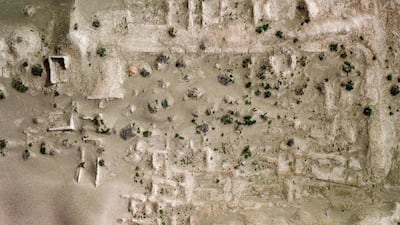
An ancient structure at the endangered Umm Al Aqarib archaeological site in Iraq seen from the air. All photos: AFP -

Archaeologist Aqeel Mansarawi at the ancient site in the southern Dhi Qar province, which he says is now under threat from sandstorms linked to climate change -

Some of the walls at the site have stood for millennia -
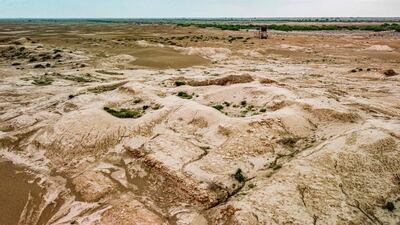
Babylonian treasures have been painstakingly unearthed over decades by archaeologists -
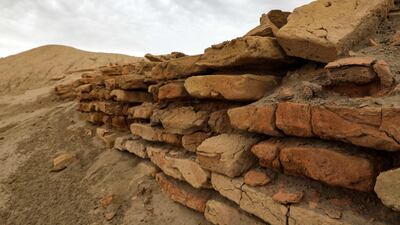
But the structures are frequently reburied by sandstorms -

The archaeology is also damaged by wind-blown sand in a land parched by rising heat and prolonged droughts -
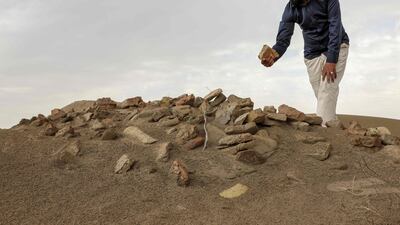
Mr Mansarawi inspects ancient masonry that is falling prey to the harsh conditions -
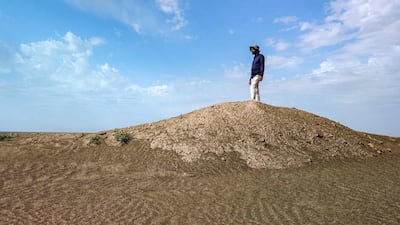
Archaeological marvels that survived the ravages of war are again under threat -
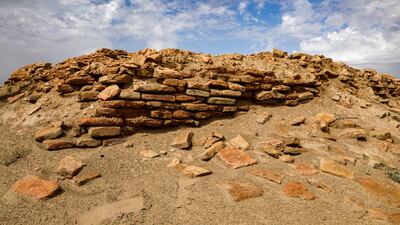
An ancient building that is disappearing into the sands -
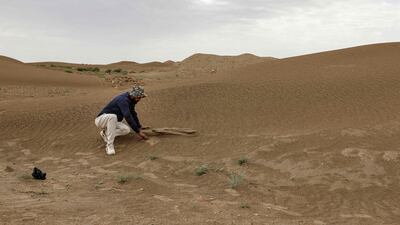
Mr Mansarawi searches for the remains of a building claimed by the desert sands


The team used a glue-like consolidant to strengthen the bones and surrounding sediment. They then removed Shanidar Z in dozens of small foil-wrapped blocks from under seven-and-a-half metres of soil and rock in the cave.
In the Cambridge lab, researchers took micro-CAT scans of each block before gradually diluting the glue and using the scans to guide the extraction of bone fragments.
“Each skull fragment is gently cleaned while glue and consolidant are re-added to stabilise the bone, which can be very soft, similar in consistency to a biscuit dunked in tea,” Dr Emma Pomeroy, a palaeoanthropologist from Cambridge’s Department of Archaeology, said.
“It’s like a high-stakes 3D jigsaw puzzle.
“A single block can take over a fortnight to process.”
The rebuilt skull was surface scanned and 3D-printed, forming the basis of a reconstructed head created by world-leading Paleo artists and identical twins Adrie and Alfons Kennis, who built up layers of fabricated muscle and skin to reveal a face.
The cave has also been home to remains of 10 other Neanderthal people excavated more than 60 years ago, with clumps of ancient pollen surrounding one of the skeletons.
Archaeologists had suggested the presence of pollen indicated that the dead were buried with flowers, but a study led by Professor Chris Hunt, of Liverpool John Moores University, now indicates the pollen was left by bees burrowing into the cave floor.
The archaeological site of Aqar Quf in Iraq – in pictures
-
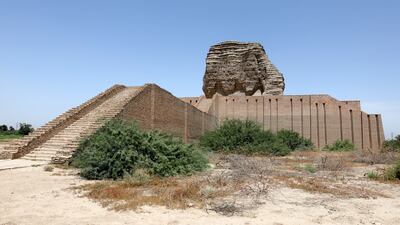
The 3,000-year-old Babylonian-era ziggurat of Aqar Quf towers above the landscape in Abu Ghraib town, 30km west of Baghdad. All photos: EPA -

The ziggurat, a pyramidal stepped temple tower, stands to a height of about 52m with a base measuring 69m by 67m -

It was a temple for Enlil, the ancient Mesopotamian deity of the wind, air, earth and storms -
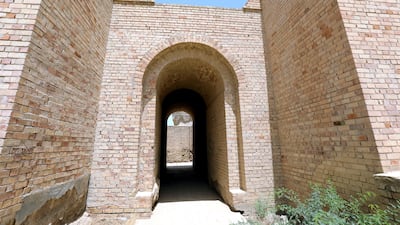
It is currently an archaeological site of the ancient city of Dur Kurigalzu - or Fortress of Kurigalzu -
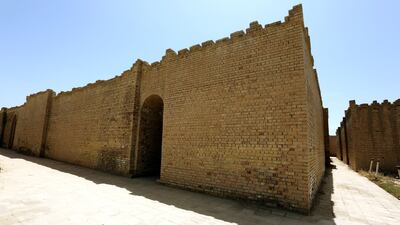
The site was abandoned and looted following the overthrow of Saddam Hussein by the US military -
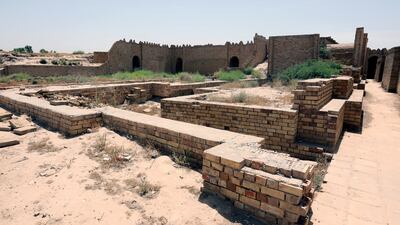
Rain and standing groundwater, as well as the encroachment of modern construction, contribute to the deterioration of ziggurat and damage to the ruins -
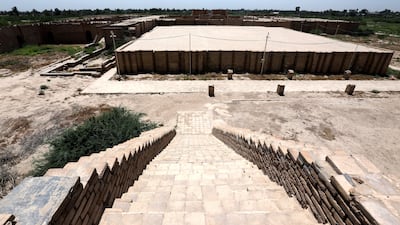
After being founded by the Kassite King Kurigalzu I in the 14th century BC, the city was controlled by the Assyrians and Elamites several times before being destroyed in the middle of the 11th century BC -
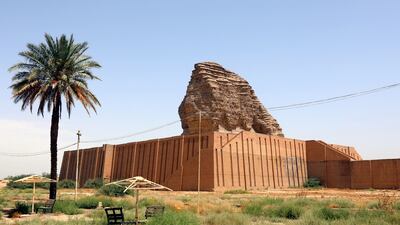
The ziggurat at Aqar Quf


Further research since Shanidar Z was found has detected microscopic traces of charred food in the nearby soil.
These carbonised bits of wild seeds, nuts and grasses suggest not only that Neanderthals prepared food – soaking and pounding pulses – and then cooked it, but did so in the presence of their dead.
“The body of Shanidar Z was within arm’s reach of living individuals cooking with fire and eating,” said Dr Pomeroy.
“For these Neanderthals, there does not appear to be that clear separation between life and death.
“We can see that Neanderthals are coming back to one particular spot to bury their dead.
“This could be decades or even thousands of years apart.
“Is it just a coincidence, or is it intentional, and if so what brings them back?
“As an older female, Shanidar Z would have been a repository of knowledge for her group, and here we are 75,000 years later, learning from her still.”

