



In three of their last four fixtures in World Cup finals, Japan have held a two-goal lead over Belgium, come back from a goal down to beat Germany and recovered from another deficit to defeat Spain. With a record like this, it can seem misguided, out-of-date, to label these outcomes as "shocks" or to call Japan "giant-killers".
Facing an upstart record like Japan’s, Croatia might even think it wise to style themselves something other than giants, or as the “superpower” their head coach Zlatko Dalic called his team, as he looked forward to contesting a quarter-final place at Qatar 2022. Superpower is a vulnerable status to claim at a World Cup which has been regularly upsetting hierarchies.
No unfancied side has challenged the traditional European establishment more than Japan, who hinted at their appetite for prized scalps as they exited the last World Cup. On a dramatic evening in Rostov-on-Don, Genki Haraguchi and Takashi Inui stunned Belgium with two goals, four minutes apart, shortly after half time of their last–16 tie. Japan would depart admired for their powers of ambush but not for their stamina. A far stronger Belgium than the version who limped away from Qatar last week went on to recover that night and edge themselves into the quarters, winning 3-2 in stoppage time.
Lessons were learnt by the valiant losers, as the head coach who was appointed by Japan immediately after the Russia World Cup, Hajimi Moriyasu, told reporters. “As a team, Japan have always been capable of a well-organised gameplan,” he said of a country approaching its fourth last-16 tie in six World Cups but yet to cross that frontier. “But that’s not enough unless the individual players are strong. What’s happened in the last four years is that the individuals have become much more able.”
The clear virtues of Moriyasu’s squad are that match-winning individuals are several in number and their coach has a sharp eye for their specialist deployment. Take Ritsu Doan, the forward from Freiburg who as a 20-year-old scored decisive goals during Japan’s march to the final of the last Asian Cup in UAE. Doan, now 24, has become a de luxe supersub at this, his first World Cup.
-
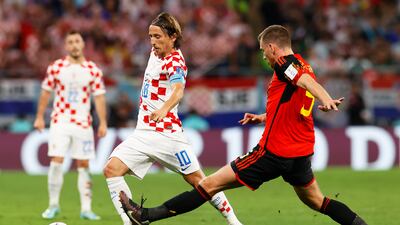
Luka Modric of Croatia vies for the ball with Jan Vertonghen of Belgium during their World Cup match at the Ahmad bin Ali Stadium on Thursday, December 1, 2022. EPA -
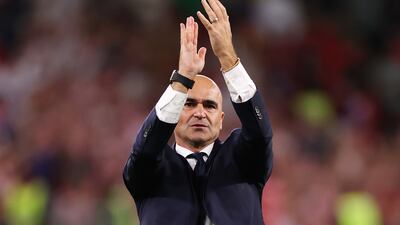
Roberto Martinez applauds Belgium's fans after their sides' elimination from the tournament during the FIFA World Cup Qatar 2022 Group F match between Croatia and Belgium at Ahmad Bin Ali Stadium. Getty Images -
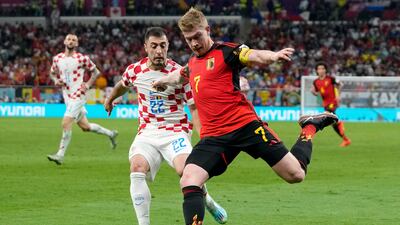
Belgium's Kevin De Bruyne, right, and Croatia's Josip Juranovic, left, fight for the ball. AP -
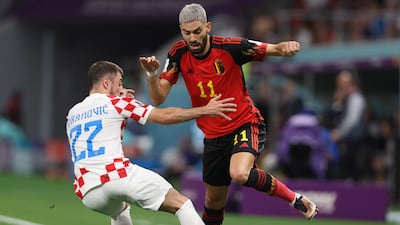
Josip Juranovic, left, of Croatia battles for possession with Yannick Carrasco of Belgium. EPA -
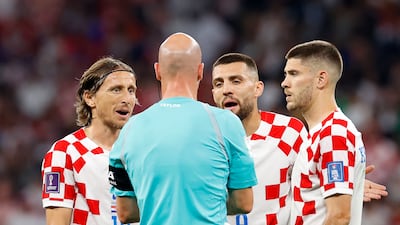
From left, Croatian players Luka Modric, Mateo Kovacic, and Andrej Kramaric argue with referee Anthony Taylor. EPA -

Croatia's defender Borna Sosa fights for the ball against Belgium at the Ahmad Bin Ali Stadium. AFP -
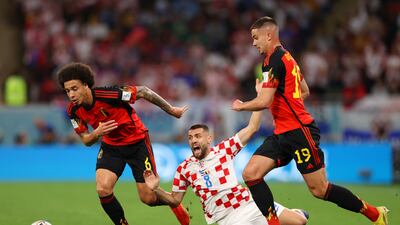
Mateo Kovacic of Croatia is challenged by Axel Witsel and Leander Dendoncker of Belgium. Getty -
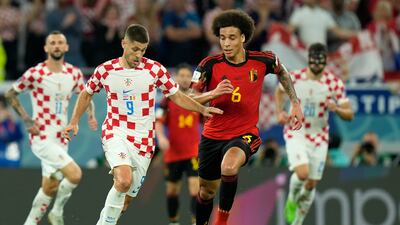
Croatia's Andrej Kramaric, left, duels for the ball with Belgium's Axel Witsel. AP -
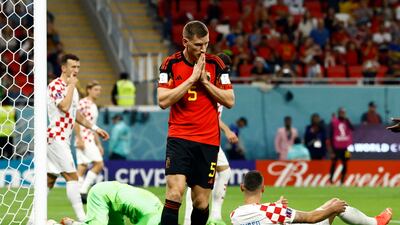
Belgium's Jan Vertonghen reacts. Reuters


Four minutes after coming on in Japan’s opening game against Germany, Doan equalised. Three minutes after Moriyasu’s half-time alterations against Spain included briefing the substitute Doan to disrupt the pattern of Spanish keep-ball, Doan pounced following a slack pass from Alex Balde, the Spain left-back, and rocketed in the equaliser. That was the platform for the 2-1 victory that put Japan top of a group including the 2010 world champions and the humbled, homebound Germany, winners of the 2014 World Cup.
Impact from the bench - always likely to be significant at the first World Cup to allow five substitutions per team, per game, but at the same time an extra test of a coach’s agility - has been a crucial tool for Moriyasu. Three minutes after Doan’s thunderbolt against Spain, Kauro Mitoma, another half-time arrival, stretched out his left leg chasing what looked a lost cause to cross for Japan’s second goal. His great effort was matched by the good luck that a ball that, to the naked eye, appeared to have gone out of play was adjudged fractionally within the white line as Mitoma centred.
The downside of these rousing second-halves, these brilliant Plan Bs is that Moriyasu hears criticism of his Plan A. The falling behind against Germany and Spain, and the 1-0 defeat to Costa Rica shone a light on some of Japan’s limitations: a counter-attacking strategy that can be too easily anticipated; and certain frailties in the positioning of goalkeeper Shuichi Gonda, whose showreel in Qatar so far combines fine saves with flawed interventions, though none of them yet costly thanks to the warrior recoveries of his teammates.
Or, as the veteran full-back Yuto Nagatomo put it vividly, “us showing the world we battle like Samurai.
“For all the technical and tactical improvements we have made over the last four years, they have to be based on courage,” continued Nagatomo, who renews acquaintance with a trio of former club colleagues from his long period whole-heartedly dashing up and down the flank for Internazionale. He coincided there with Ivan Perisic, Marcelo Brozovic and Mateo Kovacic, enduring stalwarts of Croatia’s midfield.
They each brought home silver medals from the last World Cup. Which, for Dalic, entitles Croatia to be regarded as a “superpower, even though we are a small country with big dreams.
“We’re facing a Japan side that wants to prove itself,” Dalic added, “a team that has beaten two world champions in Germany and Spain with character and quality. Maximum respect to Japan."

