



England manager Gareth Southgate has named Leicester City attacker James Maddison and Newcastle United striker Callum Wilson in his 26-man squad for the World Cup finals in Qatar.
The in-form pair have been brought back for their first international call-ups in three years. Maddison’s only England cap came as a substitute against Montenegro in November 2019 – also the last squad Wilson, who has one goal from four appearances, was involved in.
England play their first game against Iran on November 21, then take on the United States on November 25 and Wales four days later.
“He’s playing really well,” Southgate said of Maddison. “Look, he’s a good player, we’ve always said he's a good player. We think he can give us something slightly different to the other attacking players we’ve got.
“At various stages there have been conversations about James. He is playing as well as any of the attacking players in this country.”
There is a recall for rejuvenated Manchester United forward Marcus Rashford, whose last cap came in the Euro 2020 final loss to Italy.
There is no space in Southgate’s Qatar selection for Roma striker Tammy Abraham, Brentford frontman Ivan Toney or West Ham forward Jarrod Bowen.
“Tammy has had a poor run of scoring form at the wrong time, Southgate said of Abraham. “It is not a case where we are three or four weeks away from the first match, we are now 10 days, so form could be more important.
“We are watching their club form but we don't know where they are until we see them face to face.
“You still don't get the full picture until you work with them and see how they train with each other.”
Manchester City pair Kyle Walker and Kalvin Phillips were included despite a lack of match fitness, while Manchester United captain Harry Maguire has been named in the squad despite his limited game time.
“Kalvin played last night; he is free of injury,” said Southgate. “We are aware he is not going to be able to play seven 90 minutes, that won't be possible. But he is available.
“We don't really have a lot of cover for that role in the country. Kalvin is a super player and we feel it is a risk worth taking. Kyle is not back in full training but will be available before the end of the group stage.”
-
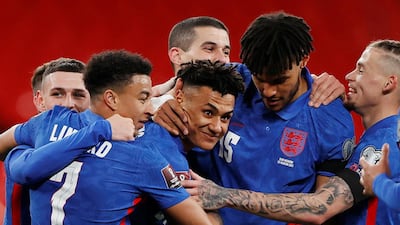
HOW ENGLAND QUALIFIED FOR WORLD CUP 2022: (Group I) March 25, 2021. England 5 (Ward Prowse 14', Calvert-Lewin 21', 53', Sterling 31', Watkins 83'): England began their qualification campaign by brushing aside San Marino at Wembley with substitute Ollie Watkins scoring on his debut. Manager Gareth Southgate said: "Of course, it's an opponent we should beat, but I thought they went about the job really well." Reuters -
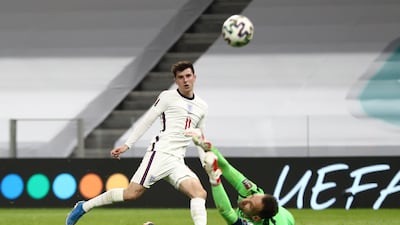
March 28, 2021. Albania 0 England 2 (Kane 38', Mount 63'): Two out of two for Southgate's men who stretched their unbeaten run in World Cup qualifiers to 23 games after Harry Kane scored one and supplied the other. Southgate said: "We had opportunities to make it three and should have killed the game off. I didn’t like the way we managed the game in the last 15 minutes, charging forwards when we didn’t need to." Reuters -
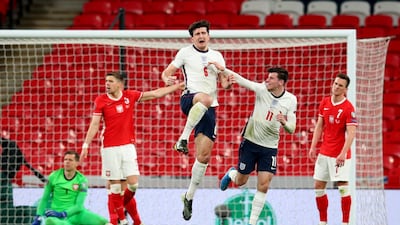
March 31, 2021. England 2 (Kane pen 19', Maguire 85') Poland 1 (Moder 58'): England overcame a dreadful error from defender John Stones that led to Poland - who were without Robert Lewandowski up front - scoring to make it three wins out of three. Southgate said: "We need to play top opponents and you could see tonight we still have a lot of improvements to make. That’s not anything I didn’t know." Reuters -
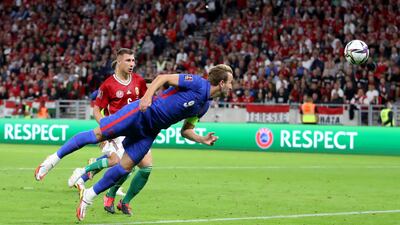
September 2, 2021. Hungary 0 England 4 (Sterling 55', Kane 63', Maguire 69', Rice 87'): Impressive England destroyed Hungary with four second-half goals in Budapest in a match where England players had objects thrown at them while some players suffered racist abuse from the home crowd. Southgate said: "We showed great maturity and kept the ball well. The attacking play was really exciting in the second half and we could have had more." Reuters -
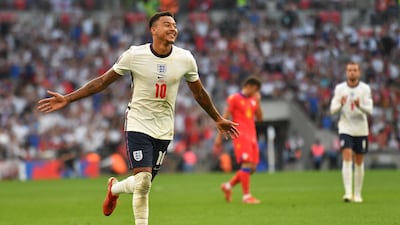
September 5, 2021. England 4 (Lingard 18', 78', Kane pen 72'), Saka 85') Andorra 0: Three late goals made it five wins out of five for England, who made 11 changes from the side that won 4-0 in Hungary. Southgate said: "It was difficult for the players picked who didn't have as much games together. You have to keep moving the ball, keep being patient. It wasn't an easy task." AFP -
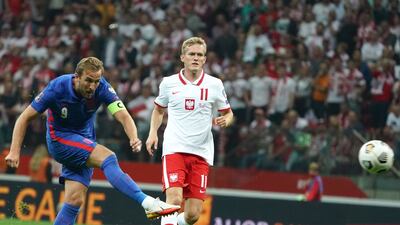
September 8, 2021. Poland 1 (Szymanski 90+2') England 1 (Kane 72'). An injury-time leveller ended England's 100 per cent record but still found themselves four points clear at the top of Group I with four games left. Southgate said: "It was no surprise that this was the hardest game in the group. Early in the game, we were a little slow to move the ball ... in the second half we controlled the game." AFP -
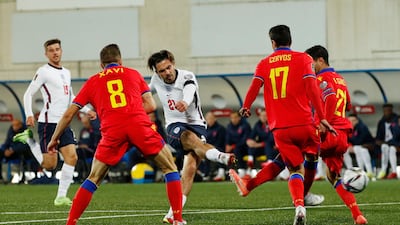
October 9, 2021. Andorra 0 England 5 (Chilwell 17', Saka 40', Abraham 59', Ward-Prowse 79', Grealish 86'): A stroll for England against a country ranked 156th in the world. Manchester City forward Phil Foden was the star of the show as Jack Grealish scored his first England goal. Grealish said: "In the back of my mind there has been that feeling that I've just wanted to score, just to get off the mark. Obviously I've done that tonight, I'm delighted." Reuters -

October 12, 2021. England 1 (Stones 37') Hungary 1 (Sallai pen 24'): A stumble in England's quest for Qatar as Southgate's side produced a disjointed display at Wembley with an out-of-form Harry Kane taken off despite the Three Lions still searching for a winner. Southgate said: "I don't think we played at the level we have done and Hungary defended very well. We didn't do enough to win the game." EPA -

November 12, 2021. England 5 (Maguire 9', Kane 18', 33', 45'+1), Henderson (28') Albania 0: Harry Kane was back in the scoring groove, hitting a hat-trick that left England needing only a point from their final qualifier in San Marino to qualify. Southgate said: "The first-half performance in the main was outstanding. Harry gave a fantastic centre-forward's performance ... I thought his all-round game was excellent." Getty -
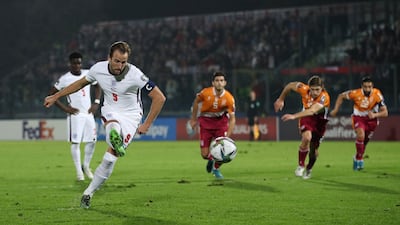
November 15, 2021. San Marino 0 England 10 (Maguire 6', Fabbri og 15'), Kane pen 27', 31', pen 39', 42'), Smith Rowe 58', Mings 69', Abraham 78', Saka 79'): England reached double figures for the first time since 1964 and secured their spot in Qatar. Southgate said: "We gave a performance that was enjoyable for the supporters that travelled, was clinical in the way we went about it, and then showed some exciting young players coming through." Reuters


Versatile Arsenal defender Ben White has been brought into a group that has Luke Shaw as the only out-and-out left-back. Marc Guehi, Fikayo Tomori and Tyrone Mings are among those missing out.
Chelsea’s Conor Gallagher made the cut but Southampton captain James Ward-Prowse again just missed out on a major tournament squad.
“We’ve wanted to make sure the balance of the squad is right,” added Southgate.
“I think the squad is more important than ever. With five substitutes you can have almost half the team changed during the game so you want different options for different moments of matches and stages at the tournament as well.
“We’ve had to cover a couple of players that aren’t yet fully fit, so having 26 available meant we were probably able to take a couple of risks that you might not have been able to with 23, but we think the balance is there and we’ve got cover in the positions we need.
“We’re lighter on depth in some positions than others but we think we’ve got everything covered.”

