

Australia could soon enter a new phase of living with Covid-19 “like the flu”, said Prime Minister Scott Morrison.
Mr Morrison said he discussed a move to Phase D of the national pandemic response plan with the national cabinet of state and federal leaders.
He said leaders wanted to move to living with coronavirus as though it were the flu and drop the isolation requirement for close contacts of cases – although he said he would first seek advice from health experts.
"Our airports are open again, international arrivals can come, there are waivers now on quarantine for people returning, so we are pretty much in Phase D," he said.
"We believe we are pretty much in Phase D now, there are a few exceptions to that. Phase D, remember, means living with the virus like the flu."
It comes after Australia declared a national emergency on Wednesday as thousands on the east coast started returning to uninhabitable homes after whole towns were swept away by devastating floods.
Mr Morrison’s conservative government faces an election in May. He said the Covid-19 isolation rule was "starving businesses of staff".
Health officials in the country’s most populous state of New South Wales this week flagged concern about a rise in the new BA.2 sub-variant of Omicron, which they said could double daily cases by the month's end from the latest figures of about 15,000.
-

Returning international passengers are greeted on arrival at Perth International Airport. All photos Getty Images unless otherwise specified -
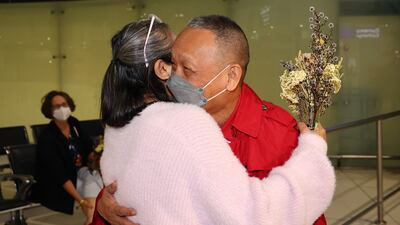
Travellers arrive in Perth with no need to quarantine for the first time in nearly two years. -
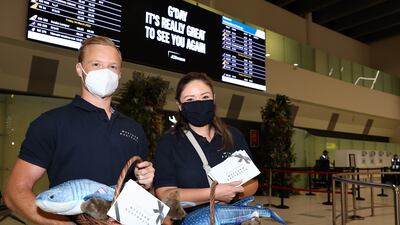
Western Australia Tourism representatives hand out gift baskets to arriving passengers. -
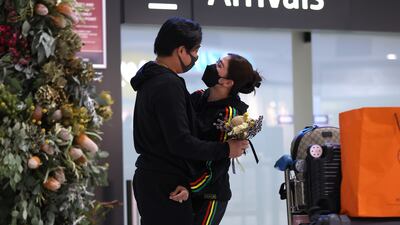
Tears and hugs at Perth International Airport as arrivals reunite with loved ones. -
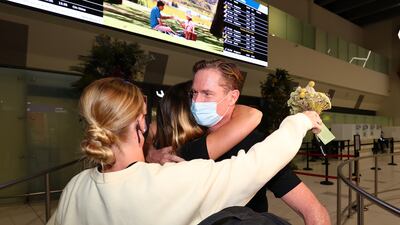
Hard border closures in Western Australia have meant friends and family have been separated for 700 days. -
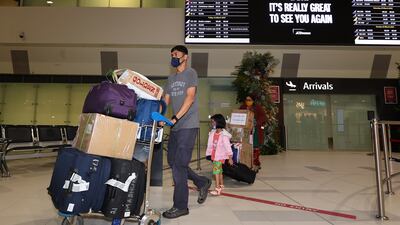
International passengers walk through the arrivals hall at Perth International Airport on March 3 as Western Australia eases border restrictions to vaccinated visitors. -
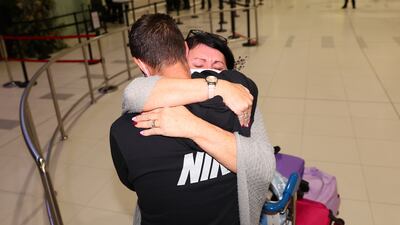
A joyful reunion at Perth International Airport. More than 23,000 passengers are expected to fly into Western Australia this week. -

Tears as passengers are greeted after arriving in Perth. -
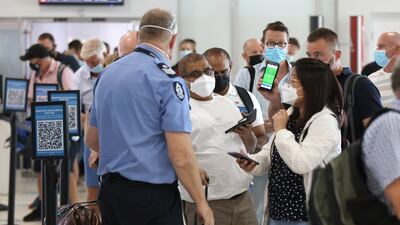
Arriving passengers and Western Australia police officer at Perth Airport. -
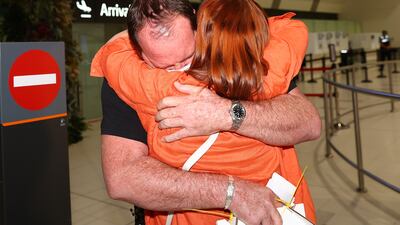
Reunions have been a long time coming for people in Perth, with the state imposing the country's strictest Covid-19 measures. -

Qantas' first flight landed in Perth just after midnight on Thursday. Photo by Paul Kane / Getty Images -
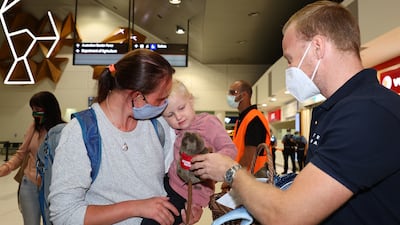
A West Australian Tourism representative offers a young passenger a toy Quokka on arrival at Perth International Airport Terminal. Photo by Paul Kane / Getty Images -

Footballer Bruno Fornaroli of Perth Glory arrives back in Western Australia from Melbourne. Getty Images -

Passengers arrive at Perth Airport's domestic terminal. AP


China grants approval to five Covid-19 antigen kits
In China, approval has been granted to five Covid-19 antigen kits made by local companies to be used for self-testing, state broadcaster CCTV said on Saturday.
Beijing Huaketai Biotechnology had been allowed to make changes to its antigen test kit's device certificate, said China's National Medical Products Administration (NMPA) on Friday.
It published a similar approval for four other companies, Nanjing Vazyme Biotech, Guangzhou Wondfo Biotech , Beijing Jinwofu Bioengineering Technology and a BGI Genomics subsidiary, Shenzhen Huada Yinyuan Pharmaceutical Technology, on Saturday.
While the NMPA did not provide more information, CCTV said the NMPA approvals marked the official market launch of new self-test kits.
The approvals come after the country's health regulator on Friday said it would allow the general public to buy antigen self-test kits in stores and online for the first time.
In the past two years, medical workers in many Chinese cities have swabbed hundreds of thousands of noses and throats days after just a handful of cases emerged, using nucleic acid tests that require labs to process samples.
The scale of effort has helped China keep its caseload tiny by global standards.
Hong Kong outbreak 'not past its peak'
Hong Kong leader Carrie Lam said on Saturday the city's outbreak was not yet past its peak despite daily case numbers showing a slight levelling off.
"At this moment, we could not comfortably say that we have past the peak," she said.
Health authorities reported 29,381 new infections on Friday, compared with 31,402 new cases on Thursday.
Ms Lam said fresh food supplies from mainland China had largely been restored to previous levels, after panic buying by the public in recent weeks had seen some supermarket shelves emptied on a daily basis.
Since early 2020, the global financial hub has recorded almost 650,000 infections and about 3,500 deaths - most of them in the past two weeks.
Hong Kong, like mainland China, has adopted a "dynamic zero" strategy that seeks to curb infections with strict mitigation measures, even as most other major cities learn to live with the virus.
China and Hong Kong's approach has been severely tested by the fast-spreading Omicron variant.

