

A British airline has taken a significant step in the global fight against the Covid-19 pandemic by lifting the requirement for passengers to wear masks on many of its flights.
Jet2, a budget carrier, no longer mandates travellers to wear face coverings on its flights to and from England and Northern Ireland.
Headquartered in England, which recently removed all remaining Covid-19 restrictions, the airline is thought to be the first major carrier to lift its mask requirement.
It still recommends the wearing of masks, however, and they are required for passengers leaving the plane in a foreign destination.
But will their decision prompt other airlines to follow suit? And is it a wise move to relax such restrictions on flights?
The National spoke to aviation and health experts to find out.
Do face masks cut the risk of infection?
The effectiveness of face masks at preventing the spread of Sars-CoV-2, the virus that causes Covid-19, has sometimes been questioned, but the evidence suggests they do offer benefits.
Paul Hunter, a professor in medicine at the University in East Anglia in the UK, said there was “no doubt” wearing a face covering reduced the risk of infection.
“Adults who never wear a mask are about 1.5 times or 1.6 times more likely to be positive for Covid than people who always wear a mask,” he said, citing figures published by the British government.
The same research, he said, found children wearing masks did not seem to offer a similar benefit.
Based on his knowledge of the scientific literature before the Omicron variant emerged, Prof Hunter said there had “not been a lot of well-described outbreaks on aeroplanes”.

One study from 2020 concluded, perhaps against what might have been expected, that people in a window seat were more at risk of catching the coronavirus than individuals sitting by the aisle.
Alan Peaford, editor of Arabian Aerospace, African Aerospace and ADS Advance, a UK aerospace title, said Hepa (high efficiency particulate air) filters on board aircraft “do a remarkable job” of cleaning the air, so face masks may not offer significant benefit.
“The face masks were an addition and more to reassure passengers and give them some extra comfort [reassurance that they are safe],” he said.
Will other airlines follow Jet2’s lead?
This depends in part on local regulations. Jet2’s lifting of the need to wear a mask does not apply on flights to and from Scotland, for example, where face coverings are still required in most indoor public spaces for people aged over 12, although this changes later this month.
Across the Atlantic, a mandate for US travellers to wear masks is due to expire on March 18 (although it could be extended), which means airlines may follow Jet2’s lead.
While the general direction of travel in some countries is towards the relaxation of restrictions, this appears to be happening slowly, with many governments maintaining measures to prevent the spread of Covid-19.
Peter Woolfrey, an independent aviation analyst, indicated that, at the moment, it was uncertain how things would unfold.
-
Latvia's Air Baltic scored 7 out of 7 for its Covid-19 compliance rating by airlineratings.com. AAFP -
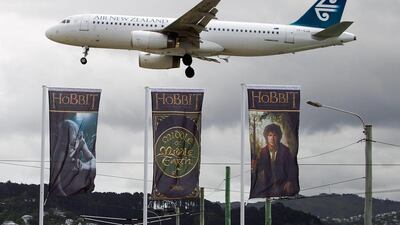
Air New Zealand also ranked in the top 20. AFP -
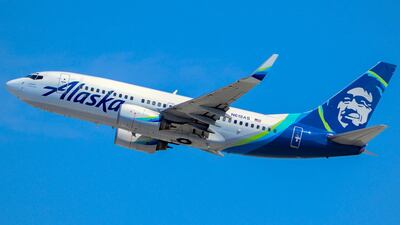
Alaska Airlines also took the top rating for Covid-19 compliance. Image courtesy Tomas Del Coro -

Japan's All Nippon Airways made the cut. Reuters -
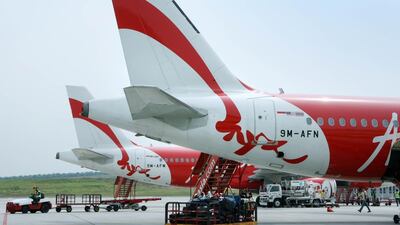
Low-cost airline Air Asia is one of few budget airlines in the top 20. Bloomberg -
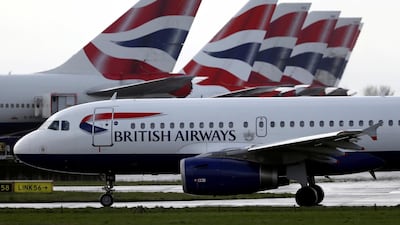
British Airways scored big for its Covid-19 compliance. Airlines are scored out of seven categories by airlineratings.com. Reuters -

Hong Kong's Cathay Pacific also ranked in the top 20. Reuters -
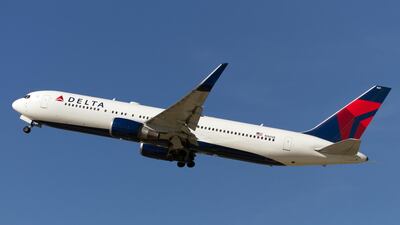
Delta Air Lines ranks as one of the top 20 airlines for Covid-19 compliance. Getty Images -
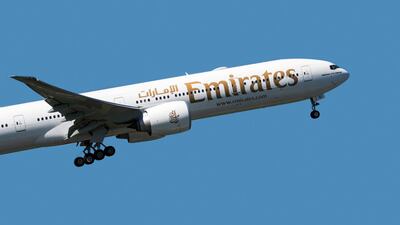
Emirates scored 7 out of 7 for its Covid-19 compliance. Getty Images -
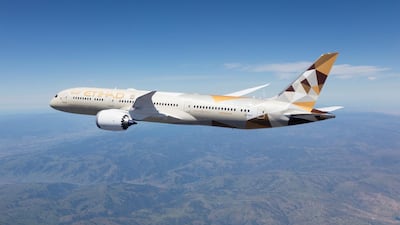
Etihad Airways also took the highest score. Courtesy Etihad -
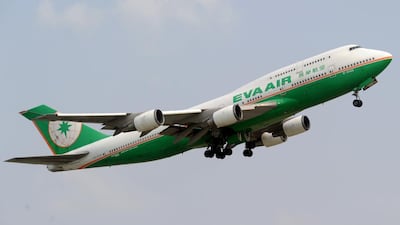
Taiwan's Eva Air was noted for its Covid-19 regulations. AFP -

Japan Airlines ranked in the top 20 Covid-safe airlines. -
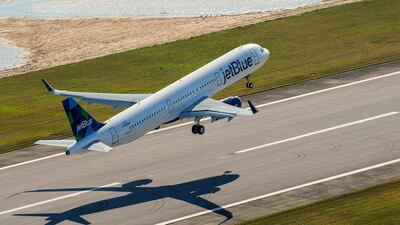
JetBlue's Covid-19 policies held up to scrutiny. James Darcy / Airbus -
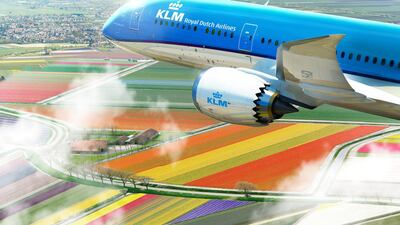
The Netherlands' KLM also led the way in Covid-19 compliance. Courtesy KLM -
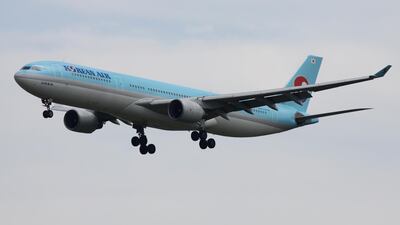
Korean Air scoreed seven stars for implementing Covid-19 policies. Courtesy Wikimedia Commons -
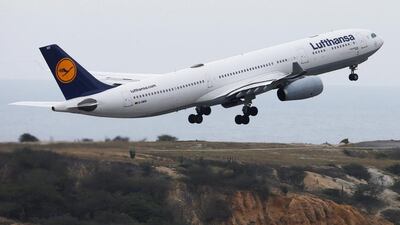
Germany's Lufthansa also ranked high for its policies to protect travellers against the coronavirus. Reuters -
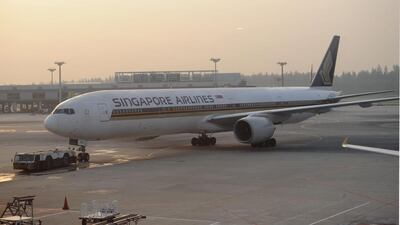
Singapore Airlines was listed in the top 20. AFP -
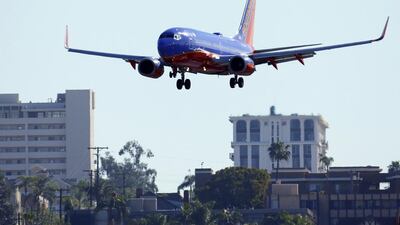
Southwest Airlines from the US also made the cut. Reuters -
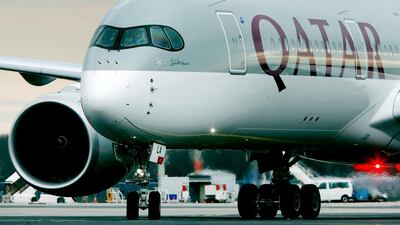
Qatar Airways ranked in the top 20 airlines for Covid-19 compliance. AP -
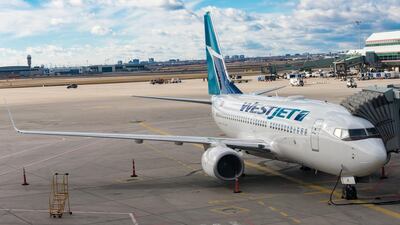
Westjet rounds out the top 20 airlines leading the way for Covid-19 compliance. Getty Images


“If the regulations will reverse, it’s still a [case] of the jury is still out,” said Mr Woolfrey.
He noted that there had been instances of airlines taking a “very hard line” on mask wearing until now, as they had with vaccination.
According to Mr Peaford, while “airlines are desperate to get back to normal”, they will be observing how Jet2’s move plays out.
“There’s a lot of discussions going on within airlines,” he said. “People will sit back and see what happens.”
If the lifting of mask requirements proves popular with travellers, he said carriers would “be queuing up to follow” Jet2.
However, if it appears passengers are concerned about the risk of diseases spreading and are avoiding the airline, other carriers would be more likely to keep masks.
What is the medical advice?
Prof Hunter said people who are more likely to suffer from severe illness if they catch Sars-CoV-2 should still wear a face covering on board an aircraft and in other enclosed spaces.
This group includes elderly people and those who suffer from certain medical conditions that make them vulnerable.
“Even if [masks] don’t stop your infection, they often cause a less severe infection because you’re exposed to a lower dose,” he said.
Regardless of whether it was required or not, Prof Hunter said that he would probably continue to wear a mask on a short-haul flight.
On a long-haul flight he indicated he would be less likely to be masked, as the benefits may be more uncertain because “you’re forever taking your mask on and off to eat”.
He said society was moving in the direction of removing mask requirements and “ultimately [it was] that way for air travel as well”.
“If they’re not required in buses or trains, the value of keeping them in other sections of society is somewhat less,” he said.

