


The antiviral drug molnupiravir has been recommended by the World Health Organisation for patients with non-severe Covid-19 who are at the highest risk of requiring hospital treatment.
Patients who are at highest risk of needing hospital treatment typically include those who are unvaccinated, older people and those with weak immune systems or chronic diseases.
However in its report in The BMJ, the WHO panel said that young and healthy patients, including children and pregnant and breastfeeding women, should not be given the drug due to potential harms.
Molnupiravir is an antiviral that works by stopping coronavirus from growing and spreading. Used as early as possible after infection, it can help prevent more severe symptoms from developing.
Thursday’s recommendation is based on new data from six randomised controlled trials involving 4,796 patients. This is the largest data set on this drug so far.
Moderate certainty evidence from these trials suggests that molnupiravir reduces the risk of hospital admission (43 fewer admissions per 1,000 patients at highest risk) and time to symptom resolution (average 3.4 fewer days), while low certainty evidence suggests a small effect on mortality (6 fewer deaths per 1,000 patients).
The panel made no recommendation for patients with severe or critical illness as there are no trial data on molnupiravir for this population.
-

Commuters, some wearing face masks, arrive at London Bridge station. UK Prime Minister Boris Johnson has said his “living with Covid” plan will bring the country “towards a return to normality”. PA -
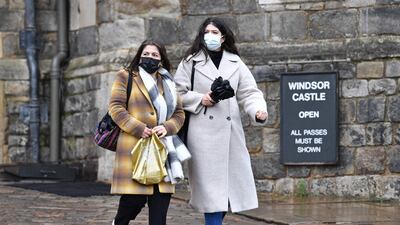
Visitors at Windsor Castle, the main residence of Britain's Queen Elizabeth. The queen tested positive for Covid-19 on February 20. AFP -

Mr Johnson speaks to patient Kathryn Wills during visit to a cancer hospital in Carlisle, northern England. AFP -

Prof Sarah Gilbert poses with her medal, after she was appointed a Dame Commander of the Order of the British Empire for her role in Covid vaccine development. AFP -

The Covid-19 Memorial Wall in London, which has more than 150,000 hearts painted on it. EPA -

British Health Secretary Sajid Javid during a visit to officially open the Robinson Building, a new research centre for Covid-19 vaccines. PA -

Anti-vaccination protesters demonstrate outside Downing Street against Covid-19 inoculations for children. PA -
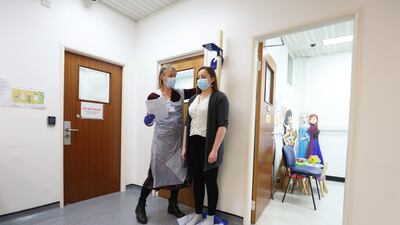
A woman is screened before receiving a Moderna booster vaccine in a clinical study at St George's University of London. PA


And it acknowledged that cost and availability issues associated with molnupiravir may make access to the drug for low- and middle-income countries challenging and exacerbate health inequity.
The panel also recommended a treatment combining two antibodies (casirivimab and imdevimab) to be used in people who are confirmed not to have the Omicron variant, as new evidence demonstrates a lack of effectiveness against it.
The guidance adds to previous recommendations for the use of Baricitinib, interleukin-6 receptor blockers and systemic corticosteroids for patients with severe or critical Covid-19; for the use of sotrovimab for patients with non-severe Covid-19; and against the use of convalescent plasma, ivermectin and hydroxychloroquine in patients with Covid-19, regardless of disease severity.
The recommendation for remdesivir is undergoing review due to new trial data. Recommendations for fluvoxamine and nirmatrelvir/ritonavir are currently in preparation.

