


Live updates: follow the latest news on Covid-19 variant Omicron
Experts said Monday that a hybrid coronavirus mutation called Deltacron, reportedly discovered in a Cyprus laboratory, is most likely to be the result of a test contamination, not a worrying new variant.
Cypriot media reported the discovery on Saturday, describing it as having "the genetic background of the Delta variant along with some of the mutations of Omicron".
While it is possible for coronaviruses to genetically combine, it is rare, and scientists analysing the discovery of Deltacron say it is unlikely.
"The Cypriot Deltacron sequences reported by several large media outlets look to be quite clearly contamination," Tom Peacock, a virologist at Imperial College London, tweeted at the weekend.
Jeffrey Barrett, the head of the Covid-19 Genomics Initiative at Britain's Wellcome Sanger Institute, said the "mutations" are on a part of the genome that is vulnerable to error in certain sequencing procedures.
"This is almost certainly not a biological recombinant of the Delta and Omicron lineages," Dr Barrett said on Monday.
-

Health workers take a break from administering Covid-19 swab tests in Colombo, Sri Lanka. The country reported its first case of heavily mutated coronavirus Omicron variant of concern on December 3 in a citizen returning from South Africa. EPA -
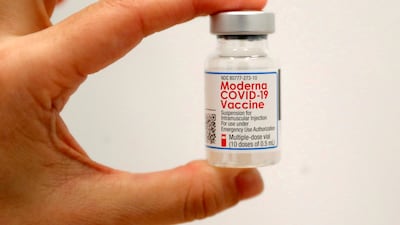
A health worker holds a vial of the Moderna Covid-19 vaccine at a pop-up in Manhattan, New York City. Reuters -

Britain's Prime Minister Boris Johnson, wearing a protective face covering to combat the spread of the coronavirus, leaves No 10 Downing Street in central London to take part in the weekly session of Prime Minister Questions at Parliament. He is facing a backlash from some of his own MPs over new coronavirus restrictions as he contends with a slump in support and questions about his future. AFP -
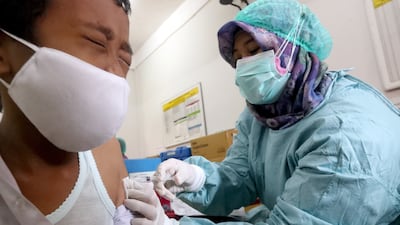
A dose of Covid-19 vaccine is given to a school pupil during a vaccination drive for children aged 6 to 11, in West Java, Indonesia. The country has reported that more than 4.2 million coronavirus infections with cases among people aged 18 and under making up 13 per cent of Indonesia’s total cases. EPA -
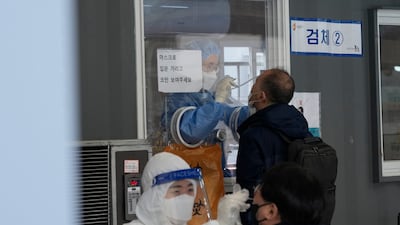
Medical workers take nasal samples from people at a makeshift coronavirus testing site in Seoul, South Korea. AP -

Brentford’s Premier League clash with Manchester United has this week been postponed due to a Covid-19 outbreak at the Old Trafford club. By Tuesday morning, the English Premier League had been hit by 42 positive tests. Photo: Manchester United FC -
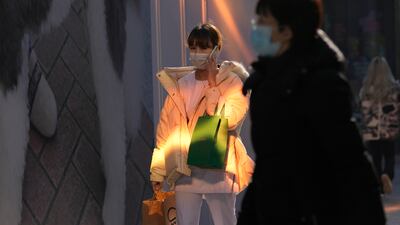
Visitors wear masks at a shopping centre in Beijing. Chinese state media said the first case of the Omicron variant had been detected in the country's mainland in Tianjin city, about 135km east of the capital. AP -

People shop for Christmas in Sydney. Covid-19 restrictions will ease further across the state of New South Wales, including rules for unvaccinated people. Getty Images -
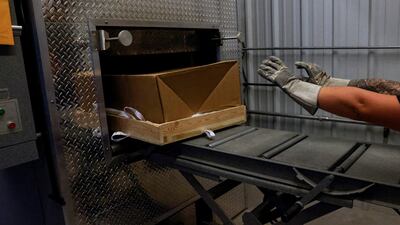
The body of a person who died from Covid-19) is pushed to be cremated by the Farmington Funeral Home in New Mexico, US. Reuters -
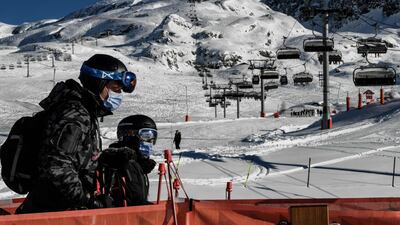
People take a ski lift wearing a mandatory mask as a preventive measure against Covid-19, in the Alpe d’Huez ski resort, France. AFP -
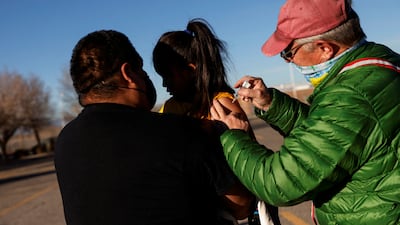
Nathan Blackwater holds his daughter, Nylah, as she receives her first dose of the Pfizer-BioNTech coronavirus vaccine in Shiprock, New Mexico. Reuters -
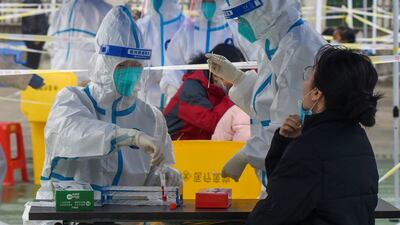
Medical workers in protective suits collect swabs from residents at a Covid-19 testing site in Ningbo, China. Reuters -
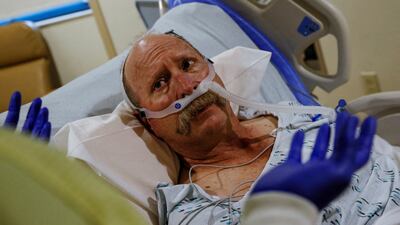
Covid-19 patient Larry Goff, 61, in an isolation room at San Juan Regional Medical Centre in Farmington, New Mexico. Reuters -

A man has a nose swab sample collected at a mobile Covid-19 testing unit in Manhattan, New York. Reuters -

Daniel and Paris Hokin wait for their Covid-19 test results with their children at a check point in Coolangatta, on Australia's Gold Coast, before entering Queensland. Getty -

Skiers wait for a cable car in Obereggen, Italy. The Italian government tightened health restrictions from December 6 to combat the rise in Covid-19 cases. Getty -

Protesters take part in a demonstration against Covid-19 health restrictions in Austria, which became the first EU country to say it would make vaccinations mandatory. AFP -
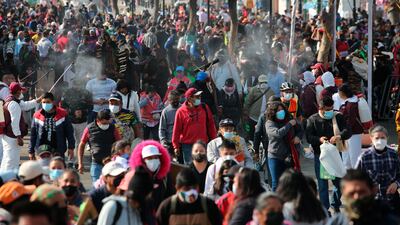
Pilgrims walk towards Our Lady of Guadalupe Basilica in Mexico City on Sunday after the easing of Covid-19 restrictions. AP -
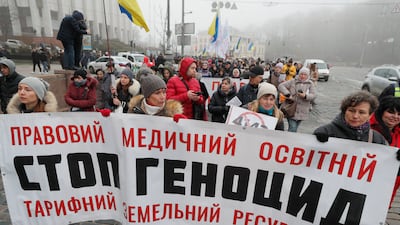
Ukrainians take part in a protest against Covid-19 restrictions for unvaccinated people in Kiev. EPA -

Medical workers protest against the Belgian government's Covid-19 restrictions in Brussels. Reuters -
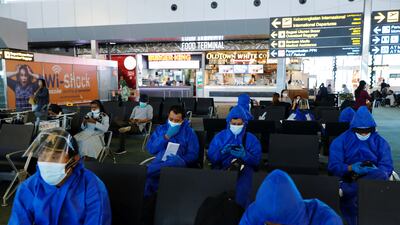
Travellers wear protective suits at Soekarno-Hatta International Airport, near Jakarta. Indonesia has banned travellers from eight African countries in an effort to curb the spread of the Omicron coronavirus variant. Reuters -
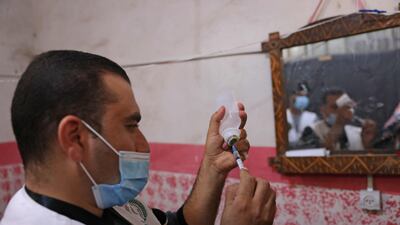
A medic prepares a Covid-19 vaccine dose during an inoculation campaign in the Palestinian city of Rafah. AFP -
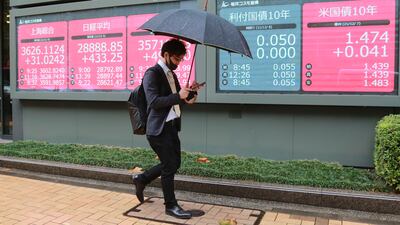
An electronic stock market board in Tokyo, Japan. Stocks advanced in Asia after a broad rally on Wall Street amid hopes that the Omicron strain will not pose a big economic threat. AP -
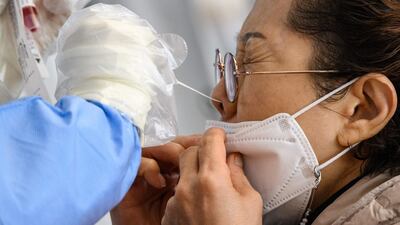
A woman undergoes a PCR test at a Covid-19 testing centre in Seoul, South Korea. AFP -
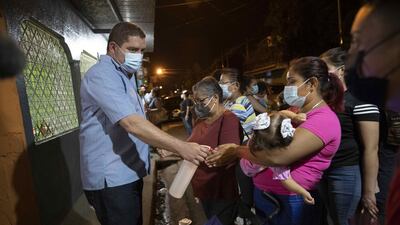
A woman attending a religious festival in Managua, Nicaragua, has her hands sprayed with sanitiser as a precaution against Covid-19. EPA -
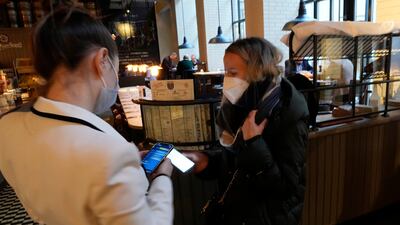
A restaurant worker in Warsaw checks a customer's proof of vaccination. From March, Poland's health workers, teachers, police and other uniformed service workers will need to be vaccinated against Covid-19. AP -
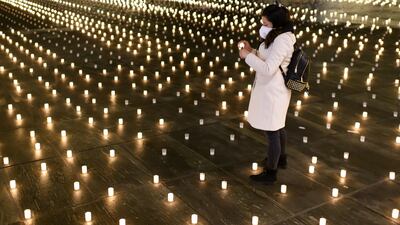
Activists lit about 12,000 candles in Bern, Switzerland, in memory of the people who have died from Covid-19 in the country. EPA -
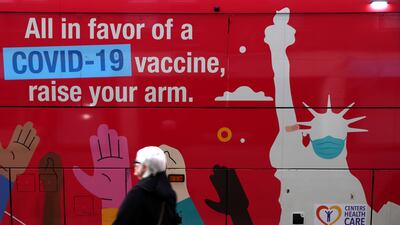
A pedestrian walks past a mobile Covid-19 vaccine clinic in Manhattan, New York. Reuters -
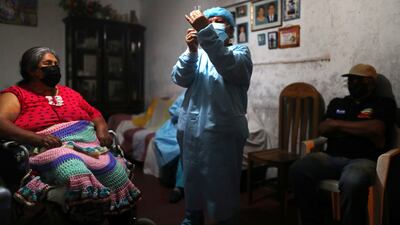
A healthcare worker prepares to give a woman a Covid-19 vaccine dose in Lima, Peru. Reuters -

A 'Mask Up For Christmas' sign in Manchester. The UK government is advising people to receive Covid-19 booster shots as it reintroduces safety measures. Getty -
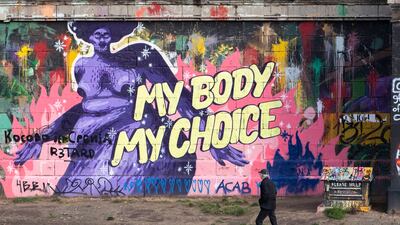
A man walks along the bank of the Danube Canal during the lockdown in Vienna. Graffiti on the wall reflects opposition to the Covid-19 vaccination campaign. AP -
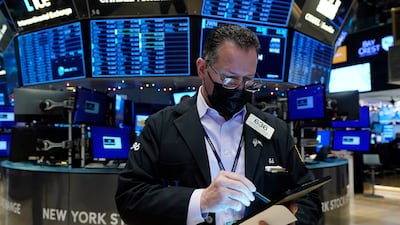
A trader on the floor of the New York Stock Exchange. Stocks rallied on Wall Street as investors hoped that the Omicron coronavirus variant will not pose a big economic threat. AP -
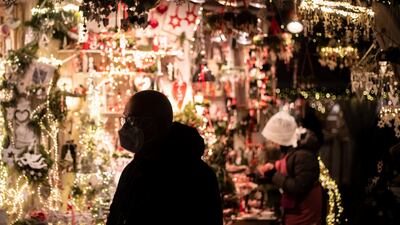
A Christmas market in Berlin. Germany is dealing with a rising number of coronavirus infections. EPA -

A lab worker handles positive Covid-19 samples to be sequenced in the virology laboratory of the APHP Henri Mondor Hospital in Creteil, on the outskirts of Paris. AFP -
A health worker collects a swab sample of a passenger who arrived in Karnataka by train, following the detection of the Omicron strain in the Indian state. EPA -
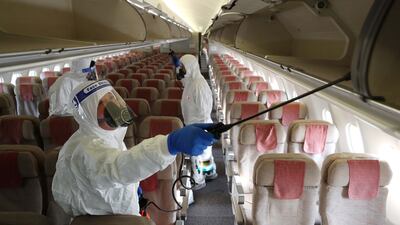
Officials disinfect the cabin of an Asiana Airlines plane at Incheon International Airport in South Korea amid mounting concerns about the Omicron variant. EPA -

Signage for a vaccination site in a Manhattan subway station as the Omicron strain continues to spread in New York. Reuters -
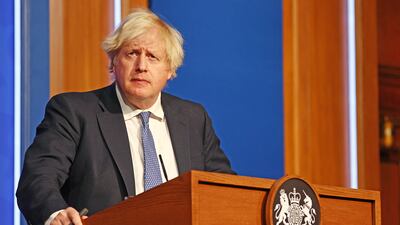
Prime Minister Boris Johnson at a press conference in Downing Street after ministers met to consider imposing new restrictions in response to rising cases and the spread of the Omicron variant. PA -
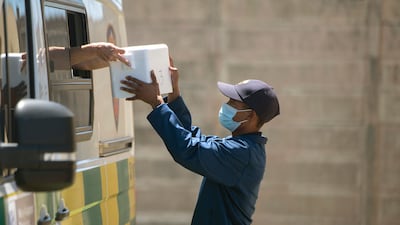
A member of the Western Cape Metro Emergency Medical Services receives vaccines from an ambulance in Cape Town, South Africa. AFP -
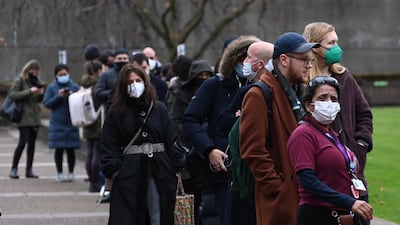
People queue for Covid-19 booster jabs outside a vaccination centre in London. UK government health experts are advising that all people aged over 18 should receive Covid-19 booster shots. EPA


Scientists are eager to battle disinformation about Covid-19, much of it circulating online.
Last week, unverified reports emerged of a "flurona" or "flurone" virus – a combination of a flu and the coronavirus – which the World Health Organisation dismissed on Monday.
"Let's not use words like Deltacron, flurona or flurone. Please," tweeted Maria van Kerkhove, an epidemiologist at the WHO.
"These words imply combination of viruses/variants and this is not happening."
While people can suffer from influenza and coronavirus at the same time, the two viruses cannot combine.
In contrast to new variants of Covid-19 such as Omicron, which greatly affect the course of the pandemic, cases of simultaneous infection of the flu and coronavirus are nothing new.
Since the start of the pandemic, the coronavirus has given rise to dozens of variants, four of which have been designated "of concern" by the WHO: Alpha, Beta, Delta and Omicron.

