

With about 50,000 people dying from Covid-19 around the world each week, the pandemic is far from over – and some nations are experiencing their highest death rates since the coronavirus broke out.
Russia this week recorded more than 1,000 daily deaths for the first time in the pandemic.
Neighbouring countries such as Romania and Ukraine are experiencing record death rates, while other eastern European nations such as Latvia are bringing in restrictions to reduce case numbers.
Europe saw a seven per cent rise in Covid-19 cases last week and was the only major region in the world to see an increase.
What is causing rates to rise in Russia?
The relaxation of social distancing rules and other guidelines, the presence of the Delta variant and low vaccination rates are all likely factors.
Russia was early in the race to develop a vaccine against Covid-19, but uptake has been disappointing, with only 31.3 per cent of the population fully vaccinated, Our World in Data said.
There is said to be widespread scepticism among the public about inoculation, reportedly stemming from criticism by senior figures in the country of Western vaccines. Analysts suggest such comments have led to a wider distrust of Covid-19 vaccines.
President Vladimir Putin has stopped short of another national lockdown despite the rising death rate, with local authorities instead taking decisions.
In some major cities including Moscow there were few restrictions until Thursday, when authorities said the capital would lock down from October 28. Other regional authorities are toughening rules in response to the current situation.
-

Pedestrians pass the National Covid-19 Memorial Wall, opposite the Palace of Westminster, in London. EPA -
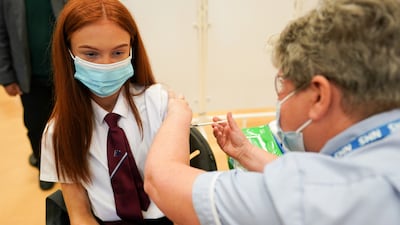
Lauren McLean, 15, receives a Covid-19 vaccine at the Excelsior Academy in Newcastle upon Tyne, in north-east England, as the country begins vaccinating children aged 12 to 15. Getty Images -
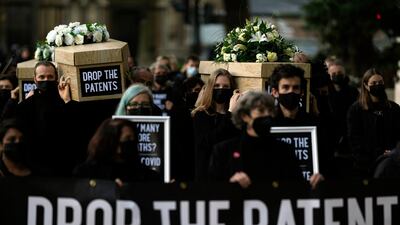
Campaigners carry fake coffins in London to highlight the number of Covid-19 deaths globally. AP -

Most passengers on an underground train on London's Bakerloo Line wear masks as a precaution against Covid-19. AP -
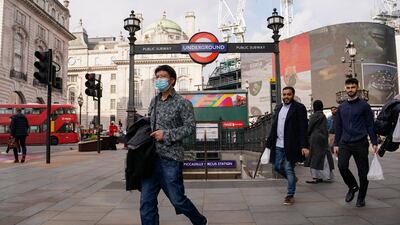
A man wears a face mask as he walks in Piccadilly Circus, in London. The UK has the highest rate of infections in Europe, with new cases averaging 43,000 a day over the past week. AP Photo -

Commuters wait for an underground train to leave from a tube stop in central London. Data up to Sunday showed more than 300,000 confirmed cases reported over the last seven days, a 15 percent increase in cases on the previous week. AFP -
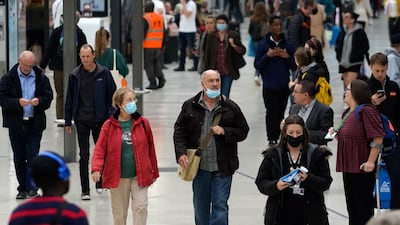
Commuters, some wearing face coverings, walk through Waterloo train station in central London. -

Chelsea fans show vaccine-related paperwork to a Covid-19 steward before entering the club's Stamford Bridge stadium in west London. Reuters -
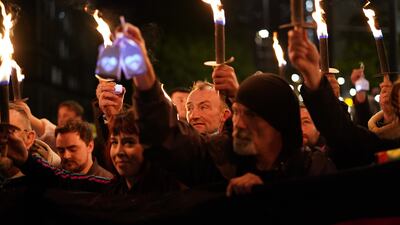
People attend a candlelit procession and vigil in the northern city Manchester to remember all those who have died due to the pandemic. Getty Images -

Chelsea Pensioner John Byrne talks to Deputy Chief Nurse Vanessa Sloane before receiving a Covid-19 vaccination at the Royal Hospital Chelsea, a retirement home for former soldiers, in London. PA -

A member of staff prepares a Covid-19 vaccine at a pop-up vaccination centre at Westfield Stratford City shopping centre in east London. PA -

Artist Luke Jerram walks through his installation 'In Memoriam', in Bristol, west England. It was created to remember the losses experienced during the Covid-19 pandemic, and is made up of more than 100 flags made from NHS hospital bed sheets. PA -
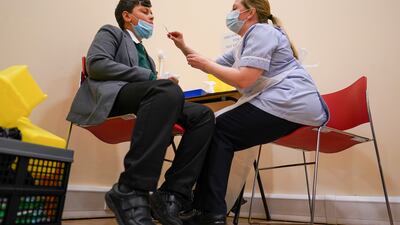
Felix Dima, 13, receives his flu inoculation ahead of receiving a Covid-19 vaccine at the Excelsior Academy in Newcastle upon Tyne. Getty Images


What is happening in eastern Europe?
In Romania, too, there has been poor vaccine uptake, with only 29.7 per cent of people fully vaccinated, less than half the European Union average of 64.3 per cent.
This low rate is thought to be part of the reason for the surge in hospital admissions and deaths. More than 500 people out of every 100,000 have the virus and the country this week recorded more than 500 deaths in a day – a record number.
Ukraine, with only 15.3 per cent of its population vaccinated, is also experiencing a record death rate that has exceeded 500 a day.
Among other eastern European nations, several have high case and death rates, including Latvia, which has a vaccination rate below the EU average and around 750 infections per 100,000 people.
With senior politicians in the Baltic state urging people to get vaccinated, new lockdown restrictions, such as the closure of restaurants, entertainment venues and schools, are being introduced.
UK's booster plan in doubt as 1.5 million shun third shot
The UK, where more than 45 million people – about 79% of over-12s – have had both doses, is also experiencing high case numbers of more than 40,000 a day. The case rate is about 450 per 100,000.
There have been calls for some restrictions to be brought back, although the government of the Prime Minister Boris Johnson, which controls measures in England, has so far resisted.
Largely thanks to the successful vaccine campaign, deaths are well below their peak in January, although they are still significant, at around 800 people each week.
Prof Paul Hunter, a professor in medicine and an infectious diseases specialist at the University of East Anglia in the UK, said that while things could change quickly, the situation was “not quite as bad” as it may seem.
“Rates are going up but in September we had more than 1,000 more people in hospital beds than we’ve got at the moment,” he said.
Waning immunity from vaccination may be a factor behind the UK’s growing case numbers and Prof Hunter said it was “quite plausible” that other European countries would see their cases rise in a month or two as immunity weakens.
The UK recently began a booster programme, in which a third vaccine dose is given, for over-50s and other vulnerable groups.
But it is estimated that 1.5 million people who were offered a booster shot appointment, by letter or text message, have yet to accept.
Will boosters curtail hospital admissions and deaths?
Recent events in Israel may indicate that boosters are effective at helping to bring down rates of serious illness and death.
Israel experienced its highest case numbers in August and early September, when they peaked at more than 11,000 a day, but daily infection rates are now only about one tenth of that.
Case numbers recently hit their lowest level for three months and death rates are a fraction of their level when the country’s fourth wave was peaking.
Israel’s booster programme began in July. Older people received their third shot and their infection rate fell earlier than in other age groups, indicating that booster shots were effective.
Prof Hunter said the fact that many in Israel have already been infected – and so are likely to have immunity – may be another reason why rates have fallen. Among a population of 9.2 million, more than 1.3 million coronavirus cases have been recorded.
Israel’s use of mask mandates and vaccine passports, which are needed to visit restaurants and other public places, has also been credited with helping to bring down case numbers.

