



The boss of Dubai Airports is gearing up for a "enormous" increase in passenger numbers after the UK confirmed it would relax restrictions on travel from the UAE – but he admitted figures may not hit pre-pandemic level for another four years.
Paul Griffiths said the move to allow travellers from the Emirates to visit the UK without needing to quarantine – as long they are fully immunised with one of four approved vaccines – would be a huge boost to the aviation industry as the public embrace the "freedom to travel".
But he remained cautious about the road to a full recovery, admitting the airport may not return to its pre-pandemic levels until 2025.
Turbulent journey during pandemic
Mr Griffiths said the airport had been on a "turbulent journey" since the coronavirus outbreak, as the initial widespread grounding of flights and subsequent safety restrictions took their toll.
He said he hoped the recent easing of restrictions across the world would help the airport achieve between 35 to 40 per cent of its pre-Covid passenger numbers, which hit 86.4 million in 2019, by the end of this year.
He said the airport was operating at about 31 per cent of that capacity but believes that figure will rise significantly in the next 12 months.
"It's been a long, hard journey, quite a turbulent one, with ups and downs month on month, week on week," he told Dubai Eye radio's Business Breakfast.
"I think the real test will be the school half-term from northern Europe, where we are already starting to see some very, very busy days emerge for October.
"So we've got a little bit of a way to go. Now, we're expecting by the end of the year something like 26 million passengers, according to our latest forecast.
"Next year we're probably going to be about 56 or 57 million. This announcement might push that further north and hopefully by 2025 at the absolute latest I expect to be announcing numbers closer to those that we saw in 2019.

"I think it's probably quite a good idea for us to be a little bit conservative with our numbers and not plan to grow our production capacity too quickly because, of course, cash has been a massive challenge over the last 18 months. But I really do hope that I am being completely conservative and we will smash those numbers."
Demand for travel set to soar
In June, Emirates said it aimed to fly to 90 per cent of its pre-pandemic network by the end of the following month, operating 880 weekly services across 124 cities.
Mr Griffiths expects the "pent-up demand" from passengers freed from quarantine requirements to generate a surge in numbers flying through the airport in the coming weeks.
He described the UAE to UK travel changes as, "an absolutely enormous deal".
"I imagine if you have been a prisoner for some time and you're let out on parole, this must be exactly what it feels like, because it's just terrific now we're seeing all of the restrictions around the world just tumbled down. And I hope very soon we'll be back to DXB as we know and love it, you know the 2019 figures, hopefully, we'll be back with this very shortly," Mr Griffiths said.
-
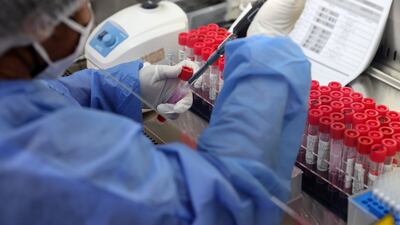
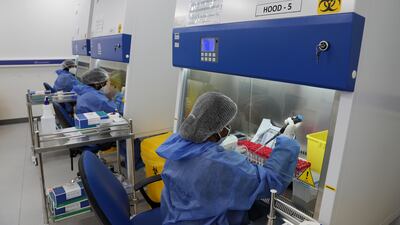
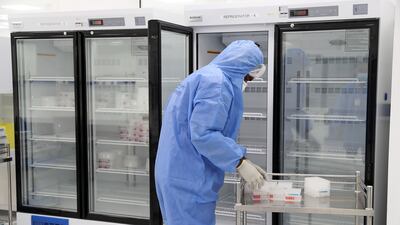
Lab staff working in the sample preparation room at Dubai Airport (DXB). All photos: Pawan Singh / The National -
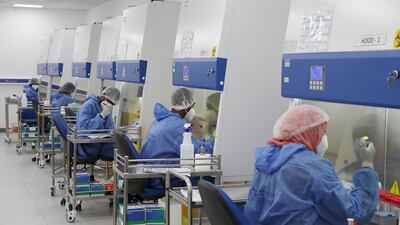
Close to Terminal 2, the laboratory is a dedicated centre for around-the-clock processing of RT-PCR test samples collected from passengers at DXB. -
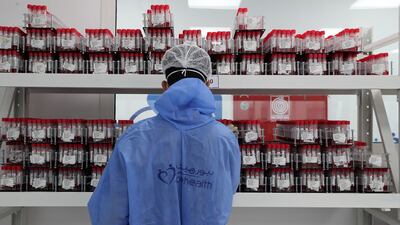
Lab staff working in Dubai Airport's in-house lab for processing Covid-19 PCR tests. -
One of the world’s busiest airports now has one of the world’s biggest in-house Covid-19 testing laboratories. -

The laboratory reduces waiting times for passengers arriving by making sure their PCR test results are delivered in only four to six hours. -
Before the lab opened in June, the passengers’ samples were collected from the airport every 12 hours. -
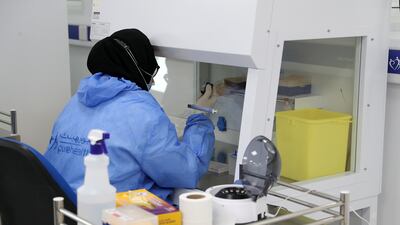
Now samples are collected every 30 minutes and transported to the in-house facility operated by Pure Health. -
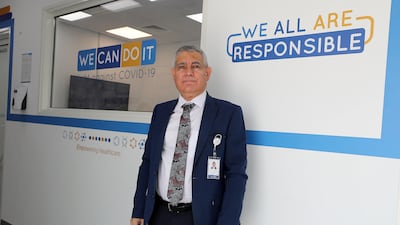
Carlo Kaabar, medical director of Mohap Laboratories, at Dubai Airport's in-house PCR lab. -
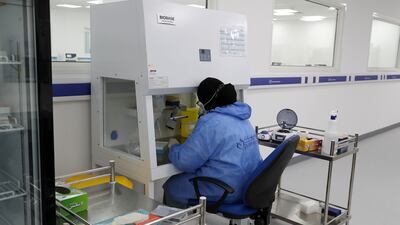
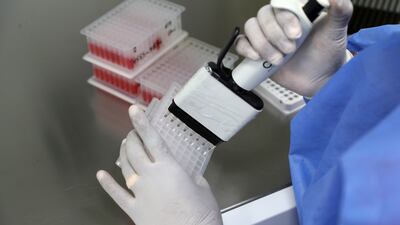
After a batch of samples is received, the staff first check their integrity and verify the passengers’ details using barcodes. -
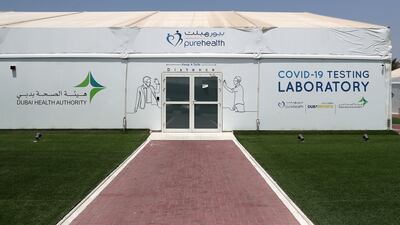
Dubai Airport's in-house lab for processing Covid-19 PCR tests. -
If passengers test positive, they need to undergo isolation and follow the Dubai Health Authority guidelines. -

Lab staff scanning the barcode of a Covid-19 PCR sample.


He referred to Emirates' decision to increase its number of weekly flights from Dubai to UK to 77 by the end of October as testament to the progress being made.
"The thing we have missed most is that freedom to travel and now that's finally put to an end by the very excellent announcements we have.
"I'm sure that pent-up demand will be enormous, phones will be ringing off the hook, the internet will break. There will be a huge demand for air travel now that mobility is back on the agenda."
Vaccination the way forward
Mr Griffiths said moves by the UK and the US to open up to fully vaccinated travellers showed the importance of inoculation drives in aiding recovery from the pandemic.
The UAE has made a nationwide vaccination campaign central to its efforts to return to normality.
More than 19.6 million doses of Covid-19 vaccine have been administered to the public in the Emirates since December, with more than 81 per cent people now having received two doses.
"I do believe that's always been the way forward," Mr Griffiths said. "I've been arguing that for many, many months – get your vaccine. The vaccine passport is coming. It is the only way to recover the travel industry and I think now everyone is recognising that."

