

Unvaccinated people are three times more likely to catch Covid-19 than those who have received both injections, a UK study has found.
Researchers from Imperial College London found new cases appeared to be slowing across England but the infection rate was still four times higher than the previous study in May.
In the study, one in 120 fully vaccinated people tested positive, compared to one in 40 unvaccinated participants.
The React study is seen as a vital measure for assessing the state of the pandemic in the UK.
The latest analysis was carried out in England between June 24 and July 12 before the country's final lifting of lockdown measures.
Most social distancing restrictions, including the legal requirement to wear a mask indoors, were removed on July 19.
Despite warnings that cases could rise to 100,000 per day, Britain recorded 21,691 cases on Tuesday, continuing a downwards trend that began in the middle of last month.
A total of 60,665 cases were recorded on July 15, the highest figure since England emerged from lockdown.
Of the 98,233 people in the React study, 527 tested positive, a rate of 0.63 per cent or one in 160 people. It was a rise from the study on June 7 when one in 670 were infected.
Despite the increase, researchers said the spread of the virus was slowing across England.
-
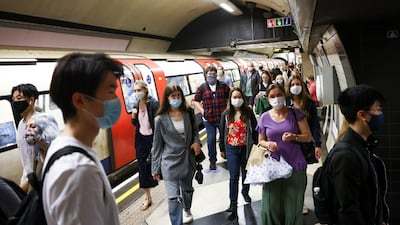
People walk along a platform on the London Underground. -
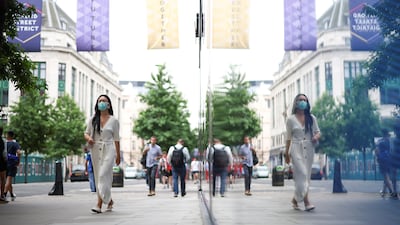
People walk along Oxford Street in central London. England lifted most Covid-19 restrictions on July 19. -
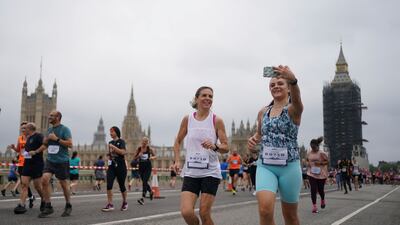
Participants run across Westminster Bridge in London during the Asics London 10km marathon. -

Festival-goers watch Wolf Alice perform at Latitude Festival at Henham Park. -
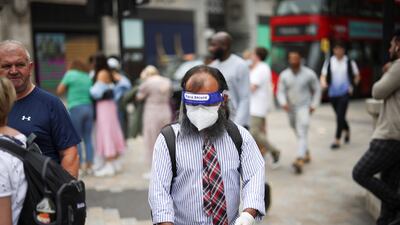
A person wearing a protective face shield and face mask walks through Oxford Circus in London. -
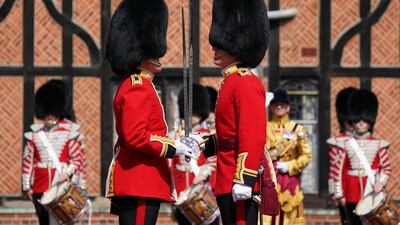
The Changing of the Guard at Windsor Castle takes place for the first time since the start of the pandemic. -
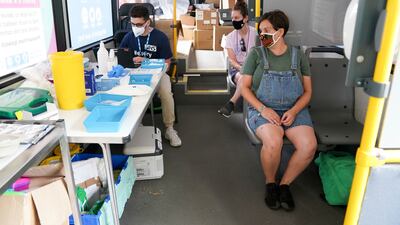
Festival-goers wait to receive a vaccine on board a bus at the Latitude Festival. -

Empty shelves in a supermarket in London. Brexit lorry shortages combined with large numbers of retail staff isolating have cause shortages of household staples in parts of the UK . -
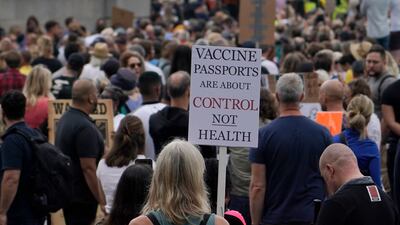
Demonstrators hold up banners as they listen to speeches during a "Rally for freedom" protest in London.


“Those who were fully vaccinated may be less likely to pass on the virus to others than those who have not received a vaccine,” researchers said.
Of the 254 positive test results sequenced for variants, all were confirmed to be the Delta strain.
Prof Paul Elliott, director of the React study, said vaccines still offered good protection against infection.
“However, we can also see that there is still a risk of infection, as no vaccine is 100 per cent effective and we know that some double-vaccinated people can still become ill from the virus,” he said.
“So even with the easing of restrictions, we should still act with caution to help protect one another and curb the rate of infections.”
Health Secretary Sajid Javid urged caution as the UK “learns to live with this virus”.
“Today’s report shows the importance of taking personal responsibility by self-isolating if you are contact-traced, getting tested if you have symptoms and wearing face coverings where appropriate,” he said.
“I urge anyone who has yet to receive a vaccine to get jabbed and take up both doses – the vaccines are safe and they are working.”

