

A groundbreaking UAE green energy scheme has generated enough power to supply 2,000 homes, using household rubbish and industrial waste, in its first year in operation.
The Sharjah Waste to Energy plant, the first such project in the region, offset 150,000 tonnes of carbon emissions.
It processed more than 100,000 tonnes of waste — equivalent to that produced by 180,000 people — which was diverted from landfill and turned into clean energy. About 250 tonnes of metal were recovered during the same period.
The plant is the first initiative under Emirates Waste to Energy, a joint venture involving Beeah Energy and Masdar.
About 60 per cent of all greenhouse gas emissions in the Emirates come from waste decomposing in landfills, Beeah said on Sunday.
Sharjah sent only 10 per cent of its waste to landfill since the plant's launch, down about 25 per cent compared to previous periods, a significant step forward in its ambition to become the Middle East’s first zero-waste city.
“The Sharjah Waste to Energy plant is an example of successful collaboration towards the UAE’s sustainability agenda,” said Khaled Al Huraimel, group chief executive of Beehah.
“In partnership with Masdar, we have pioneered a waste-to-energy innovation that adds to the national clean energy mix, while also accelerating towards our zero-waste to landfill targets in Sharjah.
“We have also achieved 90 per cent landfill waste diversion, a record for the Middle East, which highlights the positive impact energy innovations can have for sustainable waste management.
“The Sharjah Waste to Energy plant demonstrates how clean energy can not only help meet energy demand, but also recover valuable material and tackle the mounting challenge of waste in growing cities across the Middle East.”
-

Sheikh Dr Sultan bin Muhammad Al Qasimi, Ruler of Sharjah, inaugurated the Sharjah waste-to-energy plant. Photo: Emirates Waste to Energy company -

Dr Sultan Ahmed Al Jaber, the UAE’s Minister of Industry and Advanced Technology and chairman of Masdar (fourth from left), and Sheikh Dr Sultan bin Muhammad Al Qasimi, Ruler of Sharjah, during the inauguration of the Sharjah plant. Photo: Emirates Waste to Energy company -

The Sharjah waste-to-energy plant aims to displace nearly 450,000 tonnes of carbon dioxide emissions. Photo: Emirates Waste to Energy company -

The plant has been set up by Emirates Waste to Energy, a joint venture between Sharjah environmental management company Beeah and Abu Dhabi renewable energy company Masdar. AFP -
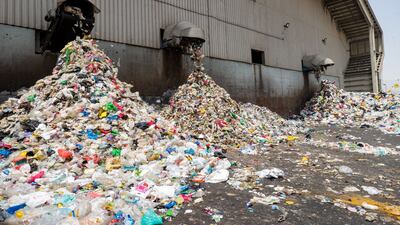
Solid waste bound for landfill in the yard of the material recovery building at the Beeah waste management complex in Sharjah. Bloomberg -
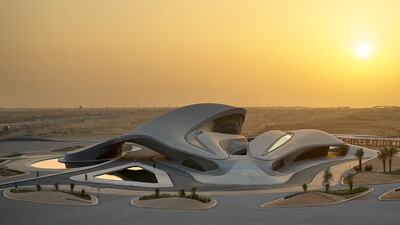
Beeah's new headquarters in Sharjah. Photo: Beeah -
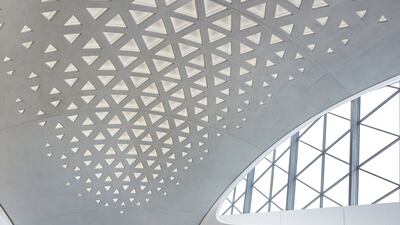
Powered by solar energy and integrating the latest technologies aimed at achieving net-zero emission, the campus is one of the last landmarks designed by the late Iraqi-British architect Zaha Hadid. Photo: Beeah -
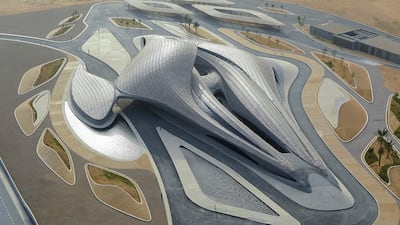
The new building is equipped to operate at LEED Platinum standards, the highest standards for energy efficiency in the world. Photo: Beeah -

Sharjah’s Beeah plans to diversify its portfolio and launch projects and ventures in the regionally and globally. Photo: Beeah -
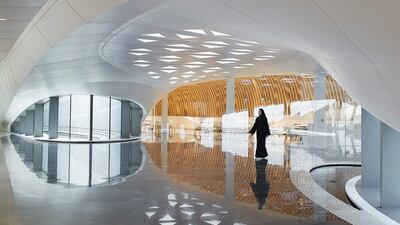
The new campus will set new benchmarks for future workplaces, the company said. Photo: Beeah


Plant can drive eco goals
The plant is expanding operations to produce 30 megawatts of power annually, while it aims to eventually process 300,000 tonnes of waste per year that would otherwise be destined for landfill.
It will displace almost 450,000 tonnes of carbon dioxide a year and preserve the equivalent of 45 million cubic metres of natural gas.
Mohamed Al Ramahi, chief executive of Masdar, hailed the progress of the energy plant.
“Achieving the landmark of 100,000 tonnes of waste processed within the first year of operation is a fantastic milestone on our journey towards pioneering worldwide efforts towards decarbonisation,” he said.
“Utilising the latest innovative technologies, the plant has played a leading role in Sharjah’s 90 per cent landfill waste diversion success and in supporting the UAE’s goal of diverting 75 per cent of solid waste from landfills.
UAE steps up climate fight
The UAE's wider net-zero strategy involves Dh600 billion ($163bn) being invested in clean and renewable energy sources in the next three decades across the country.
Last year, Abu Dhabi also revealed plans to ensure that no waste is sent to landfill after 2071.
The UAE is prioritising clean energy and the fight against climate change as it prepares to host the Cop28 global environmental summit at Expo City Dubai later this year.
Dr Sultan Al Jaber, President-designate of Cop28, has spoken of the need for the international community to turn talk into action to protect the planet.
Dr Al Jaber, who is also UAE Minister of Industry and Advanced Technology, said he is optimistic that foundations for success will be laid at Cop28.
“There is no shortage of ideas or consensus on what needs to be done. What’s missing is getting it done,” he said.
“I believe that the collective will and convening power in this room can make the necessary progress by Cop28 in November, lay the foundation for a successful climate summit and restore trust in the multilateral system.
“Our planet and our people, and especially the most vulnerable, are depending on it.”

