


Cities across the globe have long harnessed the power of nature by integrating more green spaces in urban development plans to boost the environment, as well as improve well-being.
But research in the UAE has underlined how creating additional green spaces should not be merely confined to streets and parks, but can be crucial to cultivating healthier, happier and more productive workplaces, too.
A study by Atina Ghunaim, a postgraduate researcher at UAE University (UAEU) in Al Ain, has highlighted how living or green walls - structures covered with greenery and vegetation - can cut down on pollution and create cleaner air in premises where employees can typically spend 2,000 hours a year.
Ms Ghunaim analysed pollution in the UAEU’s offices during the autumn and winter, and found that concentrations of particulate matter fell when there was a living wall installed. Levels of volatile organic compounds (VOCs), some of which have been linked to increased cancer rates, were also lower.
Cleaning the air inside homes, workplaces and other locations could offer significant health benefits, as the World Health Organisation has estimated that globally each year 4.3 million people die prematurely because of polluted indoor air.
Going green
Green walls may provide monetary and environmental upsides, because the UAEU research found that when such a wall was installed, the internal temperature was reduced by between 0.3 °C and 1.0 °C, which could cut energy demand for cooling.
According to analysis by Indian-based company, Straits Research, the global market for green walls is set to double in size in the decade up to 2031, when it is projected to be worth $5.3 billion (Dh19.5 billion).
Hisham Elkadi, a professor of architecture at the University of Salford in the UK who has researched living walls, said that the way that they brought nature into the urban environment “absolutely” offered benefits.
“The more we’re integrated with nature the better for us, for our environment, for health. There’s no question this is the way forward,” he said.
Internal and external benefits
As well as internal green walls improving internal air quality, external green walls clean the air outside, Prof Elkadi said, by removing particulate matter, harmful gases and VOCs.
There are also thermal benefits to external green walls: they reduce the heating effect on buildings in hot climates and limit the loss of heat from buildings in cooler parts of the world. Research in the UK published in 2021 found that heat loss was cut by 31 per cent when a pre-1970s building was retrofitted with a living wall.
“It’s mitigating the transmissions of energy from the atmosphere, and towards the atmosphere … The plants have very good control over the energy efficiency of buildings,” Prof Elkadi said.
Living walls and other plant life in towns and cities, including trees, also mitigate the urban heat island effect, which causes built-up areas to become hotter than surrounding areas. People who can see green walls while they are working have also been shown to have increased productivity, Prof Elkadi said.
By helping to increase the number of insects and birds, green walls can improve biodiversity, which Prof Elkadi said could contribute to urban areas becoming “green corridors” for nature instead of barriers to them.
However, green walls in hotter climates are at a greater risk of drying out, which can turn them into a fire hazard, so correct installation and regular maintenance are important.
How are companies tackling air pollution?
Many companies now provide green wall installations, both internally and externally, while green roofs are similarly becoming more popular and can, Prof Elkadi said, also reduce the urban heat island effect.
Employers around the world are making efforts to reduce internal air pollution. In India, for example, Acer has reportedly installed air purifiers in its offices, as have PepsiCo, Deloitte and KPMG, all of which have additionally brought in extra greenery to filter the air.
Simple pot plants have also been shown to reduce internal air pollution, according to research by the Royal Horticultural Society and the University of Birmingham, both in the UK.
Meanwhile, Royal Grammar School Guildford Dubai opened in 2021 with a sustainable vision supported by living walls and palm trees in the central atrium to encourage air circulation.
Another approach to clean the air, by deploying a spray-on coating for walls and other surfaces, is being offered by UAE company, Best Pick Energy.
The firm and its UK partner, Clean Air, which promotes the technology developed in Hungary by Resysten, said the method had been demonstrated to remove nitrogen oxides (NOX) from the air.
“Around the world you have zones and areas where you have naturally high concentrations of NOX sitting in the atmosphere. That tends to be in cities, it tends to be around transport hubs, it tends to be around construction sites,” said Steve Lewis, chief executive of Clean Air.
He said that the coating, which contains titanium dioxide, had been sprayed on to, for example, glass facades, vehicles, lorries and perimeter fencing around construction sites.
Construction sites are known as pollution hotspots and, with air pollution from traffic having fallen in some countries because of tighter emissions regulations, the share of air pollution accounted for by construction has increased.
Mr Lewis said a major global operator of drive-through fast-food outlets had contacted the firm about the possible use of the technology, which could reduce the extent to which employees are exposed to pollution.
The company states that the spray can remove 222mg of nitrogen dioxide per square metre per day, which can lead to a significant total across a large project.
Trials are taking place in the UAE to further test the technology with a view to rolling it out in the country, with the potential for it to be used both internally and externally.
So, from employing the age-old cleaning power of plants to using high-tech sprays, efforts to purify polluted air indoors and outdoors look set to grow.
The impact of climate change in the Middle East – in pictures
-

Flooding in the Al Barsha area of Dubai. Chris Whiteoak / The National -
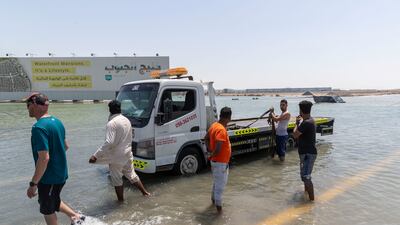
Vehicles being recovered near Al Maktoum airport in Dubai. Antonie Robertson / The National -

Flooding in the Al Barsha area of Dubai. Chris Whiteoak / The National -
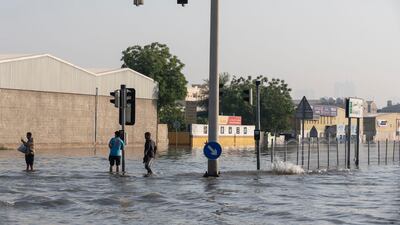
Flooding along Sheikh Zayed Road in Dubai. Antonie Robertson / The National -
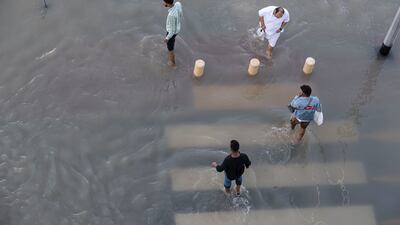
Flooding along Sheikh Zayed Road in Dubai. Antonie Robertson / The National -

Cars move through floodwater in Al Qudra, Dubai. Chris Whiteoak / The National -

Flooding on Dubai's Al Khail Road. Chris Whiteoak / The National -
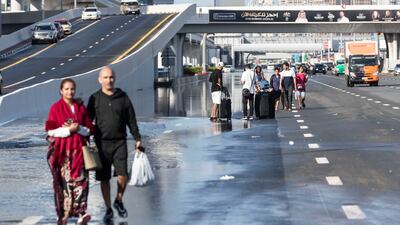
People abandon their cars on Sheikh Zayed Road due to heavy rain. Antonie Robertson/The National -

Flooding on Al Khail Road. Chris Whiteoak / The National -
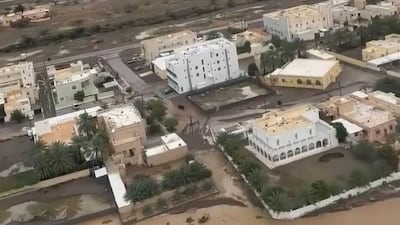
Flooding in Oman. Photo: Royal Oman Police -

A damaged car in Derna, Libya. Reuters -
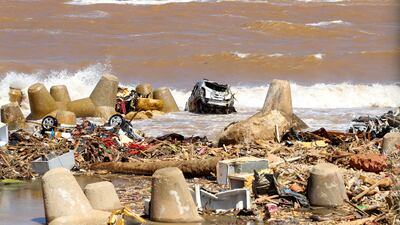
A destroyed vehicle in Derna. AFP -

Abdul Salam Ibrahim Al-Qadi walks on rubble in front of his house, searching for his missing father and brother, in Derna. Reuters -

An aerial view of the destruction in Derna. Reuters -
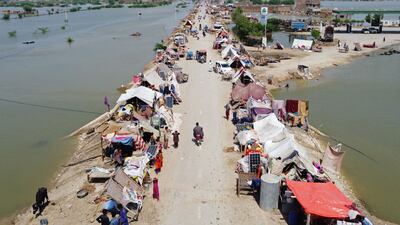
Flood-affected people taking refuge in a makeshift camp after heavy monsoon rains in Jaffarabad district of Balochistan province. AFP -
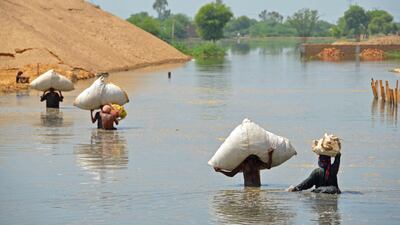
Internally displaced flood-affected people shift husk for their animals in a flood-hit area following heavy rains in Dera Allah Yar in Balochistan. AFP -
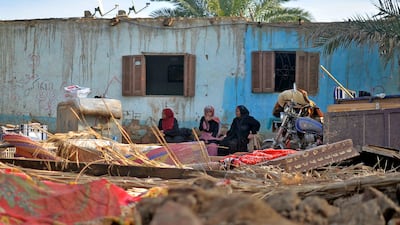
The aftermath of flooding in Egypt's southern city of Aswan, 920 kilometres south of the capital. AFP -

The Nile River from the top of Famine Stela, or Rock of Starvation, Egypt. Reuters -

Volunteers search for people in need following heavy rainfall in east Mosul, Iraq, in March 2020. Reuters -

People clean up after floods in Duhok, Iraq, on March 19. Reuters



