


A "green premium" that few are willing to pay to make cars, food and washing machines by sustainable means is holding back the fight against climate change, a UN summit has heard.
Demand for clean but pricey alternatives to steel, cement and fertilisers - used to make consumer goods, build homes and grow food - is too low for green factories to be built at scale, insiders say, thwarting efforts to cut heavy industry’s CO2 problem.
The extra costs of materials mean a house made with alternative cement could cost five per cent more in 2030, while using green fertiliser could add a cent to every dollar in the cost of a loaf of bread, according to estimates published on Thursday. Air fares could double if fully sustainable jet fuel were used.
A car would cost 1.4 per cent more and a washing machine 1.5 per cent extra due to markups on plastics and steel, says the Industrial Transition Accelerator, an initiative set up at Cop28 in the UAE and backed by billionaire Mike Bloomberg. It is calling on governments to step in and push commercial buyers to go green.

“Voluntary demand, voluntary action, is insufficient,” its deputy director James Schofield told The National at Cop29 in Baku. He said buyers given a choice between green and carbon-heavy (or “grey”) products were bound to act in the interests of their shareholders and customers when “every cent counts”.
“It’s understandable: if you have, as a procurement manager, two products that essentially have the same utility in the moment that you use them, you tend towards going for the cheapest,” he said. “There is no essential difference in its utility between green steel and grey steel. It does what it says on the tin. It’s steel.”
Voter anger over inflation was a prime grievance leading to Donald Trump's US election victory and governments being removed from office around the world. Mr Schofield said higher costs should be weighed against the alternative of letting climate change wreak economic havoc.
“The alternative is costs coming from a different direction. Impacts on the country physically but then also on jobs when the economy is hit hard by the effects of climate change,” he said. “It’s not that there is an alternative, no-cost route here. The question is how quickly can we make these changes happen in a way that does not particularly strongly impact consumers?”

What can be done?
In 124 pages of advice to governments, the Industrial Transition Accelerator said much of the markup of 20 to 40 per cent on steel, aluminium, concrete and plastics would be “diluted” to what it called a manageable level before it reaches consumers. Food subsidies could be offered if necessary, Mr Schofield said.
It said that out of 700 potential projects that could help drive down emissions, fewer than 150 are fully under way and just eight have secured funding since April. About 35 years would be needed to build them all if rates continued. The desired climate action would require them to be up and running by 2030.
Heavy industries, aviation and shipping account for about 30 per cent of global emissions and are considered hard to decarbonise because it is hard to run blast furnaces or jet engines on electricity. Many sectors are looking at hydrogen, which is currently expensive, as an alternative fuel.
In a letter to governments, steel maker Thyssenkrupp and energy company Vattenfall warned the eco-friendly projects were “struggling to reach” the stage of a final investment decision. They said “uncertainty over the scale of demand” was holding back finance.
Cop29 in Azerbaijan – in pictures
-

Participants at the Cop29 venue in Baku, Azerbaijan. Reuters -
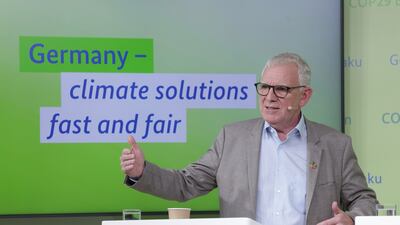
Jochen Flasbarth, State Secretary in the German Ministry for Economic Co-operation and Development, speaks in the Germany pavilion. Getty Images -
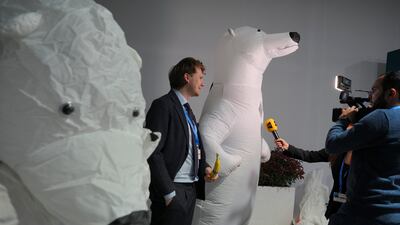
Nuclear power activists demonstrate. AP -
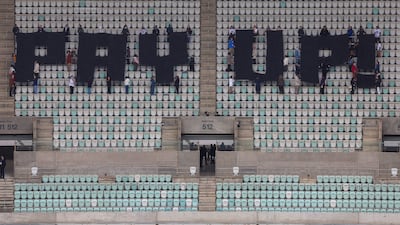
Activists hold a protest calling on developed nations to provide financing. Reuters -
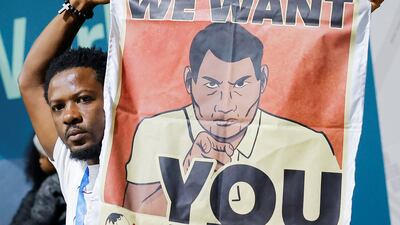
An activist holds up a sign. Reuters -
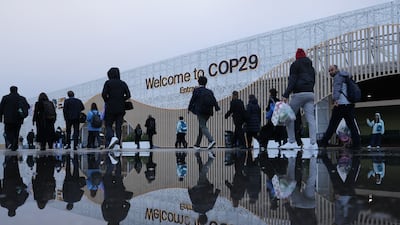
Conference participants arrive on day four. Getty Images -
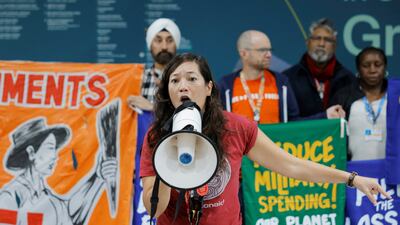
Another protest. Reuters -
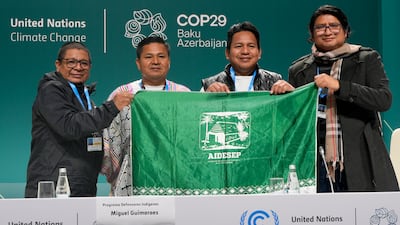
From left, Jorge Perez, Rolando Escobar, Miguel Vasquez and Esteban Cama at a session on Indigenous communities in the Peruvian Amazon. AP -
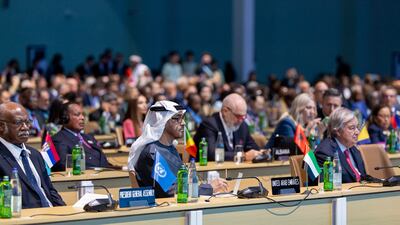
President Sheikh Mohamed attends the World Leaders Climate Action Summit at Cop29, in Azerbaijan's capital Baku. UAE Presidential Court -
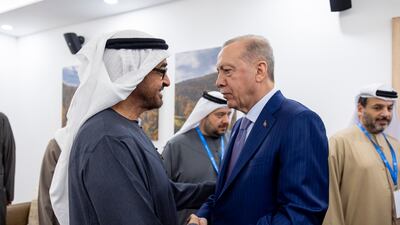
Sheikh Mohamed greets Recep Tayyip Erdogan, President of Turkey. WAM -
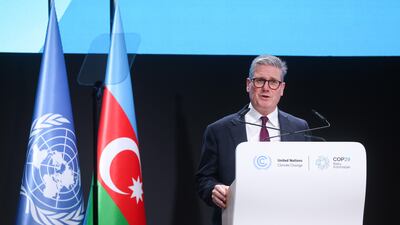
British Prime Minister Keir Starmer at Cop29. Bloomberg -

Ding Xuexiang, China's first Vice Premier, at Cop29. Bloomberg -
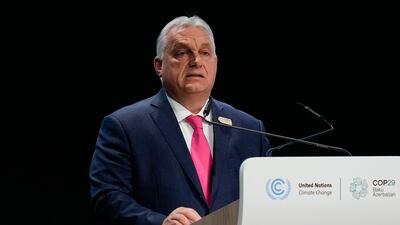
Hungary's Prime Minister Viktor Orban at a plenary session at Cop29. AP -
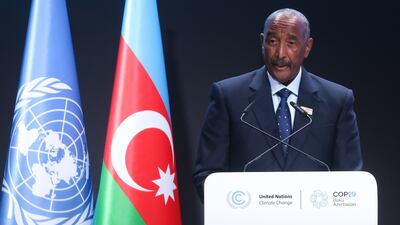
Sudan's military leader Abdel Fattah Al Burhan, at Cop29. Bloomberg -
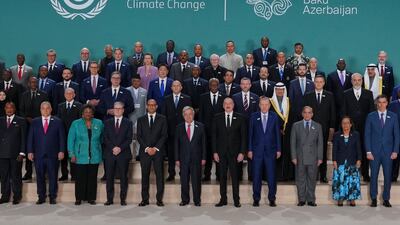
World leaders pose for a group photo at the Cop29 United Nations Climate Change Conference, in Baku, Azerbaijan. AP -
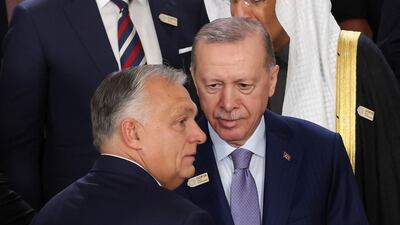
Hungarian Prime Minister Viktor Orban, left, stands next to Turkish President Recep Tayyip Erdogan. Reuters -
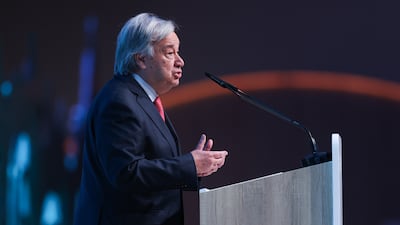
Antonio Guterres, UN secretary-general, addresses Cop29. Bloomberg -
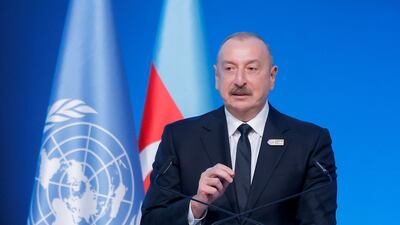
Azerbaijan's President Ilham Aliyev speaks during the Cop29 opening ceremony. Reuters -
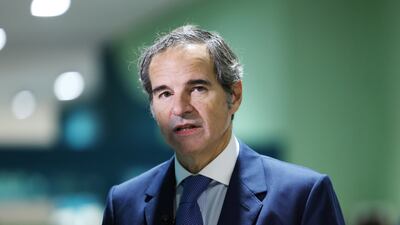
Rafael Grossi, director general of International Atomic Energy Agency (IAEA), at Cop29. Bloomberg -

Activists demonstrate for climate justice and a ceasefire in the Israel-Hamas war in Gaza, on day one of Cop29. AP -
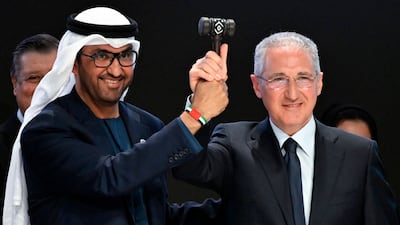
Cop28 President Dr Sultan Al Jaber and Cop29 President Mukhtar Babayev at the official handover. AFP -
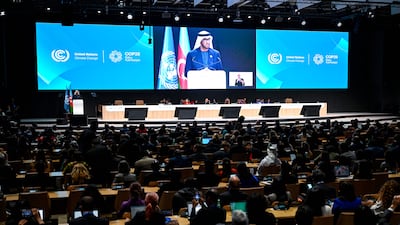
Dr Al Jaber, Minister of Industry and Advanced Technology, delivers a speech during the opening of Cop29 in Baku. AFP -
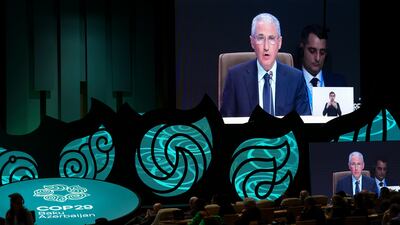
Mr Babayev speaks during the opening plenary session. AP -
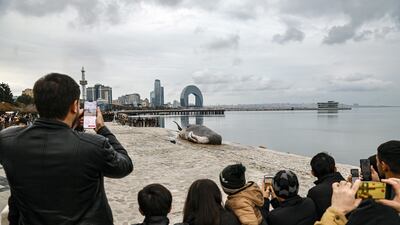
An installation depicting a beached whale by the Belgian art collective Captain Boomer on an embankment in Baku. EPA -
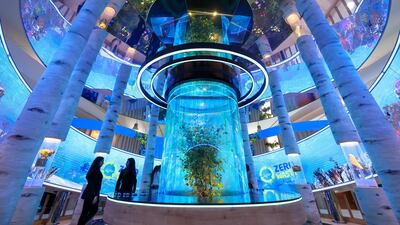
The Turkey Solidarity Centre pavilion. Bloomberg -
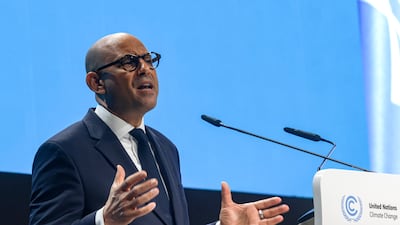
Simon Stiell, executive secretary of the UN Framework Convention on Climate Change, speaks during the opening ceremony. EPA -
People begin arriving for the start of Cop29 in Baku. Bloomberg -
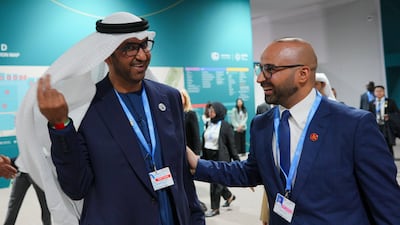
Dr Al Jaber at Cop29 with Moroccan climate researcher Cherif El Khalil. AP -
A mosaic adorns a wall at the Cop29 venue, Baku Stadium, in the capital of Azerbaijan. Bloomberg -

A woman tries out a VR headset at the tourism booth as the Cop29 UN climate summit gets under way in Baku, Azerbaijan. AP


Their proposals to increase demand include putting a carbon price on aluminium, cement and steel that makes the green version competitive. They also propose enforcing mandatory quotas for the use of hydrogen and sustainable jet fuel, and governments buying green products directly. There are also issues around certifying goods as green.
The initiative is working in the UAE and Bahrain to cut emissions from industry, which accounts for an estimated 40 per cent of the Middle East and North Africa's carbon footprint. The hope is that costs eventually fall as rising demand brings economies of scale.
“By driving demand in the way we're suggesting with our policies, that process happens quicker,” Mr Schofield said.
“There is appetite, there are projects on the table, projects that have been designed, but so few of them are reaching that investment point because of these frictions or the lack of demand. What got us there won't get us to order of magnitude two or three which is what's now needed.”

