UK government health experts have said climate change could bring Asian tiger mosquitoes carrying dengue fever to England by the middle of this century.
The biting insect has already spread across much of Europe due to warmer conditions, with it travelling alongside humans and through the transportation of goods.
With a distinctive striped body, the insect carries diseases normally associated with the tropics, such as dengue fever, Zika virus and chikungunya.
They tend to live in urban areas as opposed to wetlands and feed during the day, putting people at greater risk of being bitten.
In a report about the health effects of climate change, the UK Health Security Agency (UKHSA) warned dengue fever could be transmitted in London by 2060 while the mosquito itself could become widely established across England in the 2040s.
Officials also said other infectious diseases spread through food or water could become more prevalent with the risk of more pandemics increasing.
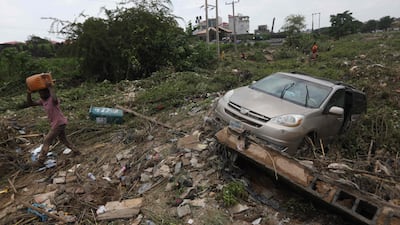
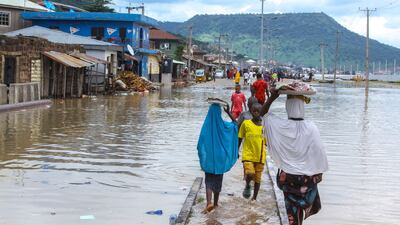
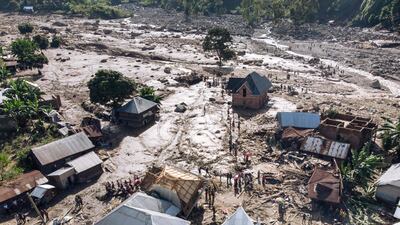
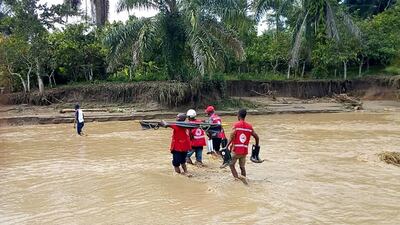
Danger from extreme heat will also worsen as will flooding, which aside from the physical impacts of drowning or injury can damage people’s mental health.
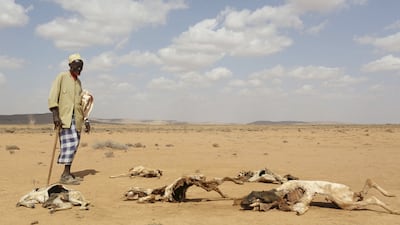
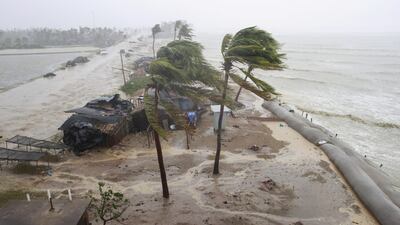
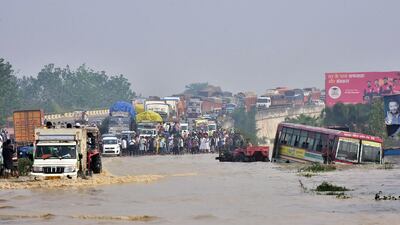
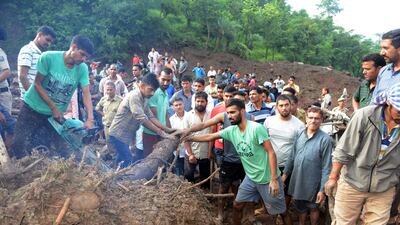
Nations at risk due to climate change – in pictures
“Things that when I trained many years ago were called tropical diseases will actually become national domestic diseases,” UKHSA chief executive Professor Dame Jenny Harries said.
“In the summer of 2022, UK temperatures reached above 40C for the first time on record.
“We had nearly 3,000 excess deaths recorded across that extended heat period while many other countries have experienced bouts of intense and prolonged heat in recent months.
“Using a high emission scenario, UK health-related deaths are estimated to increase by over 100 per cent in the 2030s, over 500 per cent in the 2050s, and over 1,000 per cent by 2070.”
Food prices are also likely to become more volatile as much of what the UK imports is from regions sensitive to climate impacts such as drought.
Wildfires producing toxic smoke are also expected to occur more frequently during the hotter, drier summers.
The elderly, young children and those with pre-existing health conditions are most vulnerable to these threats.
The Earth has already warmed by 1.2°C above pre-industrial levels and the amount of carbon in the atmosphere means further warming is already locked in even if emissions start declining overnight.
This means some adaptation is necessary alongside the reduction in emissions and making improvements to housing, flood defences and extreme temperature warnings will help mitigate some of these growing dangers, the UKHSA said.
Jolyon Medlock, an entomologist at UKHSA, said monitoring at borders can help slow the spread of mosquitoes and that at home people can keep them away by covering any standing water or empty containers as the insects lay eggs in them.
“Climate change is an important threat which undermines public health right across the globe, not only by increasing the mortality burden of extreme temperatures and weather effects, but through enhancing the spread of infectious disease and exacerbating the fragility of the global systems that our health depends upon, increasing the vulnerability of populations to existing geopolitical, energy and cost-of-living crises, Dame Jenny said.

RESULTS
Bantamweight:
Zia Mashwani (PAK) bt Chris Corton (PHI)
Super lightweight:
Flavio Serafin (BRA) bt Mohammad Al Khatib (JOR)
Super lightweight:
Dwight Brooks (USA) bt Alex Nacfur (BRA)
Bantamweight:
Tariq Ismail (CAN) bt Jalal Al Daaja (JOR)
Featherweight:
Abdullatip Magomedov (RUS) bt Sulaiman Al Modhyan (KUW)
Middleweight:
Mohammad Fakhreddine (LEB) bt Christofer Silva (BRA)
Middleweight:
Rustam Chsiev (RUS) bt Tarek Suleiman (SYR)
Welterweight:
Khamzat Chimaev (SWE) bt Mzwandile Hlongwa (RSA)
Lightweight:
Alex Martinez (CAN) bt Anas Siraj Mounir (MAR)
Welterweight:
Jarrah Al Selawi (JOR) bt Abdoul Abdouraguimov (FRA)
%3Cp%3E%3Cstrong%3EDirector%3A%3C%2Fstrong%3E%20Nag%20Ashwin%3C%2Fp%3E%0A%3Cp%3E%3Cstrong%3EStarring%3A%20%3C%2Fstrong%3EPrabhas%2C%20Saswata%20Chatterjee%2C%20Deepika%20Padukone%2C%20Amitabh%20Bachchan%2C%20Shobhana%3C%2Fp%3E%0A%3Cp%3E%3Cstrong%3ERating%3A%20%3C%2Fstrong%3E%E2%98%85%E2%98%85%E2%98%85%E2%98%85%3C%2Fp%3E%0A
Your rights as an employee
The government has taken an increasingly tough line against companies that fail to pay employees on time. Three years ago, the Cabinet passed a decree allowing the government to halt the granting of work permits to companies with wage backlogs.
The new measures passed by the Cabinet in 2016 were an update to the Wage Protection System, which is in place to track whether a company pays its employees on time or not.
If wages are 10 days late, the new measures kick in and the company is alerted it is in breach of labour rules. If wages remain unpaid for a total of 16 days, the authorities can cancel work permits, effectively shutting off operations. Fines of up to Dh5,000 per unpaid employee follow after 60 days.
Despite those measures, late payments remain an issue, particularly in the construction sector. Smaller contractors, such as electrical, plumbing and fit-out businesses, often blame the bigger companies that hire them for wages being late.
The authorities have urged employees to report their companies at the labour ministry or Tawafuq service centres — there are 15 in Abu Dhabi.
TOUCH RULES
Touch is derived from rugby league. Teams consist of up to 14 players with a maximum of six on the field at any time.
Teams can make as many substitutions as they want during the 40 minute matches.
Similar to rugby league, the attacking team has six attempts - or touches - before possession changes over.
A touch is any contact between the player with the ball and a defender, and must be with minimum force.
After a touch the player performs a “roll-ball” - similar to the play-the-ball in league - stepping over or rolling the ball between the feet.
At the roll-ball, the defenders have to retreat a minimum of five metres.
A touchdown is scored when an attacking player places the ball on or over the score-line.
MATCH INFO
Uefa Champions League, last-16, second leg (first-leg scores in brackets):
PSG (2) v Manchester United (0)
Midnight (Thursday), BeIN Sports
Mercer, the investment consulting arm of US services company Marsh & McLennan, expects its wealth division to at least double its assets under management (AUM) in the Middle East as wealth in the region continues to grow despite economic headwinds, a company official said.
Mercer Wealth, which globally has $160 billion in AUM, plans to boost its AUM in the region to $2-$3bn in the next 2-3 years from the present $1bn, said Yasir AbuShaban, a Dubai-based principal with Mercer Wealth.
“Within the next two to three years, we are looking at reaching $2 to $3 billion as a conservative estimate and we do see an opportunity to do so,” said Mr AbuShaban.
Mercer does not directly make investments, but allocates clients’ money they have discretion to, to professional asset managers. They also provide advice to clients.
“We have buying power. We can negotiate on their (client’s) behalf with asset managers to provide them lower fees than they otherwise would have to get on their own,” he added.
Mercer Wealth’s clients include sovereign wealth funds, family offices, and insurance companies among others.
From its office in Dubai, Mercer also looks after Africa, India and Turkey, where they also see opportunity for growth.
Wealth creation in Middle East and Africa (MEA) grew 8.5 per cent to $8.1 trillion last year from $7.5tn in 2015, higher than last year’s global average of 6 per cent and the second-highest growth in a region after Asia-Pacific which grew 9.9 per cent, according to consultancy Boston Consulting Group (BCG). In the region, where wealth grew just 1.9 per cent in 2015 compared with 2014, a pickup in oil prices has helped in wealth generation.
BCG is forecasting MEA wealth will rise to $12tn by 2021, growing at an annual average of 8 per cent.
Drivers of wealth generation in the region will be split evenly between new wealth creation and growth of performance of existing assets, according to BCG.
Another general trend in the region is clients’ looking for a comprehensive approach to investing, according to Mr AbuShaban.
“Institutional investors or some of the families are seeing a slowdown in the available capital they have to invest and in that sense they are looking at optimizing the way they manage their portfolios and making sure they are not investing haphazardly and different parts of their investment are working together,” said Mr AbuShaban.
Some clients also have a higher appetite for risk, given the low interest-rate environment that does not provide enough yield for some institutional investors. These clients are keen to invest in illiquid assets, such as private equity and infrastructure.
“What we have seen is a desire for higher returns in what has been a low-return environment specifically in various fixed income or bonds,” he said.
“In this environment, we have seen a de facto increase in the risk that clients are taking in things like illiquid investments, private equity investments, infrastructure and private debt, those kind of investments were higher illiquidity results in incrementally higher returns.”
The Abu Dhabi Investment Authority, one of the largest sovereign wealth funds, said in its 2016 report that has gradually increased its exposure in direct private equity and private credit transactions, mainly in Asian markets and especially in China and India. The authority’s private equity department focused on structured equities owing to “their defensive characteristics.”
DUNE%3A%20PART%20TWO
%3Cp%3E%3Cstrong%3EDirector%3A%3C%2Fstrong%3E%20Denis%20Villeneuve%3C%2Fp%3E%0A%3Cp%3E%3Cstrong%3EStarring%3A%3C%2Fstrong%3E%20Timothee%20Chamalet%2C%20Zendaya%2C%20Austin%20Butler%3C%2Fp%3E%0A%3Cp%3E%3Cstrong%3ERating%3A%3C%2Fstrong%3E%205%2F5%3C%2Fp%3E%0A
Infiniti QX80 specs
Engine: twin-turbocharged 3.5-liter V6
Power: 450hp
Torque: 700Nm
Price: From Dh450,000, Autograph model from Dh510,000
Available: Now
Gulf Under 19s final
Dubai College A 50-12 Dubai College B
Who is Mohammed Al Halbousi?
The new speaker of Iraq’s parliament Mohammed Al Halbousi is the youngest person ever to serve in the role.
The 37-year-old was born in Al Garmah in Anbar and studied civil engineering in Baghdad before going into business. His development company Al Hadeed undertook reconstruction contracts rebuilding parts of Fallujah’s infrastructure.
He entered parliament in 2014 and served as a member of the human rights and finance committees until 2017. In August last year he was appointed governor of Anbar, a role in which he has struggled to secure funding to provide services in the war-damaged province and to secure the withdrawal of Shia militias. He relinquished the post when he was sworn in as a member of parliament on September 3.
He is a member of the Al Hal Sunni-based political party and the Sunni-led Coalition of Iraqi Forces, which is Iraq’s largest Sunni alliance with 37 seats from the May 12 election.
He maintains good relations with former Prime Minister Nouri Al Maliki’s State of Law Coaliton, Hadi Al Amiri’s Badr Organisation and Iranian officials.
Crops that could be introduced to the UAE
1: Quinoa
2. Bathua
3. Amaranth
4. Pearl and finger millet
5. Sorghum