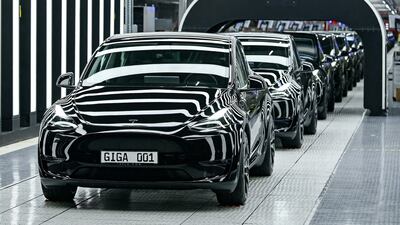
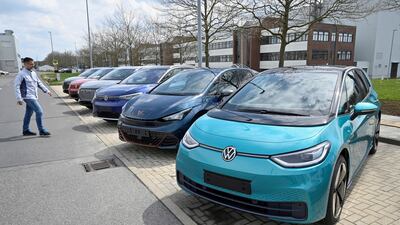
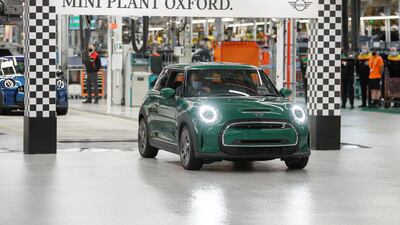
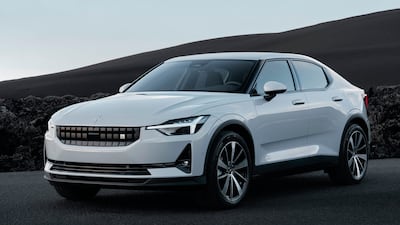
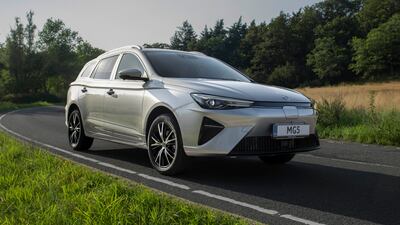
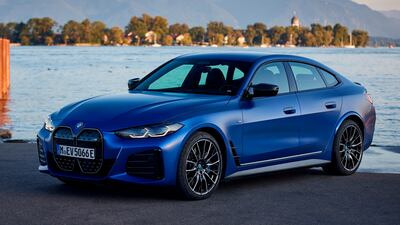
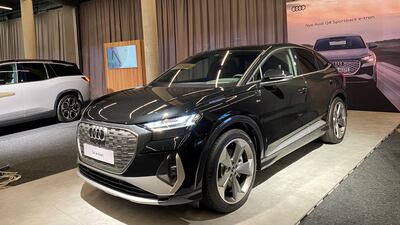
Western car makers are fretting about an “invasion” of cheap Chinese electric cars in Europe, prompting France's Renault to say on Thursday it was aiming to slash production costs for its electric models by 40 per cent.
Finance chief Thierry Pieton said the best way to fend off price competition was for Renault to cut its own development and manufacturing costs.
While the targeted 40 per cent reduction is from 2027 onwards, chief executive Luca de Meo said the group would start seeing significantly lower production costs from the second half of this year, thanks to a fall in raw material costs.
“It's clear we are in competition and that time is of the essence, but that's the business we are in,” he said.
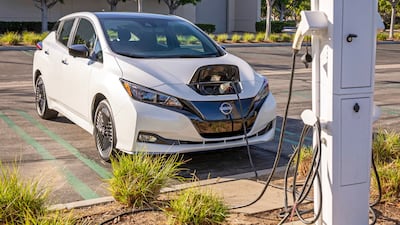
Delivering cheaper electric vehicles has become a priority for car makers worldwide as the shift to cleaner driving has come with high prices, due largely to battery costs.
Chinese manufacturers such as BYD and SAIC have invested heavily in the shift, using lower labour costs and local battery suppliers to get a head start over many rivals.
In 2022, Chinese car makers had a 9 per cent share of Europe's EV market, nearly double the previous year's figure, according to forecasts by consultancy Inovev. And the pace is picking up.
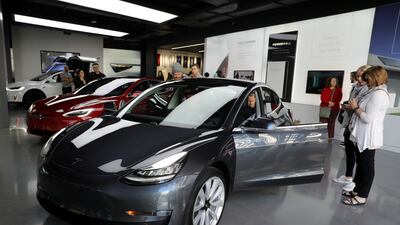
Like other EV makers, Renault also faces increased pressure from US rival Tesla, which has cut prices several times this year even as that has eaten into its margins.
As an example, Tesla this year cut US prices of its Model Y long-range version by a quarter to $50,490.
That is having an impact. According to researchers Jato Dynamics, Tesla and SAIC's MG were the biggest market share winners in Europe during the first half of this year.
Carlos Tavares, chief executive of Peugeot-to-Fiat car maker Stellantis, warned on Wednesday the competition with Chinese manufacturers would be “extremely brutal”.
“Their cost competitiveness is 25 per cent against us. We have to fight,” he said, describing the Chinese push as an “invasion”.
“We need to use our own costs to make sure that we keep on making profit with affordable prices for our middle classes.”
Mr Tavares said western car makers needed to use “the same weapons” as their Chinese rivals, sourcing parts in lower cost countries and striking partnerships with battery suppliers that offer the best combination of energy, cost and weight.
“It means that we need to come up with a sourcing proposal that allows us to sell those cars like the Citroen C3 at €25,000 or less in a profitable manner,” he said.
Once-dominant western car makers are also striving to regain ground in China itself, the world's largest car market, after losing share to local manufacturers.
Mercedes-Benz said on Thursday it was sticking to its strategy and would not engage in a price war to “buy” market share in China.
Asked about Volkswagen's move to build new models with Chinese partners and potentially co-create local platforms, Mercedes chief executive Ola Kaellenius said the premium car maker was working with partners in China to adapt its technological offering to local taste.
“We are not handing the task of creating the Mercedes of the future to another OEM [original equipment manufacturer] – that task stays with us,” Mr Kaellenius added.

A new relationship with the old country
Treaty of Friendship between the United Kingdom of Great Britain and Northern Ireland and the United Arab Emirates
The United kingdom of Great Britain and Northern Ireland and the United Arab Emirates; Considering that the United Arab Emirates has assumed full responsibility as a sovereign and independent State; Determined that the long-standing and traditional relations of close friendship and cooperation between their peoples shall continue; Desiring to give expression to this intention in the form of a Treaty Friendship; Have agreed as follows:
ARTICLE 1 The relations between the United Kingdom of Great Britain and Northern Ireland and the United Arab Emirates shall be governed by a spirit of close friendship. In recognition of this, the Contracting Parties, conscious of their common interest in the peace and stability of the region, shall: (a) consult together on matters of mutual concern in time of need; (b) settle all their disputes by peaceful means in conformity with the provisions of the Charter of the United Nations.
ARTICLE 2 The Contracting Parties shall encourage education, scientific and cultural cooperation between the two States in accordance with arrangements to be agreed. Such arrangements shall cover among other things: (a) the promotion of mutual understanding of their respective cultures, civilisations and languages, the promotion of contacts among professional bodies, universities and cultural institutions; (c) the encouragement of technical, scientific and cultural exchanges.
ARTICLE 3 The Contracting Parties shall maintain the close relationship already existing between them in the field of trade and commerce. Representatives of the Contracting Parties shall meet from time to time to consider means by which such relations can be further developed and strengthened, including the possibility of concluding treaties or agreements on matters of mutual concern.
ARTICLE 4 This Treaty shall enter into force on today’s date and shall remain in force for a period of ten years. Unless twelve months before the expiry of the said period of ten years either Contracting Party shall have given notice to the other of its intention to terminate the Treaty, this Treaty shall remain in force thereafter until the expiry of twelve months from the date on which notice of such intention is given.
IN WITNESS WHEREOF the undersigned have signed this Treaty.
DONE in duplicate at Dubai the second day of December 1971AD, corresponding to the fifteenth day of Shawwal 1391H, in the English and Arabic languages, both texts being equally authoritative.
Signed
Geoffrey Arthur Sheikh Zayed
Company%20Profile
%3Cp%3E%3Cstrong%3ECompany%3A%3C%2Fstrong%3E%20Astra%20Tech%3Cbr%3E%3Cstrong%3EStarted%3A%20%3C%2Fstrong%3EMarch%202022%3Cbr%3E%3Cstrong%3EBased%3A%20%3C%2Fstrong%3EDubai%3Cbr%3E%3Cstrong%3EFounder%3A%20%3C%2Fstrong%3EAbdallah%20Abu%20Sheikh%3Cbr%3E%3Cstrong%3EIndustry%3A%3C%2Fstrong%3E%20technology%20investment%20and%20development%3Cbr%3E%3Cstrong%3EFunding%20size%3A%3C%2Fstrong%3E%20%24500m%3C%2Fp%3E%0A
The rules on fostering in the UAE
A foster couple or family must:
- be Muslim, Emirati and be residing in the UAE
- not be younger than 25 years old
- not have been convicted of offences or crimes involving moral turpitude
- be free of infectious diseases or psychological and mental disorders
- have the ability to support its members and the foster child financially
- undertake to treat and raise the child in a proper manner and take care of his or her health and well-being
- A single, divorced or widowed Muslim Emirati female, residing in the UAE may apply to foster a child if she is at least 30 years old and able to support the child financially
The Bio
Favourite vegetable: “I really like the taste of the beetroot, the potatoes and the eggplant we are producing.”
Holiday destination: “I like Paris very much, it’s a city very close to my heart.”
Book: “Das Kapital, by Karl Marx. I am not a communist, but there are a lot of lessons for the capitalist system, if you let it get out of control, and humanity.”
Musician: “I like very much Fairuz, the Lebanese singer, and the other is Umm Kulthum. Fairuz is for listening to in the morning, Umm Kulthum for the night.”
The%20specs
%3Cp%3E%3Cstrong%3EEngine%3A%20%3C%2Fstrong%3E2.0-litre%204-cyl%20turbo%3Cbr%3E%3Cstrong%3EPower%3A%20%3C%2Fstrong%3E190hp%20at%205%2C600rpm%3Cbr%3E%3Cstrong%3ETorque%3A%20%3C%2Fstrong%3E320Nm%20at%201%2C500-4%2C000rpm%3Cbr%3E%3Cstrong%3ETransmission%3A%20%3C%2Fstrong%3E7-speed%20dual-clutch%20auto%3Cbr%3E%3Cstrong%3EFuel%20consumption%3A%20%3C%2Fstrong%3E10.9L%2F100km%3Cbr%3E%3Cstrong%3EPrice%3A%20%3C%2Fstrong%3EFrom%20Dh119%2C900%3Cbr%3E%3Cstrong%3EOn%20sale%3A%20%3C%2Fstrong%3ENow%3C%2Fp%3E%0A
Moving%20Out%202
%3Cp%3E%3Cstrong%3EDeveloper%3A%3C%2Fstrong%3E%20SMG%20Studio%3Cbr%3E%3Cstrong%3EPublisher%3A%3C%2Fstrong%3E%20Team17%3Cbr%3E%3Cstrong%3EConsoles%3A%3C%2Fstrong%3E%20Nintendo%20Switch%2C%20PlayStation%204%26amp%3B5%2C%20PC%20and%20Xbox%20One%3Cbr%3E%3Cstrong%3ERating%3A%3C%2Fstrong%3E%204%2F5%3C%2Fp%3E%0A
Countries recognising Palestine
France, UK, Canada, Australia, Portugal, Belgium, Malta, Luxembourg, San Marino and Andorra
Key findings of Jenkins report
- Founder of the Muslim Brotherhood, Hassan al Banna, "accepted the political utility of violence"
- Views of key Muslim Brotherhood ideologue, Sayyid Qutb, have “consistently been understood” as permitting “the use of extreme violence in the pursuit of the perfect Islamic society” and “never been institutionally disowned” by the movement.
- Muslim Brotherhood at all levels has repeatedly defended Hamas attacks against Israel, including the use of suicide bombers and the killing of civilians.
- Laying out the report in the House of Commons, David Cameron told MPs: "The main findings of the review support the conclusion that membership of, association with, or influence by the Muslim Brotherhood should be considered as a possible indicator of extremism."