An Amazon warehouse in Tracy, California. Amazon has about 1.52 million people on its payroll. Reuters

Big Tech hiring freeze in the US 'unlikely to affect IT services spending'


Alvin R Cabral
  • English
  • Arabic

Big technology companies such as Apple, Amazon and Facebook owner Meta Platforms plan to freeze hiring amid a slowdown in the US economy, but this is not expected to hit IT spending significantly as demand for services continues to grow, industry experts have said.

The companies are bracing for one of the “worst economic downturns”, with Amazon saying it is overstaffed after reporting a second-quarter loss of $2 billion last week.

Facebook has also scaled back plans to hire engineers while Microsoft, Netflix and Tesla have been eliminating jobs in recent months, Bloomberg reported.

However, the Big Tech hiring freeze is being offset by “significant uptake of demand for IT services”, which are mostly driven by the requirements of digital transformation that accelerated during the pandemic, said DD Mishra, a senior director analyst at Gartner.

“Most of the Big Tech firms are anticipating the risk of a recession and slowdown in the US economy, and are taking some measures in the form of a hiring freeze and slowdown in hiring due to the global economic environment, geopolitical situations and other challenges,” Mr Mishra told The National.

“[But] inflation, geopolitical disruption and talent shortages are not expected to slow IT investments significantly for now. Purchasing and investing preferences will be focused on areas including analytics, cloud computing, seamless customer experiences and security.”

Geopolitical and economic uncertainty is mounting across the world after Russia’s military offensive against Ukraine, with inflation also rising due to higher commodity prices and supply chain disruptions.

In July, the US economy shrunk for a second quarter in a row, triggering one definition of a “technical recession”, as record-high inflation and aggressive interest rate increases by the Federal Reserve hit business and housing demand.

However, the US hiring market remains strong, with employers having added more jobs in June than forecast and the unemployment rate near a five-decade low, suggesting recruitment needs are, so far, eclipsing concerns about the economic outlook.

Meanwhile, the number of information technology professionals globally is expected to grow more than 12 per cent to about 62 million in 2023, from 55.3 million in 2020, data from Statista shows.

Earlier this year, Gartner projected end-user IT services spending would grow at a compound annual rate of 9.1 per cent between 2020 and 2025.

However, the research company has since lowered its forecast to an annual growth rate of 8.5 per cent between 2021 and 2026.

“The demand pipeline for IT services is expected to stabilise, and a slowdown in additional demand could also be one of the reasons for taking steps towards stabilising demand and supply,” said Mr Mishra.

He said 2023 and 2024 would be “much better”, compared with this year.

“A combination of all these factors may require some short-term and long-term measures to navigate through emerging situations … we have not seen such an impending challenge from a services perspective in the short term.”

Technology companies may have to consider pausing their hiring plans to sustain the record growth they experienced during the Covid-19 pandemic, said George Foley, a Dubai-based senior consultant at recruitment company Michael Page.

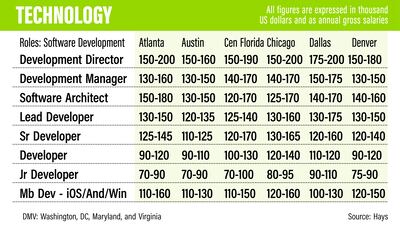
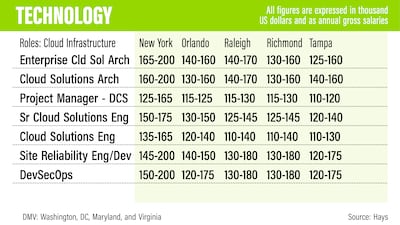
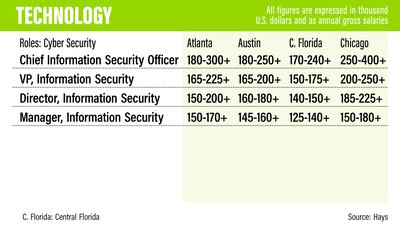
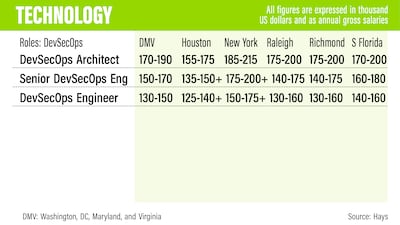
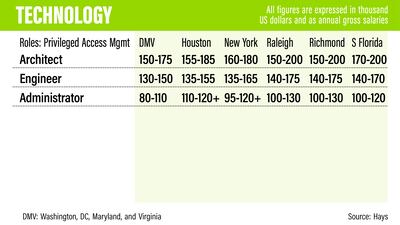
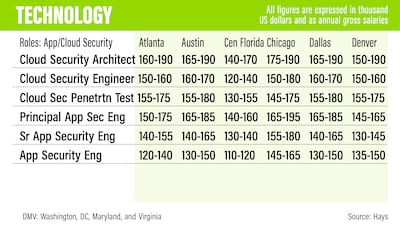
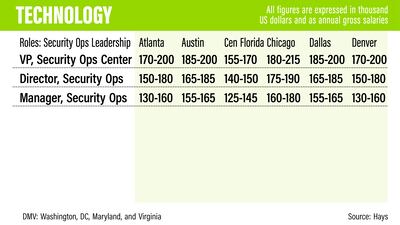
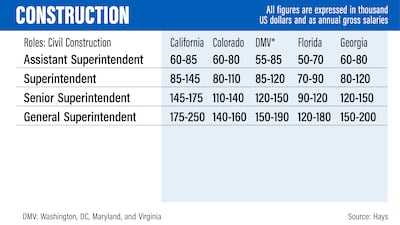
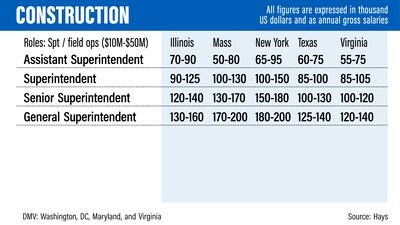
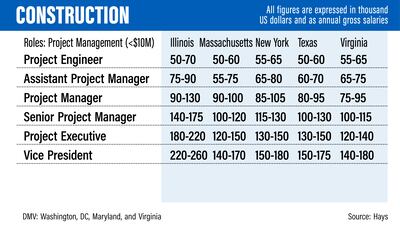
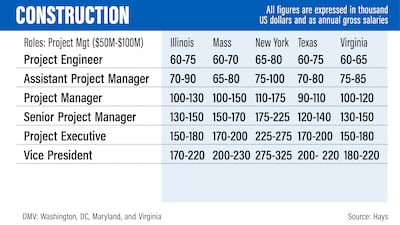
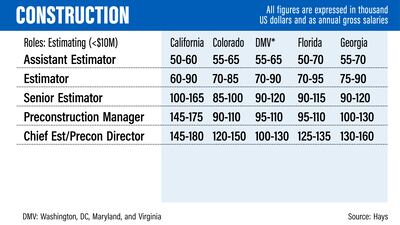
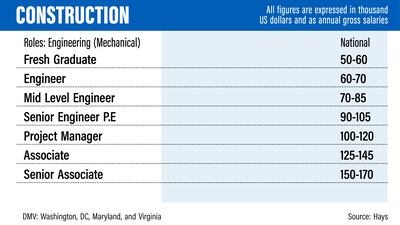
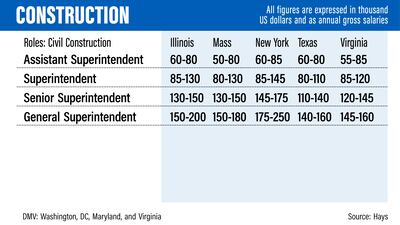
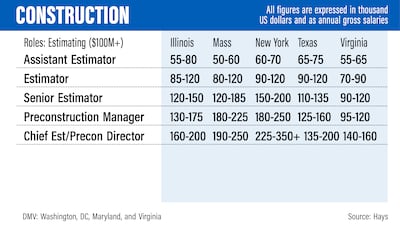
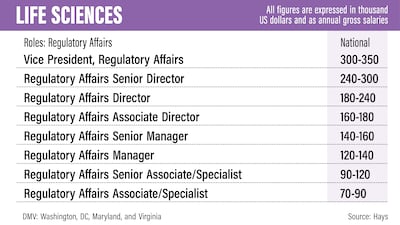
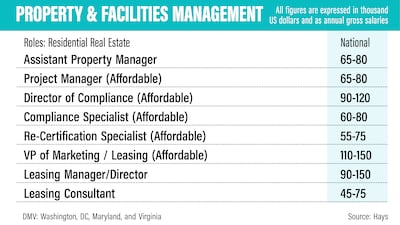
  • US salary guide 2022 - Hays
    US salary guide 2022 - Hays
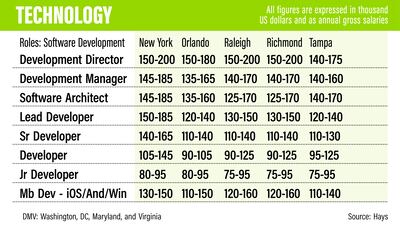
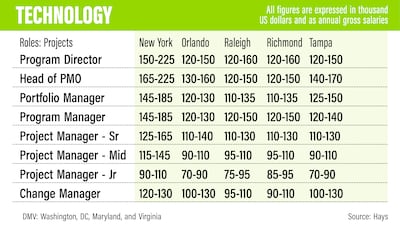
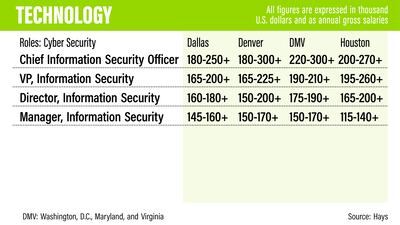
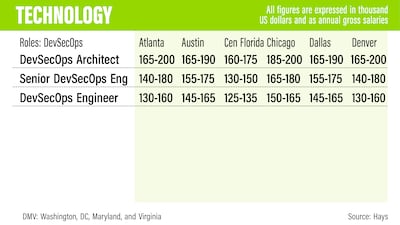
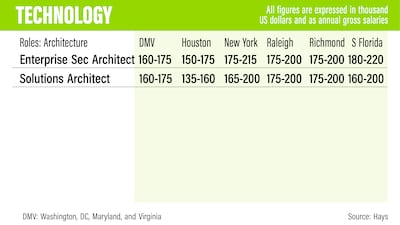
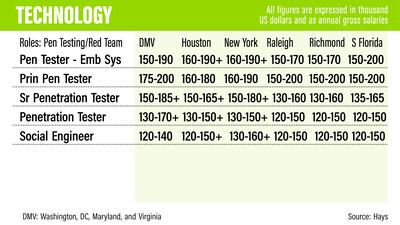
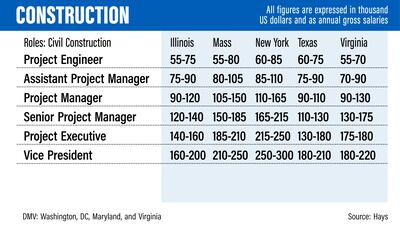
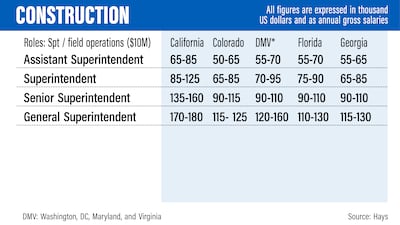
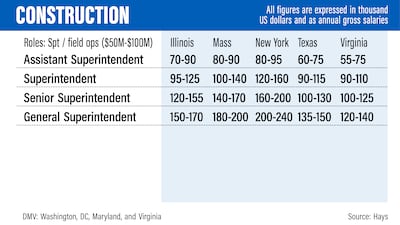
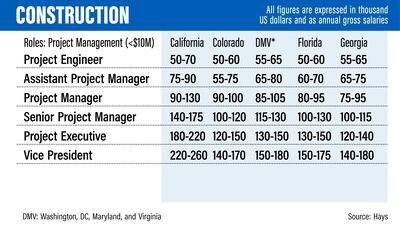
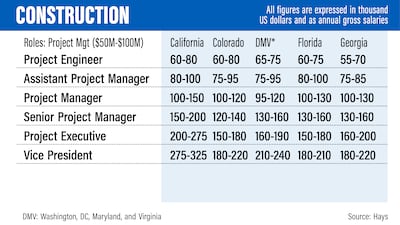
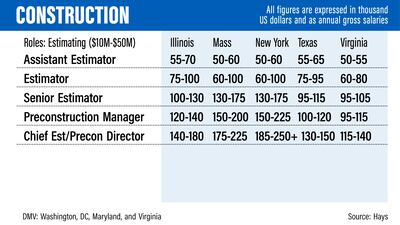
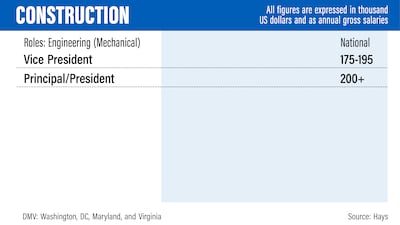
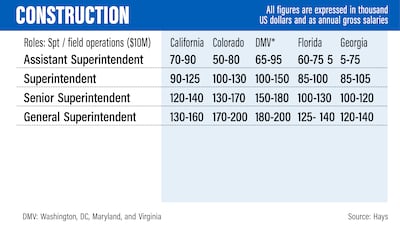
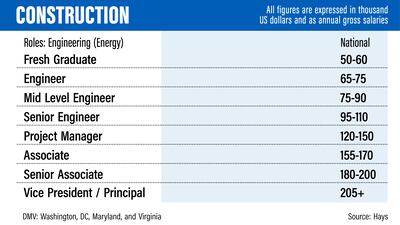
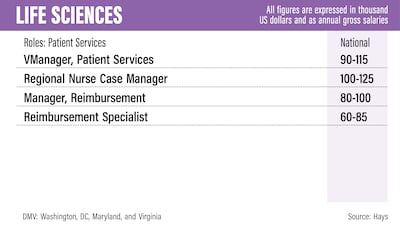
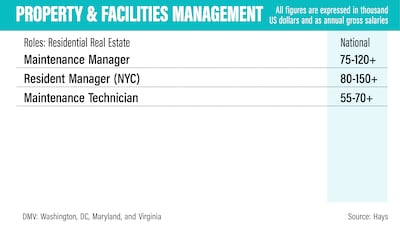
  • US salary guide 2022 - Hays
    US salary guide 2022 - Hays
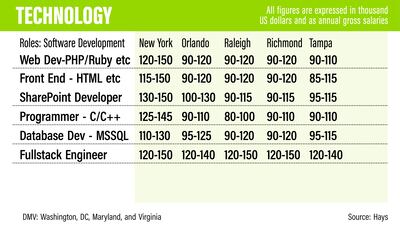
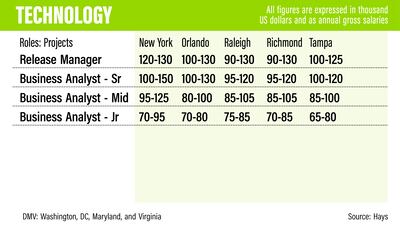
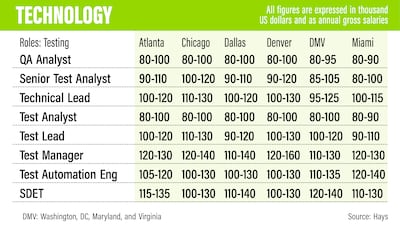
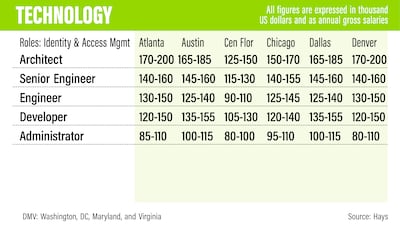
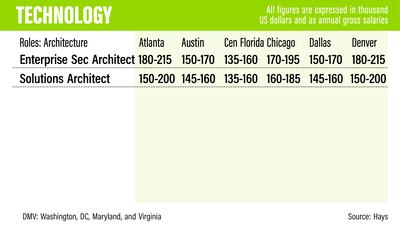
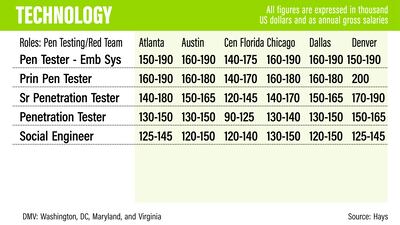
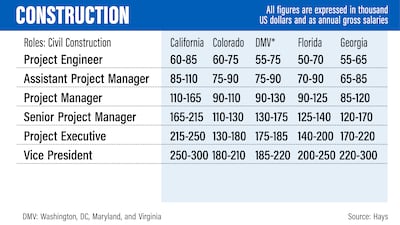
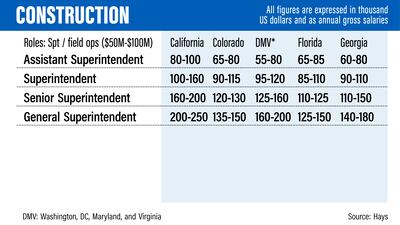
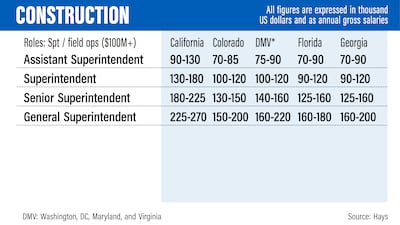
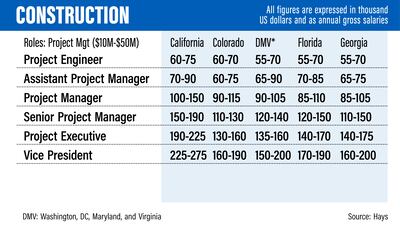
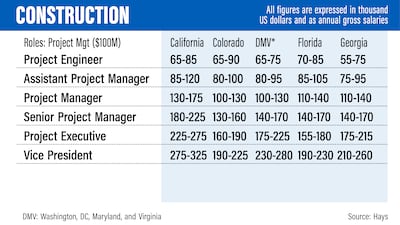
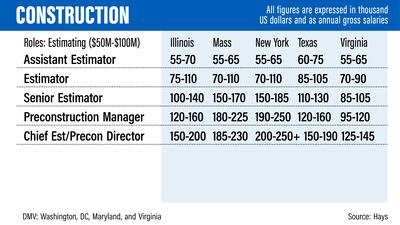
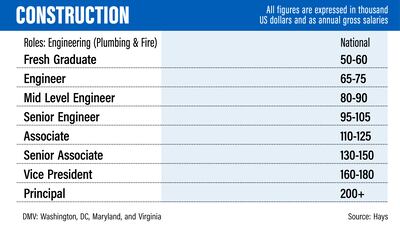
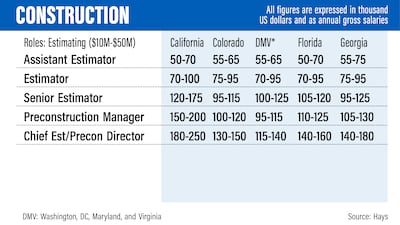
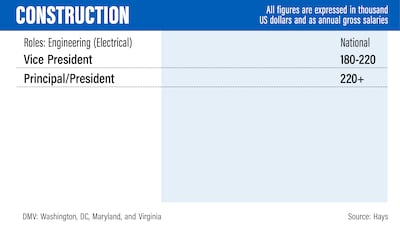
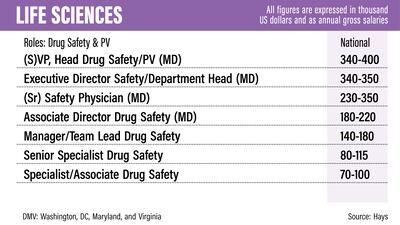
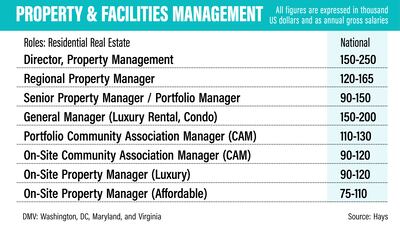
  • US salary guide 2022 - Hays
    US salary guide 2022 - Hays
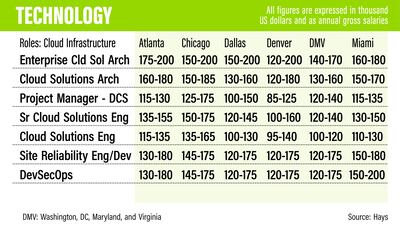
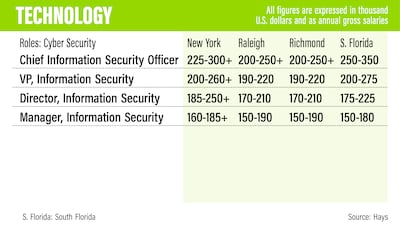
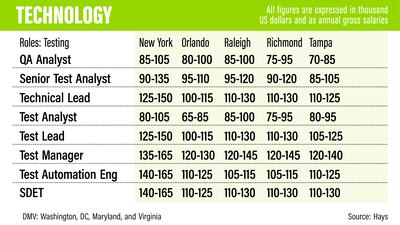
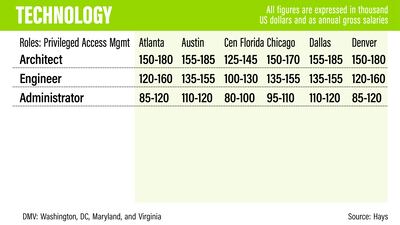
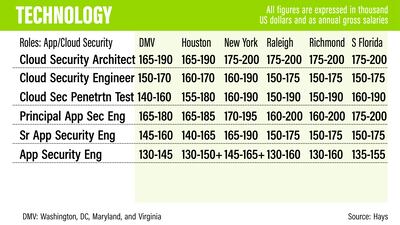
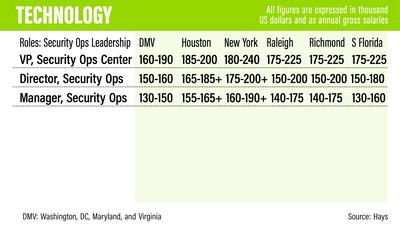
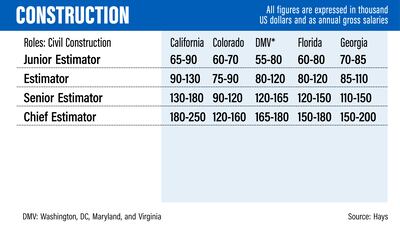
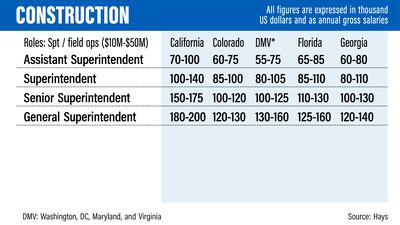
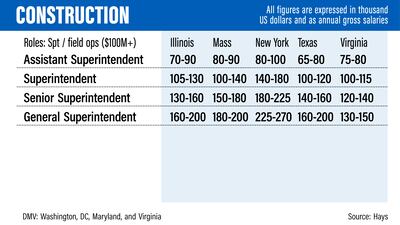
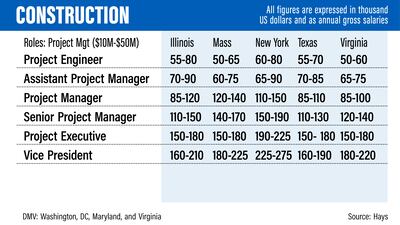
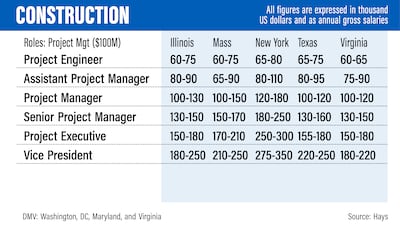
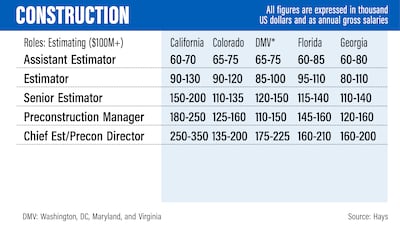
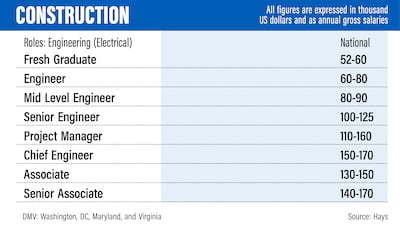
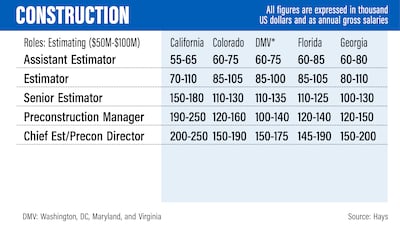
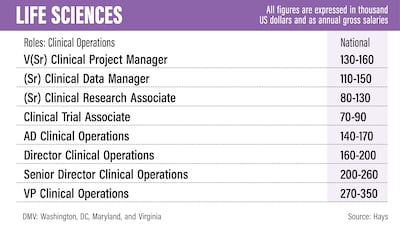
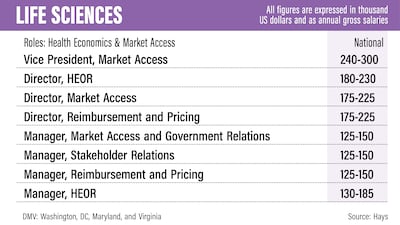
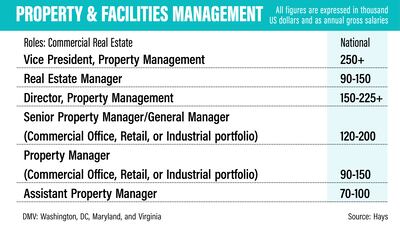
  • US salary guide 2022 - Hays
    US salary guide 2022 - Hays
  • US salary guide 2022 - Hays
    US salary guide 2022 - Hays
  • US salary guide 2022 - Hays
    US salary guide 2022 - Hays
  • US salary guide 2022 - Hays
    US salary guide 2022 - Hays
  • US salary guide 2022 - Hays
    US salary guide 2022 - Hays
  • US salary guide 2022 - Hays
    US salary guide 2022 - Hays
  • US salary guide 2022 - Hays
    US salary guide 2022 - Hays
  • US salary guide 2022 - Hays
    US salary guide 2022 - Hays
  • US salary guide 2022 - Hays
    US salary guide 2022 - Hays
  • US salary guide 2022 - Hays
    US salary guide 2022 - Hays
  • US salary guide 2022 - Hays
    US salary guide 2022 - Hays
  • US salary guide 2022 - Hays
    US salary guide 2022 - Hays
  • US salary guide 2022 - Hays
    US salary guide 2022 - Hays
  • US salary guide 2022 - Hays
    US salary guide 2022 - Hays
  • US salary guide 2022 - Hays
    US salary guide 2022 - Hays
  • US salary guide 2022 - Hays
    US salary guide 2022 - Hays
  • US salary guide 2022 - Hays
    US salary guide 2022 - Hays
  • US salary guide 2022 - Hays
    US salary guide 2022 - Hays
  • US salary guide 2022 - Hays
    US salary guide 2022 - Hays
  • US salary guide 2022 - Hays
    US salary guide 2022 - Hays
  • US salary guide 2022 - Hays
    US salary guide 2022 - Hays
  • US salary guide 2022 - Hays
    US salary guide 2022 - Hays
  • US salary guide 2022 - Hays
    US salary guide 2022 - Hays
  • US salary guide 2022 - Hays
    US salary guide 2022 - Hays
  • US salary guide 2022 - Hays
    US salary guide 2022 - Hays
  • US salary guide 2022 - Hays
    US salary guide 2022 - Hays
  • US salary guide 2022 - Hays
    US salary guide 2022 - Hays
  • US salary guide 2022 - Hays
    US salary guide 2022 - Hays
  • US salary guide 2022 - Hays
    US salary guide 2022 - Hays
  • US salary guide 2022 - Hays
    US salary guide 2022 - Hays
  • US salary guide 2022 - Hays
    US salary guide 2022 - Hays
  • US salary guide 2022 - Hays
    US salary guide 2022 - Hays
  • US salary guide 2022 - Hays
    US salary guide 2022 - Hays
  • US salary guide 2022 - Hays
    US salary guide 2022 - Hays
  • US salary guide 2022 - Hays
    US salary guide 2022 - Hays
  • US salary guide 2022 - Hays
    US salary guide 2022 - Hays
  • US salary guide 2022 - Hays
    US salary guide 2022 - Hays
  • US salary guide 2022 - Hays
    US salary guide 2022 - Hays
  • US salary guide 2022 - Hays
    US salary guide 2022 - Hays
  • US salary guide 2022 - Hays
    US salary guide 2022 - Hays
  • US salary guide 2022 - Hays
    US salary guide 2022 - Hays
  • US salary guide 2022 - Hays
    US salary guide 2022 - Hays
  • US salary guide 2022 - Hays
    US salary guide 2022 - Hays
  • US salary guide 2022 - Hays
    US salary guide 2022 - Hays
  • US salary guide 2022 - Hays
    US salary guide 2022 - Hays
  • US salary guide 2022 - Hays
    US salary guide 2022 - Hays
  • US salary guide 2022 - Hays
    US salary guide 2022 - Hays
  • US salary guide 2022 - Hays
    US salary guide 2022 - Hays
  • US salary guide 2022 - Hays
    US salary guide 2022 - Hays
  • US salary guide 2022 - Hays
    US salary guide 2022 - Hays
  • US salary guide 2022 - Hays
    US salary guide 2022 - Hays
  • US salary guide 2022 - Hays
    US salary guide 2022 - Hays
  • US salary guide 2022 - Hays
    US salary guide 2022 - Hays
  • US salary guide 2022 - Hays
    US salary guide 2022 - Hays
  • US salary guide 2022 - Hays
    US salary guide 2022 - Hays
  • US salary guide 2022 - Hays
    US salary guide 2022 - Hays
  • US salary guide 2022 - Hays
    US salary guide 2022 - Hays
  • US salary guide 2022 - Hays
    US salary guide 2022 - Hays
  • US salary guide 2022 - Hays
    US salary guide 2022 - Hays
  • US salary guide 2022 - Hays
    US salary guide 2022 - Hays
  • US salary guide 2022 - Hays
    US salary guide 2022 - Hays
  • US salary guide 2022 - Hays
    US salary guide 2022 - Hays
  • US salary guide 2022 - Hays
    US salary guide 2022 - Hays
  • US salary guide 2022 - Hays
    US salary guide 2022 - Hays
  • US salary guide 2022 - Hays
    US salary guide 2022 - Hays
  • US salary guide 2022 - Hays
    US salary guide 2022 - Hays
  • US salary guide 2022 - Hays
    US salary guide 2022 - Hays
  • US salary guide 2022 - Hays
    US salary guide 2022 - Hays
  • US salary guide 2022 - Hays
    US salary guide 2022 - Hays
  • US salary guide 2022 - Hays
    US salary guide 2022 - Hays
  • US salary guide 2022 - Hays
    US salary guide 2022 - Hays
  • US salary guide 2022 - Hays
    US salary guide 2022 - Hays
  • US salary guide 2022 - Hays
    US salary guide 2022 - Hays
  • US salary guide 2022 - Hays
    US salary guide 2022 - Hays
  • US salary guide 2022 - Hays
    US salary guide 2022 - Hays

“The worst of the pandemic seems to be over and now these tech companies are in a great position for sustainable long-term growth. While this may mean temporary freezes for some during this transition period, we are more positive about the technological future than ever before,” Mr Foley said.

Kazim Hussain, a Dubai-based business manager for cloud infrastructure and telecoms at recruitment company Cooper Fitch, said that while the technology sector in the Mena region continued to grow, some companies were slowing down overall hiring plans to ensure the employment of people with niche skills in cloud computing and machine learning.

However, it is important for technology start-ups to avoid overhiring, he said.

“[I have] witnessed many start-ups overhiring talent without demonstrating any real business growth, and then cutting jobs to balance their books.”

What Big Tech companies say about their workforce:

Amazon: the world's biggest e-commerce marketplace is also the technology sector's largest employer, with about 1.52 million people on its payroll. Now, it says it is overstaffed and has about 100,000 fewer employees, compared with the first quarter. It remains to be seen if the company — which last week reported a $2b second-quarter loss — will continue its tradition of hiring more staff in preparation for the busy holiday shopping season.

Apple: the iPhone maker could slow hiring in some units, according to Bloomberg, citing sources. Still, the company is sticking to its aggressive product launch schedule. However, Apple last week reportedly hired a veteran Lamborghini executive to help lead the development of its electric car. The Cupertino-based company had about 154,000 employees as of September 2021.

Meta Platforms: the parent company of Facebook scaled back plans to hire engineers by about a third. Chief executive Mark Zuckerberg has said he was bracing for one of the worst economic downturns ever, and also said last week the company's forecasts were too optimistic. The company had about 77,800 employees at the end of March.

Microsoft: the world's biggest software company, which missed second-quarter sales forecasts, said it would also reduce hiring in certain divisions. Microsoft, which had about 181,000 employees in 2021, recently cut about 1 per cent of its workforce and said it would remove some job vacancies.

Netflix: the world's top streaming service made several highly publicised firings since reporting a loss of 200,000 subscribers in the first quarter, on top of eliminating 150 and 300 jobs in May and June, respectively. The company had 11,300 staff in 2021 and lost 970,000 more subscribers in the second quarter.

Tesla: chief executive Elon Musk said layoffs would be needed in the challenging economic climate. About 200 employees were removed when it closed a plant in San Mateo, California, in June. The company, which beat estimates in the second quarter, had 100,000 employees by the end of 2021.

Twitter: the microblogging platform froze hiring and rescinded job offers in May amid the uncertainty surrounding Mr Musk's acquisition of the company. However, Twitter, with about 7,500 employees, recently said it would scale down its office space, but without reducing jobs. The turmoil surrounding Mr Musk's bid for Twitter also dragged the company to a loss in the second quarter.

Source: Bloomberg

Six things you need to know about UAE Women’s Special Olympics football team

Several girls started playing football at age four

They describe sport as their passion

The girls don’t dwell on their condition

They just say they may need to work a little harder than others

When not in training, they play football with their brothers and sisters

The girls want to inspire others to join the UAE Special Olympics teams

Islamic%20Architecture%3A%20A%20World%20History
%3Cp%3E%3Cstrong%3EAuthor%3A%3C%2Fstrong%3E%20Eric%20Broug%3Cbr%3E%3Cstrong%3EPublisher%3A%3C%2Fstrong%3E%20Thames%20%26amp%3B%20Hudson%3Cbr%3E%3Cstrong%3EPages%3A%3C%2Fstrong%3E%20336%3Cbr%3E%3Cstrong%3EAvailable%3A%3C%2Fstrong%3E%20September%3C%2Fp%3E%0A
The burning issue

The internal combustion engine is facing a watershed moment – major manufacturer Volvo is to stop producing petroleum-powered vehicles by 2021 and countries in Europe, including the UK, have vowed to ban their sale before 2040. The National takes a look at the story of one of the most successful technologies of the last 100 years and how it has impacted life in the UAE. 

Read part four: an affection for classic cars lives on

Read part three: the age of the electric vehicle begins

Read part one: how cars came to the UAE


Gulf Under 19s final

Dubai College A 50-12 Dubai College B

Pox that threatens the Middle East's native species

Camelpox

Caused by a virus related to the one that causes human smallpox, camelpox typically causes fever, swelling of lymph nodes and skin lesions in camels aged over three, but the animal usually recovers after a month or so. Younger animals may develop a more acute form that causes internal lesions and diarrhoea, and is often fatal, especially when secondary infections result. It is found across the Middle East as well as in parts of Asia, Africa, Russia and India.

Falconpox

Falconpox can cause a variety of types of lesions, which can affect, for example, the eyelids, feet and the areas above and below the beak. It is a problem among captive falcons and is one of many types of avian pox or avipox diseases that together affect dozens of bird species across the world. Among the other forms are pigeonpox, turkeypox, starlingpox and canarypox. Avipox viruses are spread by mosquitoes and direct bird-to-bird contact.

Houbarapox

Houbarapox is, like falconpox, one of the many forms of avipox diseases. It exists in various forms, with a type that causes skin lesions being least likely to result in death. Other forms cause more severe lesions, including internal lesions, and are more likely to kill the bird, often because secondary infections develop. This summer the CVRL reported an outbreak of pox in houbaras after rains in spring led to an increase in mosquito numbers.

The years Ramadan fell in May

1987

1954

1921

1888

Mercer, the investment consulting arm of US services company Marsh & McLennan, expects its wealth division to at least double its assets under management (AUM) in the Middle East as wealth in the region continues to grow despite economic headwinds, a company official said.

Mercer Wealth, which globally has $160 billion in AUM, plans to boost its AUM in the region to $2-$3bn in the next 2-3 years from the present $1bn, said Yasir AbuShaban, a Dubai-based principal with Mercer Wealth.

Within the next two to three years, we are looking at reaching $2 to $3 billion as a conservative estimate and we do see an opportunity to do so,” said Mr AbuShaban.

Mercer does not directly make investments, but allocates clients’ money they have discretion to, to professional asset managers. They also provide advice to clients.

“We have buying power. We can negotiate on their (client’s) behalf with asset managers to provide them lower fees than they otherwise would have to get on their own,” he added.

Mercer Wealth’s clients include sovereign wealth funds, family offices, and insurance companies among others.

From its office in Dubai, Mercer also looks after Africa, India and Turkey, where they also see opportunity for growth.

Wealth creation in Middle East and Africa (MEA) grew 8.5 per cent to $8.1 trillion last year from $7.5tn in 2015, higher than last year’s global average of 6 per cent and the second-highest growth in a region after Asia-Pacific which grew 9.9 per cent, according to consultancy Boston Consulting Group (BCG). In the region, where wealth grew just 1.9 per cent in 2015 compared with 2014, a pickup in oil prices has helped in wealth generation.

BCG is forecasting MEA wealth will rise to $12tn by 2021, growing at an annual average of 8 per cent.

Drivers of wealth generation in the region will be split evenly between new wealth creation and growth of performance of existing assets, according to BCG.

Another general trend in the region is clients’ looking for a comprehensive approach to investing, according to Mr AbuShaban.

“Institutional investors or some of the families are seeing a slowdown in the available capital they have to invest and in that sense they are looking at optimizing the way they manage their portfolios and making sure they are not investing haphazardly and different parts of their investment are working together,” said Mr AbuShaban.

Some clients also have a higher appetite for risk, given the low interest-rate environment that does not provide enough yield for some institutional investors. These clients are keen to invest in illiquid assets, such as private equity and infrastructure.

“What we have seen is a desire for higher returns in what has been a low-return environment specifically in various fixed income or bonds,” he said.

“In this environment, we have seen a de facto increase in the risk that clients are taking in things like illiquid investments, private equity investments, infrastructure and private debt, those kind of investments were higher illiquidity results in incrementally higher returns.”

The Abu Dhabi Investment Authority, one of the largest sovereign wealth funds, said in its 2016 report that has gradually increased its exposure in direct private equity and private credit transactions, mainly in Asian markets and especially in China and India. The authority’s private equity department focused on structured equities owing to “their defensive characteristics.”

The President's Cake

Director: Hasan Hadi

Starring: Baneen Ahmad Nayyef, Waheed Thabet Khreibat, Sajad Mohamad Qasem 

Rating: 4/5

The Bio

Hometown: Bogota, Colombia
Favourite place to relax in UAE: the desert around Al Mleiha in Sharjah or the eastern mangroves in Abu Dhabi
The one book everyone should read: 100 Years of Solitude by Gabriel Garcia Marquez. It will make your mind fly
Favourite documentary: Chasing Coral by Jeff Orlowski. It's a good reality check about one of the most valued ecosystems for humanity

Most sought after workplace benefits in the UAE
  • Flexible work arrangements
  • Pension support
  • Mental well-being assistance
  • Insurance coverage for optical, dental, alternative medicine, cancer screening
  • Financial well-being incentives 
Tamkeen's offering
  • Option 1: 70% in year 1, 50% in year 2, 30% in year 3
  • Option 2: 50% across three years
  • Option 3: 30% across five years 

Results:

First Test: New Zealand 30 British & Irish Lions 15

Second Test: New Zealand 21 British & Irish Lions 24

Third Test: New Zealand 15 British & Irish Lions 15

How to become a Boglehead

Bogleheads follow simple investing philosophies to build their wealth and live better lives. Just follow these steps.

•   Spend less than you earn and save the rest. You can do this by earning more, or being frugal. Better still, do both.

•   Invest early, invest often. It takes time to grow your wealth on the stock market. The sooner you begin, the better.

•   Choose the right level of risk. Don't gamble by investing in get-rich-quick schemes or high-risk plays. Don't play it too safe, either, by leaving long-term savings in cash.

•   Diversify. Do not keep all your eggs in one basket. Spread your money between different companies, sectors, markets and asset classes such as bonds and property.

•   Keep charges low. The biggest drag on investment performance is all the charges you pay to advisers and active fund managers.

•   Keep it simple. Complexity is your enemy. You can build a balanced, diversified portfolio with just a handful of ETFs.

•   Forget timing the market. Nobody knows where share prices will go next, so don't try to second-guess them.

•   Stick with it. Do not sell up in a market crash. Use the opportunity to invest more at the lower price.

Updated: August 05, 2022, 4:30 AM