Brito is Egypt’s latest new cloud kitchen on the block, but chief executive Rania Reda insists that its model will stand out from the crowd.
The start-up, founded by Ms Reda and Mo’nes Sadeq in February, recently raised $1.25 million in pre-seed funding from a Central Bank of Egypt initiative and angel investors.
Cloud kitchens, also called ghost kitchens and dark kitchens, are food production units built to prepare food specifically for delivery.
The concept has taken off in recent years, particularly during the Covid-19 pandemic when lockdowns and travel restrictions kept consumers homebound.
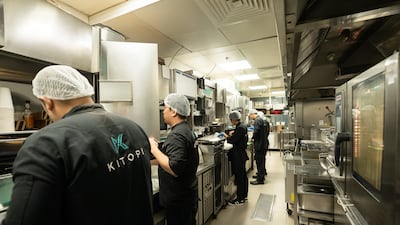
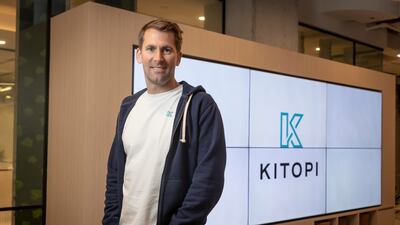
The UAE now has several cloud kitchen operators, dominated by Middle East market leader Kitopi, which was founded in 2018 and has raised more than $800 million over several funding rounds. They follow various cloud kitchen models – for example, either representing one brand or many, outsourcing or taking over operations, cooking or simply renting out space.
Egypt has about eight cloud kitchen companies, all started after the onset of the pandemic, but the majority don't follow the Kitopi model: taking care of the entire operations process — from supply chain and staff training to food preparation and delivery.
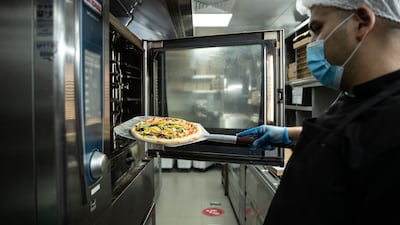
“The models that [competitors] operate are totally different than Brito. What they do is rent out the space … It is like a multi-tenant kitchen for multiple brands,” Ms Reda tells The National. “Our kitchens are operated by Brito, so we do the cooking.”
For example, Food Nation, which has offices in Cairo and Dubai, has entered into partnerships with several Tivoli food court restaurants in Cairo and Alexandria, by offering commercial kitchens for rent to accommodate their delivery orders.
Kitchen Hive does the same, while using technology to minimise costs and maximise profits. “All you have to do is cook”, its website says.
The Food Lab, however, does offer procurement, cooking, delivery and marketing. Founded in 2020, the start-up closed its first $4.5 million funding round in April this year, led by Africa-focused fund 4DX Ventures and UAE-based venture capital firms Nuwa Capital and Shorooq Partners.
Other players in Egypt’s new crop of cloud kitchens include KitchinCO, KoKens, Chef’s House and Comida Cloud Kitchens.
There is probably room for them all in a country of 104 million people where food delivery is booming. Egypt’s online food delivery market is projected to reach about $586 million this year and grow to more than $1.58 billion by 2027.
The global cloud kitchen market was valued at $63 billion in 2021 and is projected to grow at a compound annual rate of 22 per cent to $374 billion by 2030.
However, it is also a tricky space, as Covid-19 trends shift to a new normal and global economic woes hit technology start-ups.
Kitopi — which comprises more than 200 brands in more than 200 locations in the UAE, Saudi Arabia, Qatar, Bahrain and Kuwait — reportedly fired around 90 people from its head office staff last month.
Ms Reda is unfazed and says it is the ideal time and place to help restaurants save money and improve efficiency.
Since the Russia-Ukraine crisis, foreign investors have withdrawn billions of US dollars from Egypt's treasury markets. The central bank has devalued the pound twice, leading to double-digit inflation.
“When you look at the economy and devaluation that’s getting done one time after another, the restaurants are not making enough revenue … and this is the time for the sharing economy to save them, to give them a slim margin on top of what they are making that will make a huge difference,” Ms Reda says.
She first heard of the cloud kitchen concept while living in San Francisco. Coming from a technology background, she had already founded two software development start-ups.
Shortly before Covid-19 hit, she visited her sister in Dubai, finding out about Kitopi and other cloud kitchens there.
When she returned to Egypt, she started investigating whether cloud kitchens existed in the country and their market viability.
To complement the technology backgrounds of the co-founders, they hired Hassan Ghandour, who has about 30 years of experience in the restaurant management business, as Brito’s vice president of food and beverages.
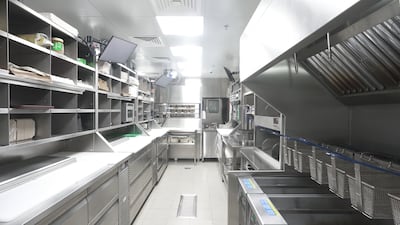
Brito now has a 1,000-square-metre multi-storey factory in the industrial zone in New Cairo that serves as the central kitchen, ensuring consistency between its satellite kitchens. Ingredients are stored and food is semi-prepared before it is transported for final cooking.
“It is a hub and spoke model, so we have a central kitchen and then we have a network of satellite kitchens that are proximate to the residential areas where the food comes out from for delivery,” Ms Reda says.
The company has a 400-square-metre satellite kitchen in New Cairo, to the east of central Cairo, and has plans to open 11 more throughout the city over the coming three years.
While the pre-seed round was needed to sign up early adopters, the next funding round that Ms Reda expects to close by May will support expansion.
Finding cheaper real estate is not a problem, she says, as “it doesn’t have to be a premier location”.
“It is not a restaurant, it is a ghost kitchen. It doesn’t have to be seen.”
The sharing economy model “provides maximum profitability for the brands” because Brito can make mass purchases of materials and ingredients, securing better prices and lowering overall costs, Ms Reda says.
The start-up counts 72 local and international brands as customers, and offers three business lines: one for restaurant brands, one for corporate clients and one for virtual brands.
For corporate clients, such as Telecom Egypt and Ain Shams University, Brito caters for their conferences and training centres.
Brito has also created five of its own delivery-only virtual brands, including burgers, fried chicken, pizzas, grills and sandwiches.
“The challenges here are high; the responsibilities are higher. It requires that you have all the skills needed to run such a business. It requires higher capital as well, because you have to cater for the equipment that every brand would require,” Ms Reda says.
The cloud kitchen industry also requires heavy capital in terms of human resources. Brito currently has 110 employees over a few shifts to cater for business from 8am to 2am.
“That is good for the economy because you are opening job opportunities in large numbers. That is one thing I am proud of,” she says.
“The other thing is that I am the only female founder building a cloud kitchen in the region,” she says. “One of my goals here is to fix the broken gender balance in this industry.”

Company Fact Box
Company name/date started: Abwaab Technologies / September 2019
Founders: Hamdi Tabbaa, co-founder and CEO. Hussein Alsarabi, co-founder and CTO
Based: Amman, Jordan
Sector: Education Technology
Size (employees/revenue): Total team size: 65. Full-time employees: 25. Revenue undisclosed
Stage: early-stage startup
Investors: Adam Tech Ventures, Endure Capital, Equitrust, the World Bank-backed Innovative Startups SMEs Fund, a London investment fund, a number of former and current executives from Uber and Netflix, among others.
Mercer, the investment consulting arm of US services company Marsh & McLennan, expects its wealth division to at least double its assets under management (AUM) in the Middle East as wealth in the region continues to grow despite economic headwinds, a company official said.
Mercer Wealth, which globally has $160 billion in AUM, plans to boost its AUM in the region to $2-$3bn in the next 2-3 years from the present $1bn, said Yasir AbuShaban, a Dubai-based principal with Mercer Wealth.
“Within the next two to three years, we are looking at reaching $2 to $3 billion as a conservative estimate and we do see an opportunity to do so,” said Mr AbuShaban.
Mercer does not directly make investments, but allocates clients’ money they have discretion to, to professional asset managers. They also provide advice to clients.
“We have buying power. We can negotiate on their (client’s) behalf with asset managers to provide them lower fees than they otherwise would have to get on their own,” he added.
Mercer Wealth’s clients include sovereign wealth funds, family offices, and insurance companies among others.
From its office in Dubai, Mercer also looks after Africa, India and Turkey, where they also see opportunity for growth.
Wealth creation in Middle East and Africa (MEA) grew 8.5 per cent to $8.1 trillion last year from $7.5tn in 2015, higher than last year’s global average of 6 per cent and the second-highest growth in a region after Asia-Pacific which grew 9.9 per cent, according to consultancy Boston Consulting Group (BCG). In the region, where wealth grew just 1.9 per cent in 2015 compared with 2014, a pickup in oil prices has helped in wealth generation.
BCG is forecasting MEA wealth will rise to $12tn by 2021, growing at an annual average of 8 per cent.
Drivers of wealth generation in the region will be split evenly between new wealth creation and growth of performance of existing assets, according to BCG.
Another general trend in the region is clients’ looking for a comprehensive approach to investing, according to Mr AbuShaban.
“Institutional investors or some of the families are seeing a slowdown in the available capital they have to invest and in that sense they are looking at optimizing the way they manage their portfolios and making sure they are not investing haphazardly and different parts of their investment are working together,” said Mr AbuShaban.
Some clients also have a higher appetite for risk, given the low interest-rate environment that does not provide enough yield for some institutional investors. These clients are keen to invest in illiquid assets, such as private equity and infrastructure.
“What we have seen is a desire for higher returns in what has been a low-return environment specifically in various fixed income or bonds,” he said.
“In this environment, we have seen a de facto increase in the risk that clients are taking in things like illiquid investments, private equity investments, infrastructure and private debt, those kind of investments were higher illiquidity results in incrementally higher returns.”
The Abu Dhabi Investment Authority, one of the largest sovereign wealth funds, said in its 2016 report that has gradually increased its exposure in direct private equity and private credit transactions, mainly in Asian markets and especially in China and India. The authority’s private equity department focused on structured equities owing to “their defensive characteristics.”
COMPANY%20PROFILE
%3Cp%3E%3Cstrong%3ECompany%3A%20%3C%2Fstrong%3EEducatly%3Cbr%3E%3Cstrong%3EStarted%3A%20%3C%2Fstrong%3E2020%3Cbr%3E%3Cstrong%3EBased%3A%20%3C%2Fstrong%3EUAE%3Cbr%3E%3Cstrong%3EFounders%3A%20%3C%2Fstrong%3EMohmmed%20El%20Sonbaty%2C%20Joan%20Manuel%20and%20Abdelrahman%20Ayman%3Cbr%3E%3Cstrong%3EIndustry%3A%20%3C%2Fstrong%3EEducation%20technology%3Cbr%3E%3Cstrong%3EFunding%20size%3A%20%3C%2Fstrong%3E%242%20million%3Cbr%3E%3Cstrong%3EInvestors%3A%20%3C%2Fstrong%3EEnterprise%20Ireland%2C%20Egypt%20venture%2C%20Plus%20VC%2C%20HBAN%2C%20Falak%20Startups%3C%2Fp%3E%0A
Will the pound fall to parity with the dollar?
The idea of pound parity now seems less far-fetched as the risk grows that Britain may split away from the European Union without a deal.
Rupert Harrison, a fund manager at BlackRock, sees the risk of it falling to trade level with the dollar on a no-deal Brexit. The view echoes Morgan Stanley’s recent forecast that the currency can plunge toward $1 (Dh3.67) on such an outcome. That isn’t the majority view yet – a Bloomberg survey this month estimated the pound will slide to $1.10 should the UK exit the bloc without an agreement.
New Prime Minister Boris Johnson has repeatedly said that Britain will leave the EU on the October 31 deadline with or without an agreement, fuelling concern the nation is headed for a disorderly departure and fanning pessimism toward the pound. Sterling has fallen more than 7 per cent in the past three months, the worst performance among major developed-market currencies.
“The pound is at a much lower level now but I still think a no-deal exit would lead to significant volatility and we could be testing parity on a really bad outcome,” said Mr Harrison, who manages more than $10 billion in assets at BlackRock. “We will see this game of chicken continue through August and that’s likely negative for sterling,” he said about the deadlocked Brexit talks.
The pound fell 0.8 per cent to $1.2033 on Friday, its weakest closing level since the 1980s, after a report on the second quarter showed the UK economy shrank for the first time in six years. The data means it is likely the Bank of England will cut interest rates, according to Mizuho Bank.
The BOE said in November that the currency could fall even below $1 in an analysis on possible worst-case Brexit scenarios. Options-based calculations showed around a 6.4 per cent chance of pound-dollar parity in the next one year, markedly higher than 0.2 per cent in early March when prospects of a no-deal outcome were seemingly off the table.
Bloomberg
The biog
Hometown: Cairo
Age: 37
Favourite TV series: The Handmaid’s Tale, Black Mirror
Favourite anime series: Death Note, One Piece and Hellsing
Favourite book: Designing Brand Identity, Fifth Edition
The rules on fostering in the UAE
A foster couple or family must:
- be Muslim, Emirati and be residing in the UAE
- not be younger than 25 years old
- not have been convicted of offences or crimes involving moral turpitude
- be free of infectious diseases or psychological and mental disorders
- have the ability to support its members and the foster child financially
- undertake to treat and raise the child in a proper manner and take care of his or her health and well-being
- A single, divorced or widowed Muslim Emirati female, residing in the UAE may apply to foster a child if she is at least 30 years old and able to support the child financially
From exhibitions to the battlefield
In 2016, the Shaded Dome was awarded with the 'De Vernufteling' people's choice award, an annual prize by the Dutch Association of Consulting Engineers and the Royal Netherlands Society of Engineers for the most innovative project by a Dutch engineering firm.
It was assigned by the Dutch Ministry of Defence to modify the Shaded Dome to make it suitable for ballistic protection. Royal HaskoningDHV, one of the companies which designed the dome, is an independent international engineering and project management consultancy, leading the way in sustainable development and innovation.
It is driving positive change through innovation and technology, helping use resources more efficiently.
It aims to minimise the impact on the environment by leading by example in its projects in sustainable development and innovation, to become part of the solution to a more sustainable society now and into the future.
BMW M5 specs
Engine: 4.4-litre twin-turbo V-8 petrol enging with additional electric motor
Power: 727hp
Torque: 1,000Nm
Transmission: 8-speed auto
Fuel consumption: 10.6L/100km
On sale: Now
Price: From Dh650,000
Most sought after workplace benefits in the UAE
- Flexible work arrangements
- Pension support
- Mental well-being assistance
- Insurance coverage for optical, dental, alternative medicine, cancer screening
- Financial well-being incentives
The specs
Engine: 2.2-litre, turbodiesel
Transmission: 6-speed auto
Power: 160hp
Torque: 385Nm
Price: Dh116,900
On sale: now
UAE currency: the story behind the money in your pockets
More coverage from the Future Forum
GAC GS8 Specs
Engine: 2.0-litre 4cyl turbo
Power: 248hp at 5,200rpm
Torque: 400Nm at 1,750-4,000rpm
Transmission: 8-speed auto
Fuel consumption: 9.1L/100km
On sale: Now
Price: From Dh149,900
WHY%20AAYAN%20IS%20'PERFECT%20EXAMPLE'
%3Cp%3EDavid%20White%20might%20be%20new%20to%20the%20country%2C%20but%20he%20has%20clearly%20already%20built%20up%20an%20affinity%20with%20the%20place.%3Cbr%3E%3Cbr%3EAfter%20the%20UAE%20shocked%20Pakistan%20in%20the%20semi-final%20of%20the%20Under%2019%20Asia%20Cup%20last%20month%2C%20White%20was%20hugged%20on%20the%20field%20by%20Aayan%20Khan%2C%20the%20team%E2%80%99s%20captain.%3Cbr%3E%3Cbr%3EWhite%20suggests%20that%20was%20more%20a%20sign%20of%20Aayan%E2%80%99s%20amiability%20than%20anything%20else.%20But%20he%20believes%20the%20young%20all-rounder%2C%20who%20was%20part%20of%20the%20winning%20Gulf%20Giants%20team%20last%20year%2C%20is%20just%20the%20sort%20of%20player%20the%20country%20should%20be%20seeking%20to%20produce%20via%20the%20ILT20.%3Cbr%3E%3Cbr%3E%E2%80%9CHe%20is%20a%20delightful%20young%20man%2C%E2%80%9D%20White%20said.%20%E2%80%9CHe%20played%20in%20the%20competition%20last%20year%20at%2017%2C%20and%20look%20at%20his%20development%20from%20there%20till%20now%2C%20and%20where%20he%20is%20representing%20the%20UAE.%3Cbr%3E%3Cbr%3E%E2%80%9CHe%20was%20influential%20in%20the%20U19%20team%20which%20beat%20Pakistan.%20He%20is%20the%20perfect%20example%20of%20what%20we%20are%20all%20trying%20to%20achieve%20here.%3Cbr%3E%3Cbr%3E%E2%80%9CIt%20is%20about%20the%20development%20of%20players%20who%20are%20going%20to%20represent%20the%20UAE%20and%20go%20on%20to%20help%20make%20UAE%20a%20force%20in%20world%20cricket.%E2%80%9D%C2%A0%3C%2Fp%3E%0A
The%20specs
%3Cp%3E%3Cstrong%3EEngine%3A%3C%2Fstrong%3E%201.8-litre%204-cyl%20turbo%0D%3Cbr%3E%3Cstrong%3EPower%3A%20%3C%2Fstrong%3E190hp%20at%205%2C200rpm%0D%3Cbr%3E%3Cstrong%3ETorque%3A%3C%2Fstrong%3E%20320Nm%20from%201%2C800-5%2C000rpm%0D%3Cbr%3E%3Cstrong%3ETransmission%3A%20%3C%2Fstrong%3ESeven-speed%20dual-clutch%20auto%0D%3Cbr%3E%3Cstrong%3EFuel%20consumption%3A%3C%2Fstrong%3E%206.7L%2F100km%0D%3Cbr%3E%3Cstrong%3EPrice%3A%3C%2Fstrong%3E%20From%20Dh111%2C195%0D%3Cbr%3E%3Cstrong%3EOn%20sale%3A%20%3C%2Fstrong%3ENow%3C%2Fp%3E%0A
North Pole stats
Distance covered: 160km
Temperature: -40°C
Weight of equipment: 45kg
Altitude (metres above sea level): 0
Terrain: Ice rock
South Pole stats
Distance covered: 130km
Temperature: -50°C
Weight of equipment: 50kg
Altitude (metres above sea level): 3,300
Terrain: Flat ice
Groom and Two Brides
Director: Elie Semaan
Starring: Abdullah Boushehri, Laila Abdallah, Lulwa Almulla
Rating: 3/5
In 2018, the ICRC received 27,756 trace requests in the Middle East alone. The global total was 45,507.
There are 139,018 global trace requests that have not been resolved yet, 55,672 of these are in the Middle East region.
More than 540,000 individuals approached the ICRC in the Middle East asking to be reunited with missing loved ones in 2018.
The total figure for the entire world was 654,000 in 2018.