


Saudi Arabia has signed a preliminary agreement with French rail company Alstom to explore investment opportunities that will support the kingdom's sustainable transport sector.
The agreement, signed by the country's Ministry of Investment, aims to identify opportunities in railway infrastructure powered by sustainable technology and energy sources with lower carbon emissions, which are in line with its Vision 2030 economic programme, the state-owned Saudi Press Agency said.
The deal will also look into the establishment of Alstom's regional headquarters in the kingdom, the SPA said.
Saudi Arabia is in the middle of a major economic diversification drive under its Vision 2030 agenda, amid a push to reduce its reliance on oil and tap into other high-growth industries to boost its economy, create more jobs and attract private investment to boost economic development.
One of the programme's core pillars is a focus on sustainability. The Arab world's biggest economy set a goal of achieving net zero carbon emissions by 2060 through a “circular carbon economy approach” that is compatible with the kingdom’s development and diversification plans, Crown Prince Mohammed bin Salman said at the Saudi Green Initiative forum last October.
Some of the key projects coming up in the country have already started putting in place sustainable measures.
In April, the Red Sea Development Company, which is building a big tourism destination in the kingdom, said that it would use biofuel generators from Germany's Man Energy Solutions to provide power to its operations.
The kingdom's electric vehicle market is also growing as more motorists adopt sustainable modes of transport, driving the country into a top-50 spot for the first time in the latest industry index released by AlixPartners in April.
Earlier this year, French company TotalEnergies also signed a preliminary agreement with Jeddah-based Altaaqa to develop and install integrated electric vehicle charging stations in the kingdom.
On the rail infrastructure side, Saudi Arabia is currently developing the $23 billion Riyadh Metro, the kingdom's second rail transport system that comprises six main lines measuring 176km.
Alstom won a $1bn contract to upgrade Cairo’s oldest metro line last year. The agreement, which was signed with Egypt’s National Authority for Tunnels, is for 55 nine-carriage trains and includes an eight-year maintenance contract.
-

A Riyadh Metro train leaves on a test drive to the King Abdullah Financial District Station in the Saudi capital. AFP -
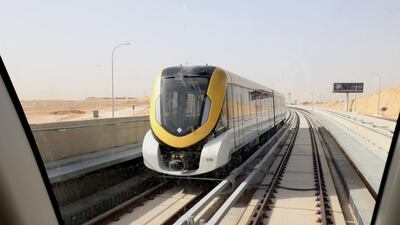
The $23 billion Riyadh Metro, comprising six main lines measuring 176km, is set to open in mid-2021. AFP -
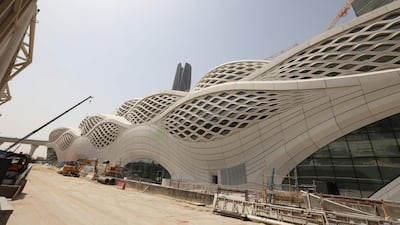
The King Abdullah Financial District Station is one of 85 getting ready to welcome commuters. AFP -

The design of the stations complements Riyadh's aesthetics. AFP -
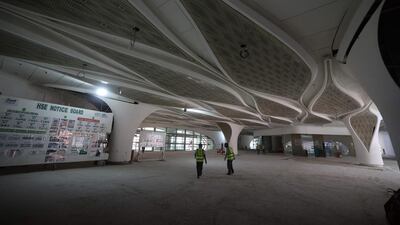
The look, feel and functionality of the stations and trains have been carefully considered, with elements of traditional local architecture seen throughout. AFP -

Construction of the Riyadh Metro project began in April 2014, with test runs starting in August 2018. AFP -
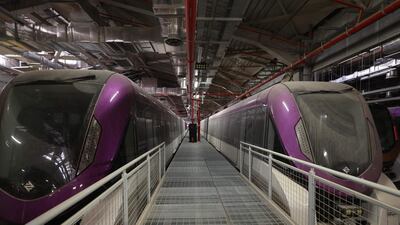
Trains have been painted the same six colours – inside and out – as the metro lines to help passengers plan their journeys. AFP -

The Riyadh Metro covers most of the city's highly populated districts, government facilities, educational and commercial outlets. AFP -
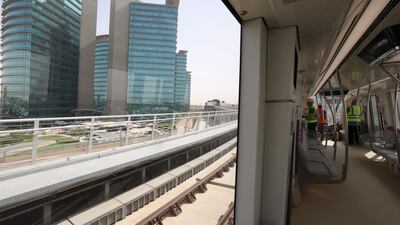
The Riyadh Metro is also connected with King KhalId International Airport, King Abdullah Financial District and many of the city's universities. AFP -

The driverless trains aim to provide a convenient, enjoyable experience for all passengers. AFP -

It is hoped the Riyadh Metro will encourage Saudi citizens to leave their cars at home and exercise more, with people walking to and from the stations. AFP



