


Climate change could cost the global economy $178 trillion over the next 50 years, or a 7.6 per cent cut to global gross domestic product in 2070, if left unchecked, according to a report by Deloitte.
If global warming reaches about 3°C above pre-industrial levels towards the end of the century, the toll on human lives could be "significant", disproportionately affecting the most vulnerable, the consultancy said.
It will also lead to loss of productivity and employment, food and water scarcity, worsening health and well-being and bringing about a lower standard of living globally, Deloitte’s Global Turning Point Report, which analysed 15 regions in the Asia-Pacific, Europe and the Americas, warned.
However, if global leaders unite in a systemic net zero transition by 2050 and meet the Paris Agreement goal to limit warming as close to 1.5°C above pre-industrial levels by as much as possible, the global economy could gain $43tn in the next 50 years, giving global GDP a 3.8 per cent boost in 2070, the report found.
“The numbers speak for themselves and businesses should be reimagining their practices to help build a more sustainable future for all," said Mutasem Dajani, chief executive of Deloitte Middle East.
"Taking small steps in the right direction will pay dividends in the future. It has become clear that if businesses do not prioritise sustainability and understand the impact they are having on the environment, valuable talent, revenue and market share may be lost."
-

Engineers carry solar panels on to the roof of a property in Barcelona in September 2022. Spain and other Mediterranean countries have generated record amounts of power from wind and solar farms. Bloomberg -
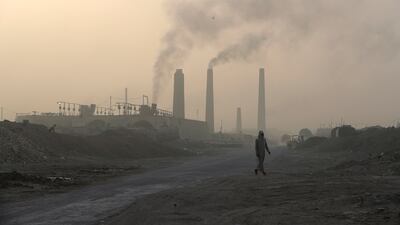
Smoke rises from brick factory stacks in Nahrawan, Baghdad. Tackling emissions from heavy industry is crucial to tackling global warming. Reuters -

A boy stands near a flock of sheep as a sandstorm approaches in the Syrian countryside of Tabqa. Syria is among the countries most vulnerable and poorly prepared for climate change, which is expected to worsen. AFP -
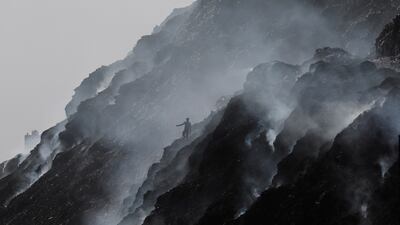
Mountains of smouldering rubbish at the Bhalswa landfill in New Delhi, India. Reuters -
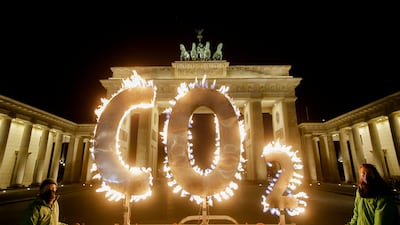
Greenpeace activists take part in a climate change protest in front of the Brandenburg Gate in Berlin in May. AP -
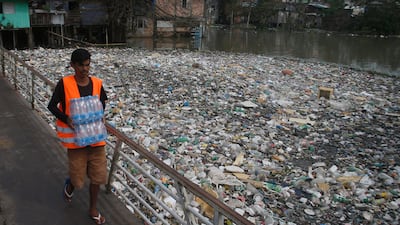
A man carries water bottles across the heavily polluted Negro River in Manaus, Brazil. About 35 tonnes of rubbish are removed daily from the river. AP -
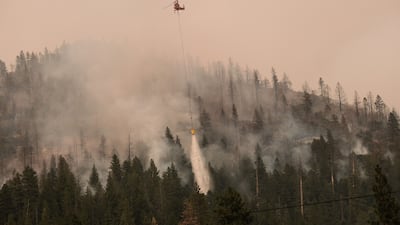
A helicopter drops water on a brush fire in California. Bloomberg -
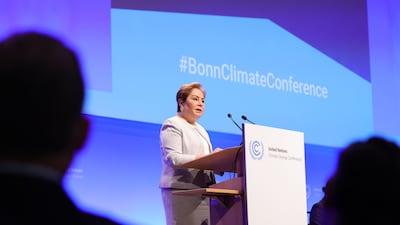
UN climate chief Patricia Espinosa speaks on the opening day of the Bonn climate change conference in Germany. Getty -
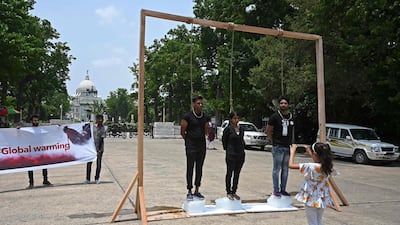
Activists take part in a demonstration to raise awareness of global warming, during an event to mark World Environment Day in Kolkata. AFP -
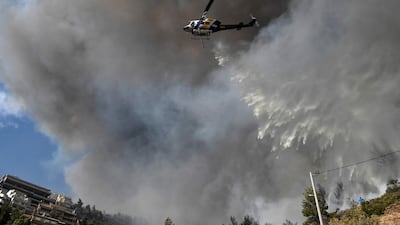
A helicopter drops water on a bushfire near a residential district in Athens. The fire forced residents to flee. AFP -
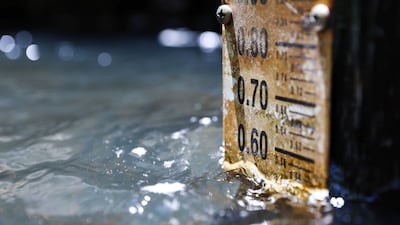
A gauge measures water levels in the Rio Nambe river, in New Mexico. Ninety per cent of the state is experiencing extreme drought. Getty -

Afghan refugees search for recyclable material from heaps of rubbish in Karachi, Pakistan. AP -

A climate activist ties herself to the net during the semi-final tennis match between Croatia's Marin Cilic and Norway's Casper Ruud at the French Open in Roland Garros in Paris. AP -
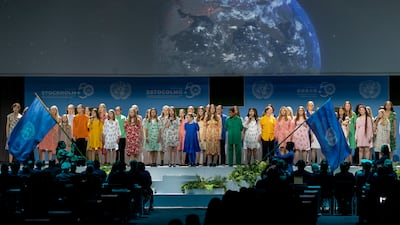
A dance group performs at a climate summit in Stockholm, Sweden. Getty -

US climate envoy John Kerry talks to a delegate at the Stockholm 50 climate summit. Getty -
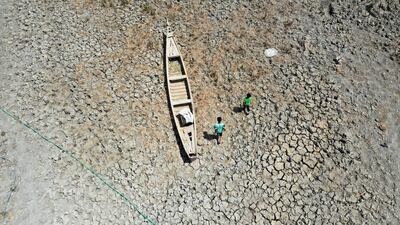
A boat is stranded during low tide at the Chebayesh marsh in Dhi Qar province, Iraq. Reuters -
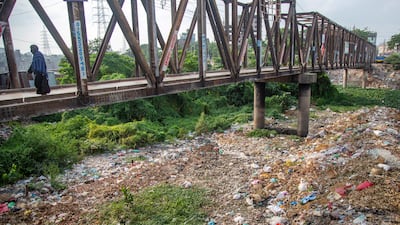
A woman crosses a polluted river in Dhaka, Bangladesh. EPA -
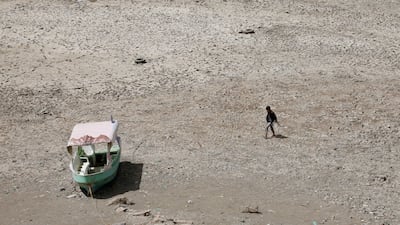
A man walks past an abandoned boat in the bed of a drought-affected reservoir on the outskirts of Sana'a, Yemen. EPA


Business leaders are recognising the importance of the issue — 89 per cent of executive-level managers surveyed by Deloitte agree there is a "global climate emergency" while 79 per cent currently seeing the world at a tipping point for responding to climate change.
However, transforming the economy for a low-carbon future will require "extensive co-ordination and global collaboration throughout industries and geographies", the report said.
Governments will need to work with the financial services and technology sectors through global policymaking, greater investment in clean energy systems and a new mix of green technology across industries.
The transition to net zero emissions would create "fundamental changes to the structure of economic growth" as the economy switches the energy mix from reliance on fossil fuels to renewable electricity augmented by fuel sources such as hydrogen, the report said.
During the initial stage, the combined cost of upfront investments in decarbonisation, coupled with the already locked-in damages of climate change, would "temporarily lower economic activity", compared with the current emissions-intensive path.
However, once the transition is complete, the "economic benefits of having avoided climate damage and the emergence of new sources of growth and job creation would start to outweigh the costs", the report said.
It also stressed that each region will move forward at its own pace, based on factors such as the way governing bodies and societies are structured, exposure to climate change and overall risk profile, and marketplace strengths and capabilities.
For example, the Asia-Pacific is expected to see the benefits of a low-carbon transition in the 2020s, while Europe will not register a return on investment until the 2050s, and the Americas until the 2060s.
However, if rapid action is taken, all regions are expected to achieve their turning point by 2070, the report said.
“Our analysis shows that a low-carbon future is not only a societal imperative but an economic one," said Dr Pradeep Philip, partner at Deloitte Economics Institute.
"We already have the technologies, business models and policy approaches to simultaneously combat the climate crisis and unlock significant economic growth, but we need governments, businesses and communities globally to align on a pathway toward a net zero future.”

