
Syria plans to build or rehabilitate two million homes by 2035 as it looks to address housing shortages in the country and boost its economy.
Housing developments would be financed through a mix of government investment, private capital, new partnerships and foreign investment, Imad Al-Masri, Syria’s assistant minister of public works and housing, told the Syrian Arab News Agency.
Syria will provide land owned by the General Housing Establishment while private investors will develop projects and infrastructure to help increase housing supply.

Syria is also working to revive stalled projects and speed up delivery of completed units in the Damascus countryside, Homs, Hama, Latakia, Tartous, Aleppo and Deir Ezzor.
There is a growing demand for homes in Syria as it attracts new investment after the country was removed from the US list of state sponsors of terrorism, and as Syrians displaced by the conflict return home.
The housing shortage in Syria is estimated at 1.9 million units in 2025 and is expected to widen to 2.5 million units by 2030 unless supply keeps pace with demand, Mr Al-Masri said.
The government is pursuing a four-pronged strategy as it focuses on reducing housing shortages in the country. This includes completing existing and stalled projects, repairing homes, rebuilding damaged housing and adding units.
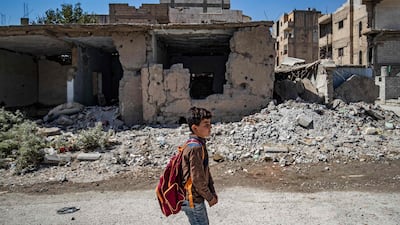
Syria’s housing stock is estimated at about 4.25 million units, of which about 1.32 million have sustained varying degrees of damage due to more than 10 years of conflict.
The latest data comes as regional investors including UAE-based developer Arada and Emaar founder Mohamed Alabbar reveal plans to invest in Syria’s property sector.
Arada plans to build a $7 billion “UAE-style” mixed-use real estate project in Syria in phases over 10 years.
The new project in the west of Damascus will have 11,000 homes, including residential apartments, villas and town houses, branded residences, 500 hotel rooms, and 1,000 serviced apartments.
Two schools as well as a hospital, offices and retail units will also be built as part of the development.
There is strong demand for “good-quality homes” in Syria, driven by local residents and foreign citizens living abroad, Ahmed Alkhoshaibi, group chief executive of Arada, told The National.
“You have the local current demand, which is very strong for good communities. And you also have Syrians living outside, who want to invest, or have a home or holiday home in the country. So that demand will continue to grow,” Mr Alkhoshaibi said.
Mr Alabbar is also looking to invest as much as $18 billion in Syria, with projects worth between $5 billion and $7 billion on the Syrian coast, and up to $11 billion in Damascus and its surroundings.
More than 1.7 million Syrians are estimated to have returned to Syria between December 2024 and April 2026 following the overthrow of Bashar Al Assad's regime nearly two years ago, according to the United Nations refugee agency, UNHCR.
About 1.97 million internally displaced people also returned to their areas of residence during the period, with a lack of housing cited as the main obstacle for return.

