
Hotel operator Rotana is in talks to re-enter Syria as the country seeks to reintegrate with the wider global economy.
“We would love to be back in Syria. We want to be back,” Rotana’s chief executive Philip Barnes said in an interview with The National at the Arabian Travel Market.
“We are already in conversations with owners, developers in Syria, and [the person] who heads up our development [in Syria] was in my office just last week and said, ‘I have two or three opportunities that are coming through,’” said Mr Barnes.
The Abu Dhabi-based hotel operator pulled out of its property in Syria in 2014, citing the country’s instability.
Syrian President Ahmad Al Shara, who was in Dubai this week, has been pushing to return the country to the global economic scene after its 13-year civil war. A strong Syria is beneficial for countries across the Middle East, even as trade routes through the Strait of Hormuz remain blocked, he said on Tuesday.
Western countries have been slowly dismantling their sanctions regime against Syria, and last month, the country was removed from the US list of state sponsors of terrorism.
“When sanctions are lifted, a lot of things change,” Mr Barnes said. “Everything changes, and developers get more excited. Sanctions come in so many different forms, but a lot of them are obviously around the movement of money and funding and control.”
Dealing with sanctioned countries for a company like Rotana, which works with partners around the world, can be challenging, he said.
“Partners in the United States, for example, they have to be aware of when we're operating in a country where there are sanctions … so there [are] a lot of things that we have to bear in mind. But as soon as those sanctions go away, as soon as they're lifted to some extent, that's when you see the excitement growing.”

With Syria, as soon as the country began reopening to the world, Rotana began looking into it, Mr Barnes said. “This is going to be an opportunity for us, and we have to be focused on it,” he said.
Rotana, founded in Abu Dhabi in 1992, manages a portfolio of more than 78 properties in operation and 40 under development across the Middle East, Africa, Eastern Europe and Turkey. It is considering opportunities in Egypt and Pakistan and in June signed an agreement to develop its first ski resort in Gudauri, Georgia.
No job cuts due to war
Despite the Iran war, Rotana has managed to avoid any layoffs this year, although staff salaries were reduced. Mr Barnes said the first steps the company implemented were chasing revenue streams and containing costs.
“March was a tough month. April was a tough month, and then [in] May we started to see business coming back … So, when I look at it now, May, June, July, August, it's gone from strength to strength to strength. In August, in Dubai, for example, we ran 82 per cent occupancy with a minor loss of rate comparative [to last year], but still nonetheless we've seen good volumes coming through,” he said.
“As best I can tell, we will be at about 80 per cent of our profitability for last year, and when you consider that last year was a banner year, I think that's a pretty good place to be.”
At the Arabian Travel Market last year, Rotana’s co-founder and vice chairman Selim El Zyr said the company was ready for an initial public offering, depending on when it receives shareholder approval. “The IPO is on the table and every time the board meets the option is discussed,” he said at the time.
Mr Barnes on Tuesday said there were no immediate IPO plans.
-
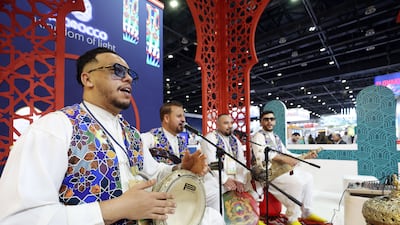
The Morocco stand at the Arabian Travel Market, at Dubai World Trade Centre. Chris Whiteoak / The National -
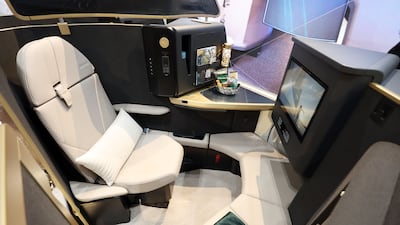
A first-class seat for Etihad Airways' Airbus A321LR. Chris Whiteoak / The National -
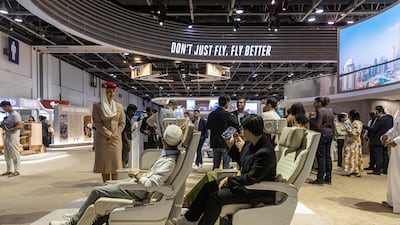
The Emirates airline stand. Antonie Robertson / The National -
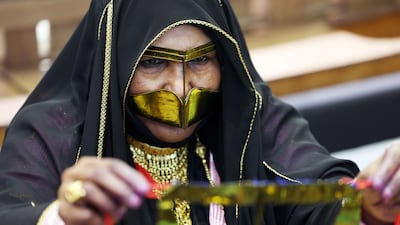
An exhibitor. Chris Whiteoak / The National -
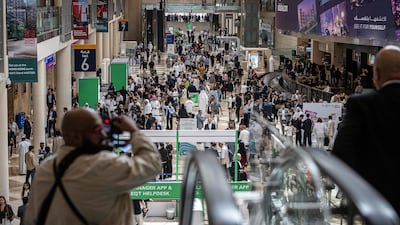
The show floor at the Arabian Travel Market. Antonie Robertson / The National -
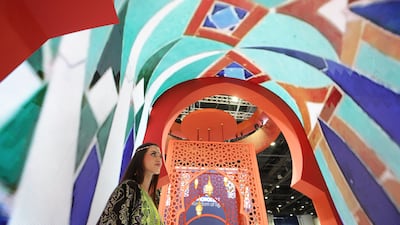
The Morocco stand. Chris Whiteoak / The National -
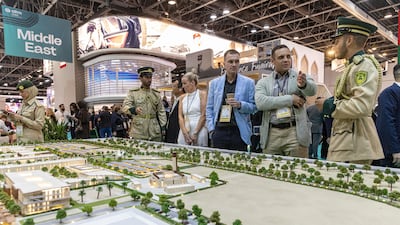
The Dubai Police stand. Antonie Robertson / The National -
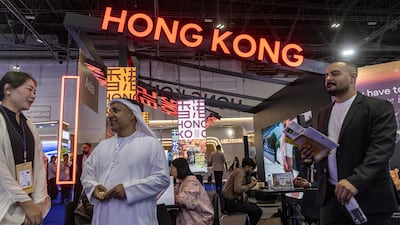
The Hong Kong stand. Antonie Robertson / The National -
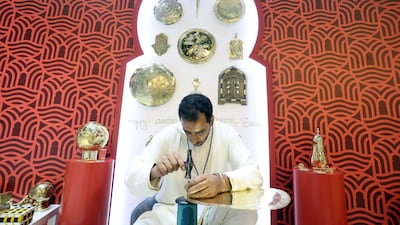
More from the Morocco stand. Chris Whiteoak / The National


“At this point in time, to my knowledge, because we are a family-owned business, there is no intention to move to an IPO. But everything can change and can change quickly. But obviously, there [are] a lot of steps to an IPO process that we would have to cover,” he said.
Looking ahead, Mr Barnes said he was optimistic. “We have 40 hotels in the pipeline. They'll be opening over the next five to six years … it may not be 40, it may be 45, it may be 35, but there will be a lot of projects that will open. And I think what matters is that you continue to invest towards those openings.”
The company will continue to focus on areas close to its UAE home base for expansion, including in Africa, the wider Middle East and parts of South Asia.
“Our world is changing all the time, and particularly in hospitality and tourism as a whole, you know that there'll be a downturn, there's an upturn, but it's how you cope with it,” Mr Barnes said.

