



The aggregate value of property and infrastructure projects since the launch of Saudi Arabia’s National Transformation Plan in 2016 has crossed $1.1 trillion as the kingdom continues to diversify its economy, real estate consultancy Knight Frank said.
The $500 billion futuristic Neom city remains the biggest project on the list of 15 big developments at various phases of construction.
The kingdom plans to have more than 555,000 residential units, in excess of 275,000 hotel rooms, more than 4.3 million square metres of retail and 6.1 million square metres of new office space by 2030.
“The planned construction in the kingdom will easily make Saudi Arabia the largest construction site the world has ever known,” said Faisal Durrani, partner and head of Middle East Research at Knight Frank.
“A bold new vision is unfolding in Saudi Arabia. The phenomenal transformation taking place in the world’s fastest-growing economy is clearly visible across the entire urban landscape.”
Saudi Arabia, Opec's biggest crude producer, is diversifying its economy away from oil, with the development of the housing, infrastructure and tourism sectors among the central planks of the kingdom’s overarching Vision 2030 economic reform agenda.
The kingdom has set an ambitious target of raising home ownership rates to 70 per cent by 2030 under the Sakani programme — a joint initiative between the Ministry of Housing and the kingdom’s Real Estate Development Fund.
The country is also developing a number of mega tourism projects as it seeks to raise the economic contribution of the sector from 3 per cent of gross domestic product to 10 per cent by the end of this decade.
These include Neom, which includes a nature reserve, coral reefs and heritage sites on a number of islands along the Red Sea, and Diriyah Gate, a seven-square-kilometre site with the At-Turaif Unesco World Heritage Site at its core.
Last month, Saudi Arabia's Crown Prince Mohammed bin Salman revealed the master plan for the Rua Al Madinah project on a site to the east of the Prophet’s Mosque.
Once completed, the development will boost the area's capacity, allowing it to host up to 30 million Umrah pilgrims.
Many of the developments are “stand-alone super-cities in their own right”, with Neom set to house nine million residents upon the completion of about 300,000 new homes, Harmen de Jong, head of Real Estate Strategy and Consulting for Saudi Arabia at Kight Frank, said.
“Super-cities like Neom will redefine urban living … [while] sub-cities like The Octagon, Trojena and The Line will set new benchmarks for luxury living in the region,” Mr Durrani said.
“With close to 30 per cent of homeowners in Saudi prepared to spend upwards of $800,000 on a second home in the kingdom, developers have their work cut out to satisfy this pent-up demand.”
-

Sharaan Nature Reserve near the town of AlUla in north-western Saudi Arabia. AFP -
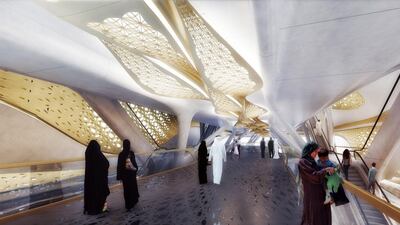
King Abdullah instructed the Riyadh Metro be completed within four years. Photo: Zaha Hadid Architects -
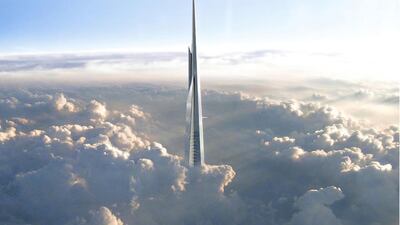
A rendering of the Jeddah Tower. Photo: EC Harris / Mace -
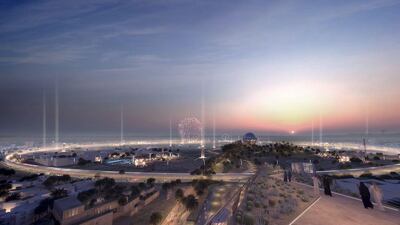
King Salman Park. Photo: Omrania -
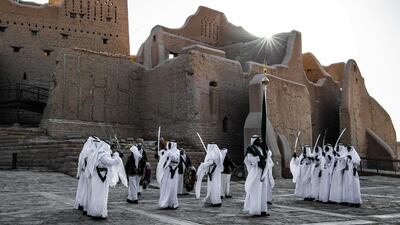
A traditional Saudi Al Ardah dance in front of Salwa Palace in At-Turaif in Ad Diriyah. Photo: Meshari Almuhanna / DGDA -
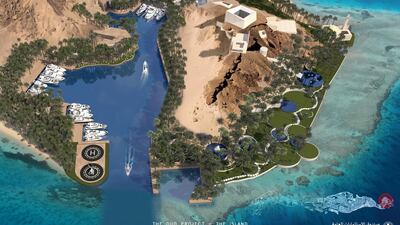
An illustration of the Amaala mega-project - one of a number of coastal and tourism schemes Saudi Arabia is developing under Vision 2030. Photo: Saudi Commission for Tourism and Natural Heritage -
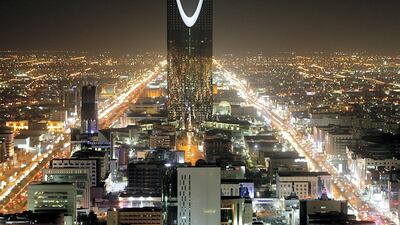
Riyad Bank has been one of the early investors in the kingdom's FinTech sector, with a 100 million riyal fund announced. Reuters -
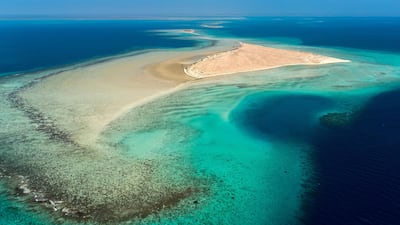
Site of the Red Sea project, where Saudi Arabia is planning a huge tourism venture encompassing 90 islands. Photo: Consulum -
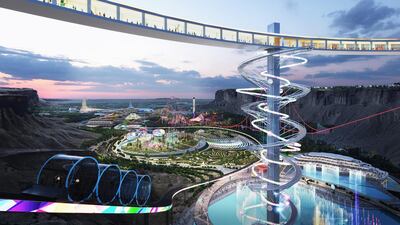
The Qiddiya City 'giga project' is an entertainment site being developed in Riyadh. -
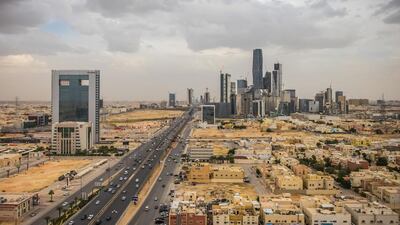
Saudi Real Estate Company for Infrastructure won the contract to develop infrastructure of Al Widyan mega-project. Waseem Obaidi for The National -

A low-carbon tram will connect visitors from AlUla International Airport across the five districts that make up The Journey Through Time. Photo: RCU


The $20bn Diriyah Gate is another project that will add 20,000 homes to the residential stock of the kingdom's capital, Riyadh, by 2027. With $5bn spent so far, Knight Frank estimates that 46 per cent of construction has been completed.
Riyadh itself is poised for significant growth, with the population expected to close in on 17 million by 2030, up from the current 7.5 million people.
The city announced real estate projects worth $104bn in the past six years and plans a new $147bn international airport, details of which are expected soon.
The planned aviation hub accounts for close to 74 per cent of the $200bn nationwide infrastructure spend, Knight Frank said.
The kingdom, which also has a heavy focus on sustainability and well-being, is currently building several sports, health and education sector projects.
These include the $500 million Riyadh Sports Boulevard and the $23bn “Green Riyadh” initiative that will transform the Saudi capital through the planting of 7.5 million trees.
“This emphasis on well-being extends to the 19,000 hospital beds planned, which is set to cost $13.8bn, $8.6bn of which is planned for Riyadh Province alone,” Mr de Jong said.
“Over 80 new educational institutions are also being built at a cost of $82bn.”

